
How To Fight Recall Bias in Consumer Insights

Posted by MFour on Apr 24, 2018 9:50:25 AM

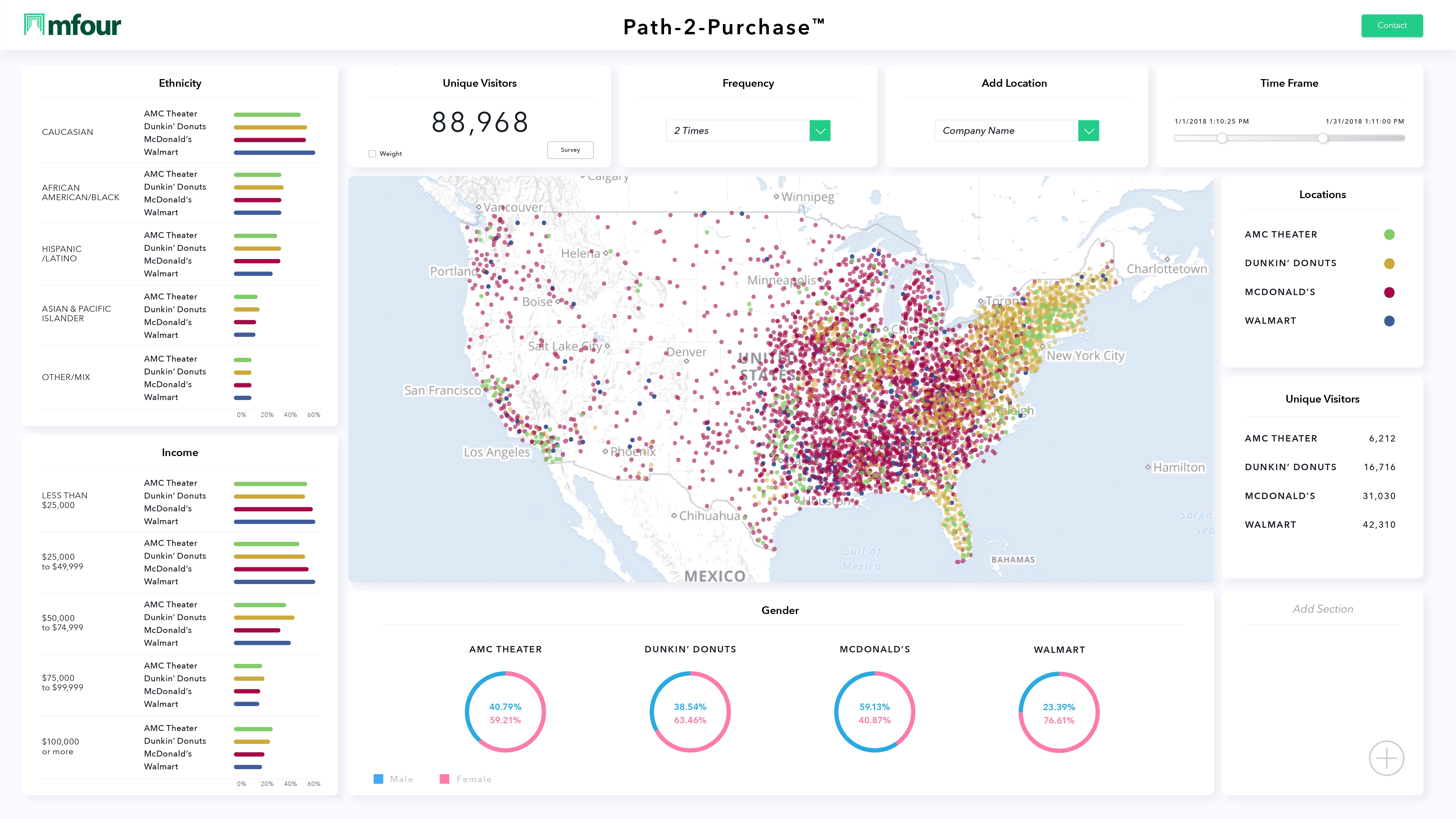
P2P_Dashboard_widescreen_update_Final

 It’s often said that memories make life worth living. But in consumer insights, too often they make life a headache.

Yes, we’re talking about recall bias, which is the error that occurs when survey respondents give answers based on faulty recall. It’s a harsh reality that while memories are made to be cherished, the reason we cherish them is because they are so easily lost. And in market research, data infected by recall bias compromises everything.

As the authors of a 2017 scholarly study examining recall bias put it, “simple…recall questions generate large measurement errors.” The study focused on a survey by the Canadian government in which respondents were asked how much they had spent on food over the previous four weeks. The answers consistently underestimated actual expenditures, compared to data from subsequent diary studies involving the very same respondents (the authors noted that the diary phase was considered more reliable, but had accuracy problems of its own because of data-distorting factors such as respondents growing tired of having to record expenses each day).

The good news is there’s now an almost surefire remedy for recall bias in consumer research. But first, let’s dig a bit deeper into the problem, by asking you to take a very quick survey.

  • How often have you eaten quick-serve restaurant food in the past two weeks?
  • How many times have you stopped for gas over the past four weeks?

  • When did you last pass by a billboard for [fill in the name of the brand or product]? 
  • Do you like being asked questions you can’t properly answer?

That last one is rhetorical and perhaps a bit facetious. But the fact is, recall-based research happens all the time, and it puts insights professionals in the uncomfortable position of having to present recommendations to decision-makers that the researchers know are tainted by recall bias. Until now there has been no reliable and affordable alternative, except to accept recall bias as a fact of life and hope it doesn't distort data too badly.

But now there is.

Users of the new Path-2-Purchase™ Platform are putting recall bias behind them. They’re targeting mobile consumers by leveraging smartphones’ GPS features to find real people in real time and in the most relevant places, for in-the-moment, Point-of-Emotion® research. Instead of asking about experiences from a week ago, they’re getting insights into what their consumers just did – or are doing right now – along with vivid and trustworthy feedback on why they’re doing it and how it makes them feel.

It’s also important to note that with Path-2-Purchase™ you don’t have to even ask a question to learn how many times a consumer has been to a gas station or a quick serve restaurant over the past two or four weeks. Respondents opt in for location tracking that automatically tells you where, when, how often and for how long they’ve been in a given location. You can use that information to build a perfectly-tailored questionnaire. You also can track whether they’ve come in view of your brand’s billboards.

Early adopters of Path-2-Purchase™ Platform are beating recall bias at last, and so will you. For a one-on-one demo of how it can fill your projects' specific needs, just click here.


Topics: geolocation, Path-2-Purchase™ Platform, consumer insights

MFour Adds 3 Experienced Pros in Sales and Research Operations

Posted by MFour on Apr 19, 2018 9:30:00 AM

Sarah_Jim_Joan_Grouped  

Sarah Chung, Jim Timony and Joan Martinez (L-R)

MFour welcomes three new employees who together bring more than 60 years of experience to its Sales and Operations teams.

In Sales, veteran market research executive Jim Timony joins as a Senior Solutions Executive, and Sarah Chung as Solutions Executive. Joan Martinez has joined the Operations team as a Senior Research Consultant.

Jim has been immersed in consumer insights for more than 25 years. At GFK he rose to Vice President of Media and Communications Research, and won an Employee of the Year award. More recently, he was Phoenix Marketing’s Vice President of Converged Technology & Media. He brings extensive experience in designing and overseeing qualitative and quantitative projects, and in guiding clients to new methodologies that provide a clear roadmap for growth. At MFour, Jim will help clients benefit from unprecedented capabilities, including measuring and testing mobile ads’ effectiveness and gaining insights via the new Path-2-Purchase™ Platform. Jim earned a Bachelor’s degree in Business Administration and Economics from Franklin Pierce College. He’s a golfer and a football fan, and enjoys spending time with his family.

Joan has 20 years of market research experience across a wide range of business categories, which she’ll apply to understanding MFour clients’ goals and guiding them to successful projects, from survey design through analysis and recommendations. Most recently she was Research Director for Alter Agents, Inc. Joan holds a Bachelor’s degree in History from California State University, Los Angeles. She’s an avid golfer, and is especially proud that she was one of two women who qualified for the championship round of the 2016 Southern California Golf Association’s Amateur Net Score tournament. As befits a stats and numbers expert, Joan also has played competitive poker. She says she has been unusually successful in raffles and playing the lottery, which she attributes to having been blessed by Pope John Paul II when he visited her native Guam in 1981.

Sarah brings more than 17 years’ sales experience to MFour, including positions with Salesforce, Ingram Micro, Alteryx and Kimberly Clark. At MFour she will guide clients toward Path-2-Purchase™ solutions that include identifying audiences with behavioral and profiling data housed in Consumer Knowledge Center, coupled with real-time, location-specific surveys. Sarah is an alumnus of California State University, Long Beach, where her focus was business administration. She is a dedicated gastro-tourist, enjoys spectator sports (especially basketball) and likes spending time with her husband and her dog, Louie.

Welcome aboard, Sarah, Jim and Joan!

Topics: mike boehm, mobile research, mobile targeting, mike bohemia, Path-2-Purchase™ Platform, consumer insights

How To Pluck Insights from the Data Haystack 

Posted by MFour on Apr 17, 2018 9:42:00 AM

 Needle-Haystack-blog-21Feb18

What if the expression, “find a needle in a haystack,” were an actual job description? Chances are there wouldn’t be many applicants. 

In our era of Big Data (an unprecedented information haystack that might as well be infinite), the consumer insights profession has been trying to figure out how to fit in. Is traditional, survey-based research at risk of being perceived as less relevant, or even outdated, in the face of so many bytes of digital information collected from customers?

The issues are well-framed in "How Customer Insight Can Be a Powerful Business Partner,” a recent article by authors from Boston Consulting Group’s Center for Customer Insight, in partnership with Cambiar and the Yale School of Management’s Center for Customer Insights. These passages really stood out (the italics are ours):

  • “Consumers’ online and mobile activities leave a digital trail, giving companies vital insight about where to reach them; data on things such as their interests, habits, and choices, which may correlate to shopping decisions; and how to predict and influence future behaviors and purchases. Many organizations, though, lack the capabilities to follow that digital trail.”
  • “[Companies] must ensure that [insights] leaders and practitioners can… adopt more creative methods, and leverage new data sources.
  • “The goal is to combine structured data with rich unstructured, qualitative data, including information on consumers’ emotional needs…

These observations all point to the key challenge facing the insights profession: how to seamlessly integrate and enrich passive, observed behavioral data with qualitative and emotional insights to tell the whole story about real consumer journeys. A new solution called Path-2-Purchase™ Platform finally lets you overcome obstacles and meet the challenge with one-source, first-party observed and qualitative data. The result is validated consumer insights for everyone.

  • For the first time, corporate researchers and brand stewards can access a single source that combines Big Data tracking of mobile consumers’ digital footprints with real-time, right-place surveys to illuminate their motivations and emotions all along the path to purchase. 
  • Observational data from tracking 2 million carefully profiled and representative U.S. consumers’ journeys across 12.5 million locations becomes more valuable when it intersects with the ability to find targeted individuals in-the-moment and survey them immediately.  
  • Being able to see who’s going where empowers researchers to identify important but previously off-the-radar consumer segments to reach out to and understand. 
  • Instead of drawing inferences and modeling consumer profiles based on third party data, insights are driven by first-party data from known and validated consumers.
  • Data is collected and stored in a Consumer Knowledge Center, where it’s available to enhance understanding and target surveys to precisely the right respondents for a given product or service.

You can learn more about Path-To-Purchase™ in a one-on-one conversation; feel free to schedule it just by clicking here. And for the full text of the article referenced above, click here.


Topics: Path-2-Purchase™ Platform

Here's Why Respondents Drop  "Mobile First" Surveys

Posted by MFour on Apr 12, 2018 10:10:00 AM


Stopwatch 10Apr18

Mobile survey engagement is won or lost in a fraction of a second – a time span shorter than it takes to say “mobile survey engagement.” 

The time span we’re talking about is the gap that occurs between screen taps as a respondent proceeds through a smartphone survey.

The questionnaire that hesitates for just a third of a second or more is lost, according to research from Google.

"Mobile first” or “mobile optimized” surveys will regularly fail the speed test. The user experience starts badly due to slow load times, and goes downhill from there. Engagement erodes, and data quality erodes with it. And its likely that these frustrated consumer won't want to take any more surveys, exacerbating the panel recruitment problem that already plagues online research. The solution is to reach mobile consumers offline via a smartphone app.

The proven answer is MFour's  Surveys On The Go® app. Introduced in 2011, at the dawn of mobile research, SOTG has attracted the world's largest, most engaged all-mobile consumer research panel. More than 2 million U.S. users have downloaded it, and their satisfaction and engagement can be measured by the 4.5 stars out of 5 rating the app consistently receives in unsolicited public ratings and reviews left at the Apple and Google Plus app stores. If respondents' mobile app survey experiences were slow, they wouldn't be so pleased, and the number of consumers downloading it wouldn't be growing by more than 2,000 per day, strictly by word-of-mouth.


"Mobile first" surveys fail the speed test because they don't take place inside an app. They merely shoehorn conventional online surveys onto smartphone screens. Also referred to as “mobile optimized” or “mobile web” surveys, they require an uninterrupted connection between phones and websites, and the risk of disengagement or dropped surveys increases with each question. That's because the "mobile first" process resembles a  game of ping-pong. Each question goes ping as it’s loaded into consumers' phones, and then pong, when they send their answers and try to move on to the next question. This back-and-forth volleying continues until the questionnaire is completed. It adds up to 40 chances for delays in receiving questions and sending answers over the course of a 20-question survey. 

According to Google, if any part of an online exchange takes more than a 20th of a second, “the connection between action and reaction is broken."

Here are a few more observations from Google’s analysis of what happens when mobile consumers are forced to wait:

  • “When it comes to negative mobile interactions, one of the top complaints we heard is “slow interactions.”
  • “Making speed a priority is critical…53% of mobile site visits are abandoned if pages take more than 3 seconds to load.”
  • “46% of people say they would not purchase from a brand again if they have an interruptive mobile experience” (think of the survey-taking experience as market research's own consumer satisfaction challenge).

Whether it’s a quick-hit, fast-turnaround study on MFourDIY®, the only all-mobile DIY platform, or a project powered by the unprecedented location tracking, targeting and segmenting now available to users of the new Path-2-Purchase™ Platform, it all begins with what’s happening under the hood. If you give your research audience the opportunity to respond via Surveys On The Go®  app, you're giving them the superb smartphone experience they expect and appreciate. And they'll reward you with the engaged attention that leads to quality data and insights that will support business recommendations you can stand behind.

For a conversation and a demo on how MFour delivers validated consumer understanding for all, just get in touch by clicking here.


Topics: mobile research, mobile apps, Path-2-Purchase™ Platform

What’s Wrong with this Survey?

Posted by MFour on Apr 11, 2018 9:55:28 AM

Pictured: Path-2-Purchase™ Platform dashboardP2P_Dashboard_widescreen_update_Final

Below is a hypothetical customer satisfaction survey for a casual dining restaurant chain. It looks like a lot of standard surveys that are regularly fielded, but in fact the design is woefully outdated. We’ll tell you why, and what you can do about it.

First, take a look and ask yourself which questions you wish you could replace or eliminate, because you know the data will be compromised by recall bias and other issues that beset stated response questionnaires.

Q1: Have you been to [restaurant chain name] in the past 14 days?

Q2: Please give the location of the restaurant, by city and, if possible, the district or street.

Q3: How often do you eat at a [chain name] restaurant?

Q4: Did you eat at any of these other restaurants during the past 14 days? [showing a list of four competing chains]

Q5: How often do you eat at [the competitors’ restaurants]?

Q6 – Q13: [a series of customer satisfaction and net promoter score questions about the respondent’s most recent visit to the client’s restaurant.]

Q14-Q21: [Identical customer satisfaction questions about the most recent visit to a competitor’s restaurant.]

It’s the first five questions that are problematic. The inadequacy of Q1 to Q5 compromises the reliability of the remainder of the survey, because stated answers about visitation over time just aren’t very trustworthy. Do you remember which restaurants you visited over the past two weeks? Do you still have a strong impression and an accurate, specific recall of the experience, including what you ordered and how friendly and efficient your server was? How satisfied or dissatisfied you were – and why?

So how do you avoid compromising your data about consumer experience and consumer satisfaction? Instead of asking problematic questions about who, where, when and how often, businesses can leverage the groundbreaking Path-2-Purchase™ Platform and see at a glance where real, validated consumers have gone, hour by hour, day by day, across 12.5 million U.S. locations, including all locations of the top 1,000 retailers. Here’s some of what Path-2-Purchase™ delivers:

  • Archived, comprehensive location and visitation data that lets you identify brand loyalists and brand rejectors before you’ve even started.
  • Survey targeting based on locations, visits and detailed, validated profiles of the industry’s largest proprietary, all-mobile consumer panel.
  • The ability to field in-store or after-visit surveys that all but eliminate recall bias.
  • “Why” answers you can trust because you’ve asked them at the Point-of-Emotion® where decisions and experiences are vividly in your respondents’ minds.
  • Validation by photo capture of purchase receipts or other identifying images.
  • Vivid, in-their-own words insights from “video selfies” you can ask respondents to make about a dining or shopping or product-use experience, while it’s happening or just after the event.

In short, Path-2-Purchase™ gives you a big head start without even having to ask “who,” “when,” “where” and “how often.” You can focus confidently on the crucial “why,” knowing you’ll get data from the right respondents, with recall bias neutralized. It’s accurate, efficient, and simply better, because it’s categorically different from stated-answer surveys taken by poorly validated, multi-sourced panelists.

To set up a one-on-one demo about how Path-2-Purchase™ Platform delivers validated consumer insights for everyone, just click here.

Topics: mobile surveys, path-2-purchase, Path-2-Purchase™ Platform

Under Pressure? Here’s What To Do When Your Stakeholders Won’t Wait.

Posted by admin on Mar 22, 2018 1:12:31 PM


The growth of eCommerce isn’t abating: the U.S. Census Bureau reports that online purchases rose 16% in 2017, reaching $453.5 billion and topping the 15.1% gain seen in 2016. The need to obtain and act upon consumer data at breakneck speed isn’t abating, either.


For consumers, constant access to mobile information makes shopping and buying journeys easier and better-informed than ever. Meanwhile, brands and retailers benefit from constant streams of data from online purchases and site visits. That presents big opportunities to maximize sales and minimize problems, by making real-time adjustments to pricing, messaging, ad placement, and everything else that determines wins and losses in the struggle for market share. But it places huge pressure on researchers and marketers to access data in a flash, to inform smart, time-critical actions. The Census Bureau’s documentation of eCommerce’s rapid growth suggests that the pressure to get speedy consumer insights isn’t going away.


Quick-turnaround research that doesn’t compromise data quality is in reach, but it requires finding the right survey-design platform, connected to a first-party panel that’s big enough and responsive enough to give you the completes you need from the consumer segments you need, at the speed your stakeholders demand.


MFourDIY® has the easy, templated design features you need to work fast, the sophisticated targeting variables you need to work smart, and the world’s largest and most engaged all-mobile panel to make your work matter because the results are real. If you need hundreds of completes within a few hours, you can get them from a stable, proprietary panel of 2 million validated U.S. consumers who reliably come through with response rates of 25% within an hour and 50% inside a day. Tech-savvy brands can tap into their own first-party data from site visits and checkouts to see what their eCommerce customers are doing. MFourDIY® completes the insights equation by providing the real-time portal to understanding the “why” behind the “what.” And, of course, results and insights that come fast enough for eCommerce are ideal for research in the bricks-and-mortar retail realm, because time is of the essence in that world, too.


To summarize: taking days or weeks in field may be suitable for research projects undertaken to inform broader retail strategy, but today's consumer insights teams need to develop faster reflexes. That's especially true in eCommerce, where there’s unrelenting pressure to respond tactically to daily or even hourly developments. But speed is also of the essence in the bricks and mortar space that still accounts for more than 90% of U.S. retail revenue. To learn more about quick-turnaround mobile-app DIY research, get in touch now by clicking here.

Topics: MFour Blog

MFour Adds Two New Team Members in Research Operations

Posted by admin on Mar 8, 2018 10:42:16 AM

Pictured: Jin Hong (L) and Taylor Manning

MFour has added two new Operations team members who’ll ensure outstanding project execution and top data quality for clients, including adopters of the new Path-2-Purchase™ Platform and its unprecedented segmenting capabilities.


Jin Hong has joined as a Fielding Expert, tasked with the core functions of achieving quality data for clients and ensuring an excellent experience for MFour’s panelists. He previously was an account executive for shipping logistics company Kenny International. Jin holds a Bachelor’s degree in American History from the University of California, Riverside. In his spare time he can most likely be found at the movies or at the gym, indulging his passions for cinema and physical fitness.


Research Manager Taylor Manning will work closely with clients from the start to finish of their research projects to ensure their success. She arrives with a wide range of experience in marketing and market research, including positions at marketing publication BuildCentral and at brandsymbol, where she gathered data for major clients in pharmaceuticals. Taylor earned a Bachelor’s degree in Psychology from the University of North Carolina at Charlotte, and was living in the Tarheel state when MFour beckoned. She is our resident expert on Iceland, having visited the Nordic isle three times and fallen in love with its culture and natural beauty. Taylor is a foodie and loves hiking with her dog, Beau.


Welcome aboard, Jin and Taylor!

Topics: MFour Blog

How To Play on the DIY Research Dream Team

Posted by admin on Feb 28, 2018 10:45:22 AM


Consumer insights pros have lots of DIY options, but MFourDIY® is the one that lets you show how much game you’ve really got. Here’s why:


You get the right equipment

A survey-building platform that’s intuitively easy, but sophisticated enough to let you target with more than 120 variables, and program with more than 120 question types.


In-app survey technology whose smooth functionality benefits researchers and respondents alike, driving speedy design, fielding and data delivery.


Smartphone capabilities such as multimedia questions and in-their-own words “video selfie” responses make this DIY sophisticated, not simplistic.


You get the players you need to win

2 million validated, carefully profiled and eager-to-engage U.S. consumers who make up the largest  all-mobile panel.


  Reach them at the right time and place using mobile GPS location surveys for in-store and after-visit data that’s location-validated and safe from recall bias. 


 Engagement drives unprecedented research speed: 25% response rate in first hour; 50% in first day. 


You get a bench full of teammates who’ve got your back

On the front end, an in-house, real-time help team ensures that what you’ve designed is feasible and will meet panelists’ expectations for an excellent experience that will yield excellent data.


On the back end, your completes will be validated by real humans.


And you’ll only be charged for clean completes.


Remember when Kevin Costner built a ballpark in a cornfield in “Field of Dreams” because he heard a voice telling him, “build it and he will come?” Building surveys with MFourDIY®  lets you realize your research dreams – fast fielding and quality data for cost effective projects that make you a quick-turnaround deadline hero. For full information about the kinds of data and insights you’ll get in the big leagues of DIY research, just get in touch by clicking here


Topics: MFour Blog

Which Businesses Are Bullish On Growth?

Posted by admin on Feb 20, 2018 9:12:22 AM


What’s the best price for a product? Which packaging will attract shoppers? What’s the best placement in a store aisle or shelf? Is a new menu item or special offer drawing customers into a restaurant? Questions like these demand fast data to drive quick insights that can help boost revenues ASAP. They’re the kinds of challenges consumer insights professionals are tackling every day.


But what’s happening on the ground week-to-week or quarter-to-quarter is also significantly influenced by decisions made with an eye on a much longer-range future: how much to invest in capital spending for new facilities and equipment.


The U.S. Census Bureau’s “Annual Capital Expenditures Survey” for 2016 is one  indicator of how bullish corporate decision-makers in different sectors feel about their companies’ or industries’ futures. As the Census Bureau explains: “Capital expenditures fuel future economic growth and productivity by permitting businesses to produce more output in the future. By definition, capital expenditures provide long term benefits…”


With that in mind, here are findings for some key industries in consumer sectors. We’ll leave the analysis to you.


Sectors with Expanding Capital Investment:

Amusement, gambling and recreation: $16 billion, +49.9% over the previous year.

Electronics and appliance stores: $1.8 billion, +23.6%

Non-store retailers: $9.5 billion, +20.3%

Motor vehicle and parts dealers: $7.8 billion, +12.9%

Food and beverage stores: $15.1 billion,  +11.1%

Clothing and accessories stores: $10.6 billion, +9.5%

Air transportation: $21.9 billion, +9.3%

Wireless telecommunications carriers: $31.3 billion,+3.8%

Wired communications infrastructure (including cable/internet): $53 billion, up +3.6%


Sectors with Declines in Capital Investment:

Legacy publishers (newspapers, magazines, books): $1.4 billion, -30.7% from the year before. 

Traveler accommodations: $12 billion, -14.9%

General merchandise stores: $15.7 billlion, -13.8%

Movies and sound recordings: $2.4 billion, -12.1%

Restaurants and bars: $17.8 billion, -5.7%


Economy-wide, the Census Bureau reports that capital spending was $1.58 trillion in 2016, down 4% from 2015.


To make these capital investments pay off, rising sales must follow, and that’s where consumer insights come in. A major new advance in mobile location-based research technology is transforming  the reach, depth, reliability and effectiveness of path to purchase insights by effectively harmonizing Big Data with mobile-app consumer surveys for the first time. It's called the Path-To-Purchase™ Platform. For a conversation about what it can mean to your specific projects, just get in touch by clicking here.


Topics: MFour Blog

It's Time To Redefine Path To Purchase Insights

Posted by admin on Feb 9, 2018 9:55:05 AM


Here's your Friday roundup of 3 items from the MFour blog to keep you up to speed on mobile. Just click and read!


Millennials Are Putting a Hold on Wedding Bells. What's it Mean?


Here's How To Track Valentine's Day Shoppers' Purchase Paths


Insights Blossom When Big Data and Survey Data Go Steady


And here's a Friday tune to inspire your search for weekend fun.

Topics: MFour Blog

Subscribe to Email Updates

Recent Posts