
MFour

Recent Posts

A 46% Surge at Staples? It Must Be Back-to-School Season.

Posted by MFour on Aug 9, 2018 12:03:32 PM

Blog P2P Back to School 8Aug18

Yes, it’s that time of year again, when many youngsters’ hearts sink a little under the knowledge that they’ll soon be Back to School, and many a consumer insights professional’s work day becomes more pressured (one hopes after having first recharged with a nice summer vacation)MFour’s Path-2-Purchase™ Platform has been observing shifts in retail trends critical for consumer insights professionals who need an immediate understanding of shopper behavior this time of year.

  • At Walmart, nationwide store visits over the first three weekends in August were up 17% over the last three weekends in July.
  • Target saw a 22% jump during the same period.
  • Staples stores witnessed a whopping 46% gain in average weekend visits, coinciding with the August Back-to-School season.

Back to School is a big event for retailers and brands. The National Research Federation predicts that this year's sconsumer spending will reach $83 billion by the time school bells ring and college campuses come back to life. It’s a short window from now ‘til then, and sellers must hustle to maximize their share. Hence the pressure on the consumer insights teams they're relying on for data, analysis and guidance.

Are you up to the challenge of helping your clients or your brands’ decision-makers recognize problems and opportunities right away? Being able to make on-the-fly adjustments is crucial to succeeding in todays complex and competitive retail environment.

One very applicable quick-turnaround use case for Path-2-Purchase™ from now until school starts can help your decision-makers right-size seasonal staffing. When you can see and quantify actual surges in traffic, you can put more customer service representatives and checkout personnel in your stores to give your shoppers an experience that they’ll consider efficient, successful and relatively stress-free. They’ll love you for it – and they’ll be back when Halloween comes around.

How does it work? A key value of  Path-2-Purchase™ is the ability to instantly identify consumers as they visit a store, and push them a mobile survey while they’re still shopping, or just after they’ve left. You get your data from validated, first-party consumers, segmented not just by where and when they shop, but by detailed demographic profiles based on more than 200 data points. It beats trying to infer who people are from third-party data whose uncertain sourcing often makes it too much of a not-so-good thing. And it lets you understand your competitors’ customers and their paths to purchase, in ways that can help your brand convert the other guy’s shoppers into your own.

Because you’ll identify and survey shoppers while they’re still in a store, or just after they’ve left, you’ll get feedback while their emotions and recall are at a revealing peak. Researchers can expect a 25% response rate within an hour, and 50% within 24 hours. Identifying shopper satisfaction issues in the first week or two of Back to School shopping gives you your best shot at helping your stakeholders correct them in time to avoid alienating shoppers and taking hits to the bottom line.

You can school yourself by taking a free spin with the Path-2-Purchase™ dashboard, so just click here. And to learn more about how first-party mobile consumers engaged with in-app mobile research capabilities can meet your specific projects’ needs, just click here.

Topics: mobile research, Path-2-Purchase™ Platform, consumer insights, back to school

It's Fundamental: Know Exactly Where Your Data Comes From - or Else.

Posted by MFour on Aug 7, 2018 9:31:59 AM

First-party Source blog 7Aug18 

The fundamentals of any important subject are always worth revisiting, and they should always be restated with the utmost clarity – especially when the subject is as complex as market research and consumer insights.

With that in mind, here’s Roger D. Peng, Professor of Biostatistics at Johns Hopkins University, stating a fundamental principle of data sourcing with perfect clarity. It’s part of an online course, “Managing Data Statistics,” offered by Coursera.org.

“You need to be able to tell a story about how the data came from the population and ended up in your lap. If you can’t describe that process, then it’s going to be very hard to understand how valid your inferences are from the data. The better and more clearly you can describe how the data came to you, the stronger your results will be.”

In light of this simple truth, you can see the shortcomings of using foggy data sourcing methods such as river sampling for online surveys. The same goes for inferring who consumers are from massive sets of third-party data collected from myriad sources, without actually studying the real source of consumer data, which is, after all, real consumers.

It’s worth repeating: “The better and more clearly you can describe how the data came to you, the stronger your results will be.”


That truth from Prof. Peng applies not only to the accuracy and relevance of your analysis of the data, but to the story you need to be able to communicate intelligibly to the business decision-makers who are looking to consumer insights pros for guidance. How did the data “end up in your lap?” How are you going to “describe that process?” And what are the chances your data and recommendations will be respected and applied to the decision at hand if you can’t make it perfectly clear what the data is and where it came from?

Does a complex, roundabout approach to data collection help your cause? Are you yourself a bit uncertain about where the survey respondents came from and who they really are? Does the third-party data and the way it’s processed to create inferences about consumer identities and behaviors make total sense to you?  

The best way to meet the fundamental need for clarity and intelligibility is to observe and question validated, real consumers. There’s nothing hidden or complicated about a first-party consumer panel of willing research participants who want to take surveys, and who come from just one, easily identifiable and easily described source. There's no substitute for a research population of validated U.S. consumers who willingly have downloaded a mobile research app and shared various kinds of profiling information about themselves in order to participate. A large majority of app users also consent to a transparent request to enable their phones’ location services, which makes them available for powerful, in-the-moment in-store and after-visit surveys, and allows their movements to be observed and tracked for a powerful understanding of their buying journeys.

As Sherlock Holmes was fond of telling Dr. Watson, “it’s elementary.” Yes, the fundamentals are elementary, but they’re not easy. Clarity is a rare commodity. To learn more about how to achieve the clarity you need about your data’s sourcing, validity, and usefulness in constructing an actionable consumer narrative, just get in touch by clicking here.


Topics: data quality, data integrity

Women of Insight: Meet MFour's Senior Research Consultants

Posted by MFour on Aug 2, 2018 9:20:14 AM

Quirks photo Wehn Martinez Han Aug 2018 issue

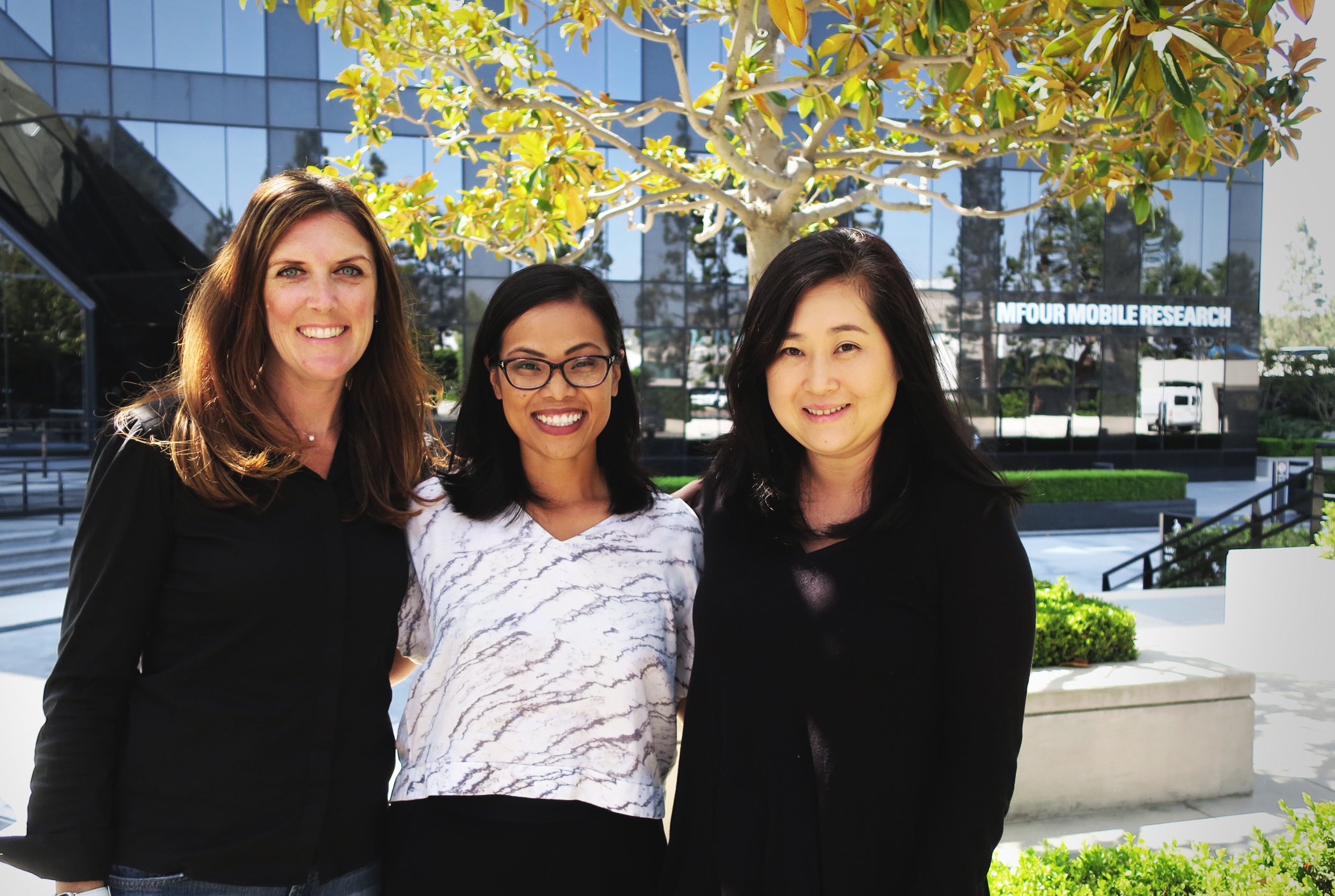
L-R: Allyson Wehn, Joan Martinez, Andrea Han

Successful market research delivers accurate, actionable numbers that reliably depict consumer reality, but success really depends on the human factor. At one end are the people who provide a window on reality by participating in research as respondents. At the other are the consumer insights professionals who have the expertise and passion to succeed at the meticulous, exacting work of creating studies that will obtain data that's pertinent and reliable, then interpret what it all means to give clients analysis and recommendations that will help them reach  smart business decisions.

It's only fitting, then, that three key members of MFour's insights team, Senior Research Consultants Andrea Han, Joan Martinez and Allyson Wehn, have a spotlight moment in the August issue of Quirk's, as part of its "Faces of Market Research" feature. You can check out their profile in the magazine itself by clicking here (see pg. 57). Or just read on.

Andrea Han, Joan Martinez and Allyson Wehn have come from widely diverse hometowns – Sao Paulo, Brazil, the village of Ordot on Guam, and Fullerton, CA., respectively -- to share a proud and important job title at MFour: Senior Research Consultant. They also share a passion for consumer insights that, among them, has produced 57 years’ experience in market research. As a team, they analyze data obtained from validated, first-party consumers who participate in research by using MFour’s pioneering mobile app, Surveys on the Go®. That includes drawing insights from location tracking data, photo captures, and real-time “video selfies” that respondents create and submit with their phones.

“My natural curiosity has driven my career,” says Martinez, who has been doing consumer research since her college days at California State University, Los Angeles. “What intrigues me about MFour is the technology. My thinking was, `this is the new frontier, where the world is going.’ I want to be part of that.”

For Wehn, “sometimes I feel like a detective, because clients are asking me to look for answers.” The University of California, Santa Barbara graduate also relishes the populist underpinnings of consumer research. When she’s out shopping, she often finds herself mentally recreating the research behind the merchandise. “When I see the real-life applications, more often than not those decisions come from consumers giving feedback on how they want things to be.”

Han, a graduate of the University of Southern California, says her career satisfaction is tied to her clients’ satisfaction. “They want to know, `what does this data mean to us?’ That’s what we’re here for. The real rewarding part for me is when clients look at the insights in the deck and say, `this is what we needed…and more.’”

You, too, can get what you need...and more. Get in touch and we'll talk about getting you started. Just click here.


Topics: mobile research, market research, consumer insights, data quality, data analysis

Case Study: Troubleshooting a Sports Drink's In-Store Displays

Posted by MFour on Aug 1, 2018 6:00:00 AM

Sports Drink blog 30July18

The Challenge:

Marketers of a sports drink brand were curious whether their beverage was being properly placed and displayed at a specific major retail chain's stores. Additionally, the beverage maker wanted to know if shoppers who bought its brand were satisfied with the selection of flavors and sizes?

The Solution:

MFour conducted a GPS geolocation study of the retail chain’s shoppers, intercepting them naturally as they entered a store and surveying them immediately on their smartphones via the mobile app Surveys on the Go®. Shoppers who said they had bought the client's sports drink from the retailer within the past 90 days qualified for the survey and were directed to find it. All 250 respondents also answered a photo question in the survey with their smartphone camera, showing the shelf display of the product and its competitors.

Key findings:

1. Confusion over where to look:

  • 34% of shoppers said they had a hard time finding the drink.
  • Shoppers named four different aisles where they had expected to find the drink.
  • Most looked first among bottled waters (39%) or sports drinks (48%).
  • Others initially checked in the juice or soda aisles.
  • 98% eventually did find the drink.

2. Dissatisfaction with display and product availability

  • 34% said they were dissatisfied with the display.
  • 36% said the product was not neatly arranged on the shelf.
  • 51% said they couldn’t find the flavor they wanted.
  • 53% couldn’t find the quantity-per-package they wanted.
  • 16% said the sports drink was not in stock.

3. Threat to in-store sales

  • 57% of respondents said they would be willing to buy the drink online.

Insights and recommendations:

  • Establish a single, consistent aisle location.
  • Display it with bottled waters or sports drinks, but not either-or.
  • Offer a single-bottle option, in addition to multi-bottle packages.
  • Provide more flavor variety and keep shelves well-stocked.
  • Improve visibility of the drink, which was often on the bottom shelf.

To learn how to build your own market research solutions like this and get results in hours, days, or just a few weeks, get in touch with us by clicking here.

Topics: location based survey, mobile surveys, surveys on the go, gps, case study

The Best Screener Qs Are The Ones You Don't Even Have To Ask

Posted by MFour on Jul 31, 2018 9:30:00 AM

Question Mark 2 blog 30July18 

Louis Armstrong, whose 117th birthday falls this week (Aug. 4), is one of the most recognizable and enduring personal brands in popular culture. But one of his most famous sayings seems to contradict the very concept of market research’s role in building brands.

“If you have to ask, you’ll never know,” the brilliant trumpeter (and singer of the hits “Hello, Dolly,” “When the Saints Go Marching In,” and “What a Wonderful World”) replied, when asked to define “swing,” the term for the freewheeling jazz rhythm he pioneered.

But now Satchmo’s saying is beginning to make more sense in consumer insights terms, thanks to Path-2-Purchase™ Platform. This transformative new visualization tool lets you obtain a wealth of data about a representative, first-party consumer panel, without even having to ask. The result is faster, far more precise segmentation of the people you most need to talk to, and, when you do start asking questions, a leaner, more efficient survey process.  

Path-2-Purchase™ lets you eliminate most of the screener questions that bog down your research and cost you time in filling quotas and fielding your questionnaires. Now respondents  don’t have to go away frustrated and alienated from the research process because they were screened out. That keeps  them very much alive as participants for all your future projects. Meanwhile, consumers who do qualify get right to the point because they only have to answer the truly substantive questions that focus on what you really need to know. Research becomes much faster. Engagement intensifies. Data quality attains new heights. And so does the level of assurance with which you can present your findings and recommendations to your clients or stakeholders.

Take a look and play with Path-2-Purchase™ by clicking here. You’ll get a quick understanding of its potential for segmenting, targeting, surveying, and mining historical data from the consumers you most need to know.

  • You’ll select among 2.3 million first-party validated consumers, based on their journeys across 12.5 million U.S. locations.
  • No need to ask where they’ve been and trust their recall.
  • You’ll also know them by more than 200 first-party demographic and psychographic profiling characteristics, enabling you to select validated, relevant consumers to interview without having to ask numerous screener questions.
  • When you are ready to ask, you can reach them at any time and place.
  • To acquire deep context for your survey data, simply append historical location, profile and survey data from our Consumer Knowledge Center.

So take a few moments to explore what a wonderful world it could be if you jump on board to select, track and gain unprecedented contextual understanding without even having to ask. Set up a live demo and conversation about how Path-2-Purchase™ can help you fulfill your projects’ specific needs faster and more efficiently than ever before, just by clicking here.

Meanwhile, Happy Birthday to Louis Armstrong, who is now at least half right about market research. Here’s something swinging from the man himself.


Topics: mobile surveys, market research, survey, Path-2-Purchase™ Platform, consumer insights, survey design

It's a War Out There: Consumer Insights and the Battle for QSR Pizza Market Share

Posted by MFour on Jul 27, 2018 7:00:00 AM

 Pizza Blog 26July18

From a business perspective, a key ingredient for success in the battle for market share in quick-serve pizza delivery and carryout is validated consumer insights from real pizza buyers.

The war for the pizza consumer’s wallet is extremely hard-fought, the latest evidence being Domino’s announcement that it aims to open 2,350 additional stores in the U.S. over the next ten years – a 42% increase from the 5,650 locations it already has. Now that’s an ambitious example of a business trying to increase its deliverables. Right now, however, Pizza Hut is in the lead, with 7,469 U.S. stores at the start of 2018.

Fast delivery is not the only thing QSR pizza brands must deliver. They need excellent counter service, too. Domino’s for example, realized 63% of its $26.5 billion in 2017 U.S. sales from carryout business, per its most recent annual report.

From a marketing and consumer insights perspective, Domino’s, Pizza Hut, and every other QSR pizza or fast-casual pizza chain has at least one thing in common: it’s easy to find out who’s going to each brand’s stores for carryout or dining in, and how much traffic each chain is getting, down to individual stores. You just have to know about MFour’s Path-2-Purchase™ Platform, which you can do by clicking right here.

Important consumer panel facts and mobile research capabilities include:

  • 2 million validated, demographically-profiled real consumers who have downloaded the Surveys On The Go® mobile research app.
  • Store-level accuracy with GPS location tech that tracks and validates each research participant’s store visits across 12.5 million U.S. retail and restaurant locations (including all stores of the top 1,000 retailers, with all the big pizza players represented).
  • Identify key consumer segments to understand the “who” behind those location visits – segment by age, sex, income or whatever else you need, with 250 demographic and ethnographic profiling characteristics.
  • Add the “where” of consumer behavior by observing real, first-party participants’ visits to store locations in a specific zip code, in a DMA, a state, or nationwide.
  • Understand the “when” and the “how often” by observing visit frequency (indicating who’s a brand loyalist, agnostic, or rejector), time of day, day of week, and dwell-time.
  • Crucially, get insights into the “why,” by surveying GeoValidated® consumers after they’ve left a store. Expect a 25% response rate within an hour, 50% within 24 hours.
  • Get competitive insights by identifying, tracking and surveying a rival’s customers.

There’s a lot more – for example, we can help you find and survey pizza delivery workers, too. And another Domino’s initiative, delivering to 200,000 outdoor locations nationwide, such as beaches and parks, can be observed and studied too, via custom geolocation research that captures visits to any place in the U.S. for which you know the latitude and longitude. You can set up a productive personal demo on how to find, reach out to and understand the real consumers most important to your specific research projects and objectives, just by clicking here.


Topics: geolocation, market research, Path-2-Purchase™ Platform, consumer insights, QSR, competitive insights

Were Advertising ROI Metrics Better in 2000 BC than They Are Today?

Posted by MFour on Jul 26, 2018 7:00:00 AM

 Ancient Pottery Blog 25July18

Trying to measure advertising ROI occupies the workdays (and perhaps some sleepless nights) of Chief Marketing Officers, brand managers and consumer insights specialists the world over. The problem is that advertising ROI as it’s commonly measured might as well stand for Really Only Inferences. In the absence of real data from real consumers, measurement quickly becomes supposition.

Things were so much better 4,000 years ago. That’s when the first marketers began branding products and measuring the impact on sales. And they had the benefit of using real data from real consumers to measure the return on their branding efforts.

According to scholarship published in the Journal of Macromarketing, if a friend invited you over to dinner during the Shang Dynasty in China (2000-1500 BC), chances are you’d be served from pottery marked with symbols unique to its maker, who was also its marketer. And if you admired your host’s serving bowls, the symbol on them would surely catch your eye and prompt you to ask who made them. And that would be the first step toward product awareness, intent to purchase, and, eventually, to a sale. The maker’s investment of time and effort in festooning bowls with branding symbols would have earned a nice return.

That ancient Chinese potter had a huge advantage over many 21st Century marketing, advertising and consumer insights professionals when it came to understanding ROI. The potter could engage each actual buyer in person, and understand exactly what motivated each purchase. 

Now the direct connection to feedback from actual consumers largely has vanished. In attempting to measure ROI for Out of Home advertising, for example, today’s marketing and insights professionals are forced to fall back on inferences from data that may be tangential or even irrelevant to the actual purchase.

For example, one common but flawed method for measuring ROI is to make estimates based on raw traffic counts. The assumption is that people who passed by a highway billboard or another form of OOH advertising were in fact aware of the sign, the brand and the product. And that the sign played a significant part in driving them to shop and buy. That’s a lot to assume.

Another method, more grounded in today’s technology, uses mobile geolocation to determine that a particular consumer’s smartphone (and therefore its owner) passed in view of a sign, and subsequently was geolocated at a store carrying the advertised product. Third-party data such as apps detected on that consumer’s smartphone also might enter the mix as another input for spitting out inferred ROI metrics. Still, what’s missing from that algorithmic equation is the reality obtainable only from known and validated consumers. 

Here’s what’s often assumed or inferred in today’s standard methods for estimating advertising ROI:

  • That an OOH ad helped cause a store visit, rather than merely correlating with it.
  • That knowing which apps a consumer has downloaded is sufficient for making accurate inferences about who that consumer is. For example, whether he or she is a he or a she, and belongs to a consumer segment the OOH campaign is meant to target.
  • That an upswing in sales of the advertised product during or just after the campaign is by itself a trustworthy indicator that the campaign was a key driver of the added revenue.
  • For example, a sunblock brand may fly off the shelves during an OOH campaign, but the real driver could be a heatwave, rather than the advertising.

So what should marketers and researchers do to recapture the advantages Chinese artisans of 2000 BC enjoyed when it came to getting real marketing and advertising ROI metrics from real people?

The answer begins with identifying and surveying real consumers who’ve had validated exposure to an OOH campaign. As for the rest, it will cost you a click to find out – so just click here.

Topics: market research, consumer insights, ad measurement, digital advertising, out of home advertising

MFour Introduces New Hires in Survey Operations and Sales

Posted by MFour on Jul 24, 2018 12:26:06 PM

 Nathan_Stacey_Ryan
L-R: Nathan Blush, Stacy Hua, Ryan Houseman

MFour Mobile Research has added three new team members in survey operations and sales.

Stacy Hua joins as a Senior Research Consultant, bringing more than 16 years of experience in market research to the job of overseeing clients’ projects from survey design through data collection, analysis and reporting. She has had her own research consultancy, and has worked with many Fortune 500 clients, including Disney, Mattel and Starbucks. She earned a Bachelor’s degree from California State University, Los Angeles, in Marketing Management, with an emphasis on Consumer Behavior. Stacy’s free-time interests include sailing, traveling with her family, and volunteer work at community food banks and shelters.

Nathan Blush joins as a Survey Programming & Design Expert responsible for creating effective questionnaires that will produce data and insights clients need to reach strong business decisions. He previously worked at MG Capital Group, organizing data and identifying prospective clients. Nathan holds a Bachelor’s degree in Psychology, with a minor in Computer Science, from California State University, Fullerton. He’s a connoisseur of craft beers and an avid player of the card game Magic: The Gathering.

Ryan Houseman arrives as a Solutions Development Representative, who will reach out to prospective clients, educating them about the data quality they’ll obtain and the specific advanced research capabilities they’ll activate by conducting research with an advanced mobile app that reaches consumers in their most natural environment for receiving and communicating information. Houseman holds a Bachelor’s degree in Finance from Northern Arizona University’s W.A. Franke College of Business. In his free time he enjoys hiking and beach-going with friends. 

Welcome to MFour, Nathan, Stacy and Ryan!

Topics: mobile research, hiring news

Amazon Prime Day Gave Bricks and Mortar Stores the Blues

Posted by MFour on Jul 19, 2018 9:28:17 AM

PTP_Claymockup-1 Amazon's fourth annual "Prime Day" was a day to forget for major bricks-and-mortar retailers, including Walmart.

How do we know? All it took was a quick glance at the store-visit data on MFour's Path-2-Purchase™ Platform. There, platform users instantly see customer journeys to all locations of more than 1,000 retailers nationwide.

The data showed that visits to Walmarts sank to 90-day lows on July 16-17 – coinciding with the 36-hour Prime Day promotion in which Amazon Prime members enjoy the biggest discounts of the year. Walmart's foot traffic for Monday, July 16, was 12% lower than its Monday average over the previous three months, excluding the busy Monday of the long Memorial Day weekend.

Whether it's Prime Day or any other day, Path-2-Purchase™ is an unprecedented tool for consumer insights professionals to understand the journeys and motivations of validated, first-party consumers. Its core functions enable researchers to target, track and survey the most relevant consumers, and to append their historical visitation data to provide deep context to any study. Validation is another core value, based on observed location journeys, unique mobile device identifiers, and precise consumer profiles.

Target: to check Prime Day's impact on bricks-and-mortar stores, we did simple targeting based on nationwide visits to a single retailer, Walmart. But Path-2-Purchase™ lets you visualize where consumers go and who they are in granular detail, segmenting by more than 250 demographic and psychographic points and by 12.5 million U.S. locations, including all outposts of the top 1,000 retailers.

Track: consumer-journey tracking options are exhaustive. For example, you can identify and track Walmart's habitual Monday visitors. Track them on the days of their Walmart visits, including where they go just before and after shopping at Walmart. Then see where they go during the same hours on all other days of the week.

Survey: identify loyal Walmart shoppers and ask them whether they used Prime Day to buy products they customarily would shop for at Walmart. Or identify consumers who have the Amazon app for specific insights into their Prime Day spending and experiences. 

Append: after taking a snapshot of your relevant consumers' latest actions and attitudes, contextualize by accessing data from a Consumer Knowledge Center that shows where the same research participants have gone in the past. 

Validate: No need to ask respondents whether they've shopped at a Walmart in the past 90 days, where, and how often. You already know all of that.

Like Amazon, Path-2-Purchase™ is a platform full of endless possibilities. It's comprehensive, convenient, and efficient. To access the platform for a self-guided demo, just click here. And to set up a live, one-on-one discussion about how Path-2-Purchase™ and MFour's other solutions can fill your projects' specific needs, just click here.


Topics: market research, Path-2-Purchase™ Platform, consumer insights, retail

The News About Mobile: the News Is Mobile

Posted by MFour on Jul 18, 2018 7:00:00 AM

Mobile News Blog 17July18

Here’s a definition for consumer insights professionals: “engagement” and “mobile engagement” are increasingly synonymous for most Americans, according to the latest findings announced by Pew Research Center.

The headlines on Pew’s report and its accompanying charts pretty much tell the story: 

  • “Use of mobile devices for news continues to grow, outpacing desktops and laptops”
  • “About six in ten now often get news on a mobile device”
  • “Younger adults more likely to get news on a mobile device.”

What it means for market research can be boiled down to five words: “Get mobile right, or else.” Especially if you want your research to be representative for minorities, Millennials, and the rising Gen Z.

Here are a few of the key findings:

  • 58% of U.S. adults say they often access news on mobile, compared to 39% on desktops and laptops.
  • “The share of Americans who often get news on a mobile device is nearly triple the 21% who did so in 2013.”
  • “At the same time, the portion of Americans who often get news on a desktop has remained relatively stable, with 39% of adults often getting news on a desktop or laptop computer, up just 4 percentage points from 2013.”
  • Americans ages 18 to 49 are especially attuned to news on mobile, with 71% in the 18-29 age bracket reporting that they often get news on mobile, compared to 32% who often access it via personal computers.
  • For ages 30 to 49, the technology for frequent news access is 67% mobile and 38% personal computer.
  • Nonwhites are twice as likely to access news on mobile as they are on personal computers, by a margin of 61% mobile to 31% PC.

To repeat, get mobile right, or else, Start by understanding the difference between in-app mobile research, and “mobile optimized” or “mobile web” research.

  • In-app is state-of-the-art, created solely to harness the full capabilities of smartphones. Mobile web research is a rearguard action by online survey providers who were slow to respond to smartphones' dominance and are trying to play catch-up.
  • In-app surveys are instantly embedded in respondents’ phones and can be taken in an interruption-free, offline space, driving full engagement and fast data. 
  • Mobile-web requires a constant connection to the internet, which can easily be interrupted, leaving respondents frustrated and driving up research costs in both time and money as participants drop out, possibly never to return.
  • An excellent mobile experience is the key to building the validated, first-party consumer panel that's now a must for reliable, representative data.
  • And, as Pew's findings show, an excellent mobile experience meets consumers where they naturally gather.
Can we agree that anyone who needs to engage the public for almost any reason needs to do it on mobile? The ayes have it. So let’s move on to a topic that does require some meticulous, innovative thinking: how to tap into advanced, in-app mobile research capabilities to solve your projects’ specific needs. To have that conversation in a quick, one-on-one demo, just get in touch by clicking here.

Topics: consumer insights, mobile web, mobile optimized, mobile app research

Subscribe to Email Updates

Recent Posts