

admin

Recent Posts

Nine things to know about app vs. email in survey notifications

Posted by admin on Jul 28, 2016 7:00:33 AM

Dead End Signs

Email can hurt you.

No, we’re not talking about certain Democratic party luminaries.  

We’re talking about market research, where email is the road to nowhere when it’s used to invite people to take surveys by clicking a link to an online questionnaire.

 Here are four facts documenting the dead-end dysfunctionality of email invitations:

  • Users of mobile devices open only about one third of the emails they receive.
  • Just one in 10 of those who open an email invitation will click to access the survey.
  • Consequently, only 3% of the potential mobile respondents approached by email are engaging with the survey. Even fewer will actually complete it.
  • A different study, by a division of IBM, shows the same 3% response or "click through" rate for emails received on all devices, not just mobile.

It doesn’t have to be that way. You can avoid driving down the dead-end street of email-enabled online research. Take the all-mobile, native app route instead, where app-based notifications for in-app survey-taking engages panelists at a far higher rate. 

Which leads us to the five other things to know in making the app vs. email comparison -- then acting accordingly.

  • More than one million active panelists in the U.S. have MFour’s Surveys on the Go® app on their smartphones or tablets.
  • They get their survey notifications with an in-app push, a capability made possible by a proprietary technology known as GeoNotification®.
  • The push arrives with a distinctive “ca-ching” – the sound of a cash register – which signals exactly what this is about: a chance to earn by taking a survey.
  • Consequently, 50% of those pushes get the reaction our clients want – engaged respondents embarking on their surveys, which 95% of them go on to complete. 
  • Result: App-based mobile notifications are nearly 17 times more effective than email alerts (50% vs. 3%).

Conclusion: We’ll leave it to you.

For more on how mobile app surveys compare to online surveys, check out this essay in GreenBook by Michael Smith, our Chief Product Officer & Director of Panel.

Topics: News, MFour Blog

USA Today & Forbes Cite Our App Tracker

Posted by admin on Jul 26, 2016 2:43:34 PM

MFour’s App Tracker shows the apps our panelists use, and lets you target surveys based on each Android-using member’s app profile.

These articles in USA Today and Forbes reported data we collected on motives, demographics and experiences of respondents who have the Pokemon Go app.

App Tracking can work for you in looking at lifestyles, behaviors and how a company’s app stacks up against its competitors’.

We’d love to brainstorm ways to make App Tracker generate data and insights you need. Please get in touch to chat and learn more.


Topics: MFour Mobile Research, News, pokemon, MFour Blog, mobile, app tracking

Sayonara, VCRs. Online Surveys Will Join You Soon.

Posted by admin on Jul 25, 2016 7:00:49 AM

Videocassette

Remember the sound of a video cassette recorder in full-on rewind or fast-forward mode? If not, count yourself lucky. That high-pitched rattling, shuddering noise was annoying on its own demerits – and the displeasure only deepened because it would go on for a clattering eternity while you waited for the clunky machine to take your tape back to the beginning, in case you wanted to watch it again.

At the time it was the best we had, and it got the job done.

The news, from CNN, that the last VCR manufacturer will stop production later this month got us thinking about how creative destruction is the essence of technology. DVD and DVR killed the VCR, and now video streaming is threatening the DVD.

There are obvious resonances in this for market research. We, too, are living through the creative destruction that’s needed to move us forward.

Few VCR users were deeply invested in their machines. They were only too happy to snap up a DVD player. But in MR, the investment in yesterday’s technology – the online survey -- is deeply embedded. There’s still reluctance to take the next step forward to superior, all-mobile survey technology.

The analogy can only extend so far: quaint as they will be, the last VCRs to ship out the door of Japan’s Funai Electric will get the job done for whoever still has videocassettes to play. The same can’t be said about online surveys. That method is broken – as GreenBook’s most recent GRIT report about the state of market research made plain while sounding a loud, clear call for innovation. Panel quality is disintegrating – and data quality and efficiency are disintegrating along with it. The potential panelists are looking at their smartphones instead of computer screens. That's where they prefer to take in their world, and respond to it -- including taking surveys. 

Once you recognize the problem, the solution speaks for itself: find a way to make surveys work on smartphones.

Some say there is no good way – which, if true, means market research will wither and die. But in MFour’s experience – and that of its million-member all-mobile panel and the clients who benefit from the data they provide – life has just begun. The state of the art in mobile delivers so much more than online research ever could – GPS-enabled geolocation, for starters.

Soon there will be no choice between online and mobile – just as there’s no longer a choice between the VCR and its much-superior successors. Online’s destruction isn’t coming – it’s at hand. And that’s the most creative thing that could happen to market research.

See below for more information – including explanations why some supposedly mobile methods are badly compromised, rightly-distrusted, and mustn't be allowed to define what properly-designed all-mobile research can achieve. MFour executives recently have contributed these three essays to leading market research publications. We hope you'll find them illuminating. 

Mobile has advanced beyond the online survey approach

GRIT Says Panel Woes Are Jeopardizing MR’s Future. There’s An Answer.

The World Has Moved to Mobile. Will Market Research Ever Get in Step?


Topics: Uncategorized

Reptile Leapfrogs Bunny-eared Pokemon in a Survey Recount

Posted by admin on Jul 22, 2016 11:33:43 AM

The reptile demanded a recount, and the reptile won.

As part of our recent survey of 1,000 Pokemon Go players, we asked respondents to pick their favorite Pokemon creature.

We reported that the winner was Eevee, a cute cross between a rabbit and a fox, with Charmander, a gap-toothed, dinosaur-like fella with a flaming tail, placing second.

On further examination of the data, Charmander edged Eevee by 16 votes, picked by 12.1 percent of the panel to Eevee’s 10.5 percent. Squirtle the two-legged turtle was third, just 4 votes behind Eevee. The famous Pickachu got 9.4 percent for fourth place.

The main issue was the many variant spellings our respondents gave to the write-in question, some of which your faithful blogger failed to tally as votes for Charmander. So any way you want to spell it, Charmander is the champ.

Topics: News, MFour Blog

Mobile or Online? YouTube Becomes a Forum for the Great Market Research Debate

Posted by admin on Jul 21, 2016 11:12:23 AM

https://www.youtube.com/watch?v=E0CKozKI5Ho

YouTube has become a forum for the important conversation about whether mobile surveys are really the answer to crucial problems facing market research, thanks to Bob Lederer of Research Business Daily Report.

In the daily video report he hosts on YouTube, Lederer pithily framed the issue by laying out the point-counterpoint discussion that has unfolded recently in Quirk’s Marketing Research Review (the segment begins at the video's 1:43 mark).

The debate began, as Lederer noted, with Quirk’s publication of a study of Australian survey-takers that found widespread dissatisfaction with questionnaires fielded to smartphones. The study concluded that traditional online surveys taken on personal computers remained the best approach.

Lederer continued by summarizing an essay that Chris St. Hilaire, MFour’s cofounder and CEO, wrote for Quirk’s in response to the findings from Down Under. Chris urged researchers to understand that mobile survey methods are not all created equal. Ones that remain married to online methods by requiring a constant connection to the internet are doomed to the user-unfriendliness that turned off the Australian respondents. Only state-of-the-art mobile capabilities can work.

As Lederer noted, Chris emphasized that the key to great mobile research is embedding surveys instantly into respondents’ phones with the “native app” technology epitomized by MFour’s innovative Surveys on the Go®. Among other things, it eliminates the need for an uninterrupted internet connection -- the Achilles heel of quasi-mobile methods that literally hung up the Australian respondents and left them bemoaning how frustrating it was to take surveys on their smartphones.

Given the right mobile technology, researchers can harness smartphones’ unique capabilities such as multimedia and GPS-enabled geolocation to acquire data that’s faster, more nuanced and more accurate than ever before. With MFour, they can tap into a million-member all-mobile panel with proven demographic diversity and fast-response engagement.

Many thanks to Bob Lederer for putting a spotlight on this crucial issue and providing a balanced summary. We’re especially grateful that he addressed what he called the “huge representativeness problem” of how to reach Millennials, Hispanics and African Americans – the smartphone-focused, desktop- and laptop-abandoning  groups that elude surveys that remain wedded to online research methods.

We’re confident that the more MR professionals become aware that mobile research is not a commodity but a rare and demanding technological art, the more they’ll realize that turning to true masters of the mobile art will guide them past the perils of dwindling, unrepresentative panels and deliver them to new heights that the most advanced all-mobile methods can reach.

There’s mobile junk and mobile treasure – and the more this discussion continues in alert, consistently relevant and future-focused forums such as the Research Business Daily Report, the sooner our industry will get to know the difference and make the right choices.

Topics: News, MFour Blog

MFour Answers Greenbook's Call to Solve Panel Crisis

Posted by admin on Jul 19, 2016 9:46:39 AM

Greenbook GRIT_2016_SPRINGThe latest Greenbook Research Industry Trends Report (GRIT) sounds a loud and clear alarm about the eroding quality of the survey panels that are the lifeblood of market research.


Check out this response by Michael Smith, MFour's Chief Product Officer and Director of Panel, which continues the conversation by detailing  the difference between advanced mobile research  that recruits and cultivates a large panel of smartphone users, and deficient imitations that masquerade as mobile while continuing to rely on outmoded online survey panels.

Greenbook's call to action could be a game-changer, and Smith's article details how MFour already has a game-changing answer for market researchers who are ready to respond to the panel crisis by trying true-mobile technology and a true-mobile panel.


Topics: News, MFour Blog

Going to MRMW? MFour Will Keep You Busy Doing What You Do Best

Posted by admin on Jul 15, 2016 8:00:39 AM

MFour is bringing the very essence of market research to the MRMW conference in Fort Worth on Monday and Tuesday – the essence of market research being, well, doing market research.

Andrew FangAndreas HoeltingOur two-man delegation of Andrew Fang, Vice President of Sales, (far left) and Andreas Hoelting, Product Manager of MFourDIY, will give a different kind of interactive presentation in a conference workshop Tuesday from 9 a.m. to 10:30 a.m.


Their presentation on MFourDIY will focus on learning by doing as attendees get the full story about the nation’s only all-mobile, do-it-yourself survey-building tool.

The core topic is “Creating A Location-Based Survey in Under 30 Minutes.” After showing you how to use the advanced Geo-location feature that allows you to field surveys to consumers while they’re shopping or just after they’ve left a store, Andreas will help you go to work – using the platform you’ve just seen described to field an actual survey of your own.

“We’ll tell them how we run surveys that get 1,000 completes in a day, and how we can repeat that with any retailer,” Andreas said. “Then I’ll lead them through creating their very own survey. They can program it however they want, then field the survey and  watch the data come in in real time." 

The only investment conferees need to make to get an actual research project done is the 90 minutes they’ll spend in the workshop. They’ll open their MFourDIY account, which is always free, not just to conference-goers, but to all visitors to the DIY website.

"People will go through the session, and the takeaway will be that `in one sitting I now have the most powerful survey tool in my hand," Andrew said. 

Apart from the workshop, Andrew and Andreas will be manning MFour’s exhibit throughout the conference on Monday and Tuesday. The concept at our booth is also interactive. “We’ll have two computers set up for visitors to play around with the DIY tool and see how easy it is to build a survey,” Andreas said.

Andrew and Andreas will be happy to go deeper with you at the conference by setting up a demo of DIY and MFour’s other all-mobile research capabilities.

So check us out -- not just to chat, but to do what you do best.


Topics: News, MFour Blog

Survey Gives First Systematic Study of Pokemon Go Players

Posted by admin on Jul 14, 2016 5:06:24 PM
Pokemon Survey 15

Here are seven insights from the first systematic survey of Pokemon Go players in the United States:

  • The augmented-reality game is making America a friendlier place.
  • It’s carving out common ground between the races and the sexes.
  • It’s giving couch potatoes a welcome reason to go outdoors.
  • It overwhelmingly appeals to the Millennials who grew up on Pokemon.
  • It’s a time-eating addiction for some, but not most.
  • People love that it’s free; just a few are spending for extra features.
  • It isn’t going away any time soon. 

The Numbers

Promotes Connectedness:

  • 74% of respondents said they prefer playing with others over playing alone – even though nearly as many – 70% -- consider themselves introverts rather than extroverts.
  • 52% said they’ve made new friends or acquaintances playing Pokemon Go.
  • 54% said they started playing partly because friends were playing.

Minorities Are Jumping on Board

34% of all respondents said they never had played a Pokemon game before. But even more African Americans and Hispanics/Latinos are embracing the franchise for the first time because of the new app. 

  • 49% of African Americans said Pokemon Go is their first Pokemon game.
  • 40% of Hispanics/Latinos said the new app was their introduction to Pokemon.
  • 32% of Caucasians said they are newcomers to Pokemon.
  • 31% of Asians said the same.

Women, Too

  • 47% of females said they’d never played Pokemon before getting the new app.
  • 21% of males said the same thing.
  • 50% of respondents were male, 50% were female.

It’s a Millennial Thing

  • 83% of respondents were ages 18 to 34.
  • 14% were 35 and older.
  • 2% were 13 to 15 years old (the youngest bracket surveyed).

Why Play? Friends, Fresh Air, Familiarity – and it’s Free

  • 58% got the app “because I like the game encouraging me to go outside.”
  • 52% said, “because it’s free.”
  • 50% said, “because my friends started playing it.”
  • 45% said, “nostalgia.”

(respondents could pick among 7 possible reasons, choosing all that applied to them)

Time-Consuming? Depends Who You Ask

  • 50% said they spend no more than 60 minutes a day with the app.
  • 20% said they spend less than 30 minutes a day.
  • 28% said they spend one to two hours daily.
  • 22% spend more than two hours a day.

Not Big Spenders

  • 74% said they’ve only played for free, spending nothing.
  • 26% said they’ve spent on extra Pokemon Go features.
  • 90% of the spenders said they’ve spent $20 or less.
  • 62% of the spenders said they’ve spent $10 or less.
  • 2% said they’ve spent more than $100.

Looks Like It’s Here to Stay

  • 71% said they think Pokemon Go will be a “long-term success.”
  • 29% said the game will be “just a passing phase.”
  • 69% said they expect to play for “a long time.”
  • 12% said they plan to play “for the rest of my life.”
  • 16% said “not much longer.”
  • 2% said “I’ve already stopped.”

Pikachu Has Competition

  • 13.6% said their favorite Pokemon Go character is Eevee.
  • 9.2% picked Charmander.
  • 8.6% picked Squirtle.
  • 7.8% picked Pikachu, the most widely-known Pokemon.
  • 2.6% picked Bulbasaur.
  • Six other Pokemon were favored by 1% to 2% of players.

 Strange But True

With reports of Pokemon Go players landing in some strange or even dangerous situations, we asked respondents, “what is the craziest thing you or someone you know has done to catch a Pokemon?” Answers included:

  • “Ran into traffic”
  • “Walked into a tree”
  • “Walked into a pond”
  • “Saw someone wade into a lake”
  • “Kayaked to an island”
  • “Climbed an electrical tower”
  • “Girl walked into a men’s room”
  • “Went to the beach at 3 a.m.”
  • “Wandered around the apartment building in pjs”
  • “Woke up at 4 a.m. and walked for five hours, until I had to be picked up”

Methodology

The survey was carried out with MFour Mobile Research’s Surveys on the Go® app, combined with its App Tracker capability, which allows MFour to monitor which apps the Android users among its panel of more than a million survey respondents have downloaded.  Data reflects the geographic and demographic population distribution of the U.S. The survey was conducted July 13, fielded to the mobile devices of Android users who’ve downloaded Pokemon Go. Results reflect data from 1,000 completed and validated responses. Respondent demographics: 50% male, 50% female; 65.6% Caucasian; 13.4% Hispanic-Latino; 7.6% African American; 6.8% Asian; 1.6% Native American-Alaskan; 0.9% Middle Eastern; 0.6% Pacific Islander; 3.5% Other.

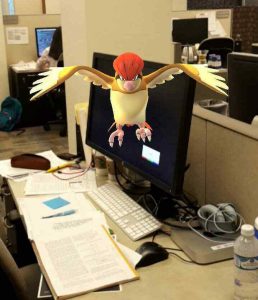
Photo: one of many received by MFour from survey-takers in our Pokemon Go study.


Topics: MFour Blog

MFour Adds A Software Engineer to its Fast-Growing Team

Posted by admin on Jul 14, 2016 9:45:19 AM

MFour Mobile Research has added Cristian Ghiurea to its Labs & Engineering department as a Software Engineer, the latest in a series of new hires in MFour’s rapid drive for growth and business expansion.

Cristian joins the team that develops and advances MFour’s systems for survey-based market research conducted strictly via mobile devices.

Cristian comes to MFour after working as senior software engineer for Two Nil, a media-marketing company, where he built proprietary media-buying platforms and a big-data warehouse.

MFour is doubling its staff to more than 100 by early 2017, with new hires across all departments.


Topics: News, MFour Blog

Pokemon Go Passes Twitter as the Nation's Top App

Posted by admin on Jul 13, 2016 1:22:58 PM


pokemon

MFour Mobile Research has quantified the extent of the Pokemon Go craze: fully a third of U.S. Android smartphone users 13 and over have downloaded the augmented reality game that's become the talk of the nation, surpassing Twitter as the most popular current mobile app.

MFour uses its App Tracker technology to identify all the apps downloaded by Android users among its million-member, all-mobile active panel. As of Tuesday, 33% of them were using Pokemon Go, exceeding the 30% who have Twitter.

Congratulations to all Pokemon Go enthusiasts -- we knew you were part of something big, and now we know just how big!

Topics: News, MFour Blog

Subscribe to Email Updates

Recent Posts