
When it comes to MFour's signature Surveys on the Go® smartphone app, an enjoyable user experience is always uppermost in our mind.
So naturally we were struck by a fascinating article in the New Yorker about the original user experience for survey-takers. It shows how a form of survey was in circulation long before the advent of formal market-research questionnaires in the early 1900s – and that it was done just for fun, as a kind of parlor game.
Some very famous names played along during the 1800s, providing intriguing information about themselves.
New Yorker contributor Evan Kindley traces how people began passing around “confession albums” to friends and acquaintances, containing a series of questions about themselves and their views on life:
A fashionable parlor game originating among the Victorian literate classes, the “confession album”... presented a formulaic set of queries on each page—“What is your distinguishing characteristic,” for instance, or “What virtue do you most esteem?” The album’s owner would pass the volume around among her friends, collecting their comments as a kind of souvenir…”

Among those who obliged, Kindley writes, were Karl Marx, Impressionist painter Paul Cezanne, Oscar Wilde (author of “The Importance of Being Earnest” and “The Picture of Dorian Gray”) and Sir Arthur Conan Doyle, the creator of Sherlock Holmes.
Kindley focuses particularly on a questionnaire filled out in 1886 by a 14-year-old Marcel Proust, who would grow up to be a leading pioneer of literary modernism with “In Search of Lost Time,” his epic series of seven novels published between 1913 and 1927.
“The Proust Questionnaire,” as it came to be known, resurfaced publicly in 1924, by which time Proust was two years dead, and very famous. His answers as a teenager were thought to foreshadow attitudes and ideas that were the germ of his great literary career and its themes.
Kindley, a Los Angeles writer who will delve further into the phenomenon in an upcoming book called “Questionnaire,” notes that the Proust Questionnaire’s renown gave rise to the common pop culture practice of publishing questionnaires filled out by famous people, including Vanity Fair magazine’s ongoing “Proust Questionnaire” feature.
Of course, the questionnaires that market researchers create and analyze are no parlor game. They’re finely-honed tools for collecting consumer data to inform business decisions that can affect a company’s fortunes and reverberate throughout the economy.
Still, we enjoy the thought that our enterprise is at least partly rooted in something done strictly for the fun of it. In the case of Proust, the “parlor game” produced answers that generated what we in market research always strive for: useful insights.
But fun still counts. By making surveys easy and enjoyable (as reflected in its consistent 4.5-star rating out of 5 in the App Store and Google Play), Surveys on the Go® keeps MFour's million-member all-mobile active panel engaged. From that springs our ability to serve our clients' need for fast, validated and demographically representative data.

 Senior Solutions Executives Alex Colao (far left) and Scott Worthge will be at OmniShopper to talk about the all-encompassing reality of today’s commerce – that we’re living in a Smartphone Empire. Users’ mobile devices are taking them where they want to go electronically, and shaping their shopping behavior along with everything else.
 We’ve been noting regularly that the market research industry faces a potentially disastrous problem because it no longer can trust
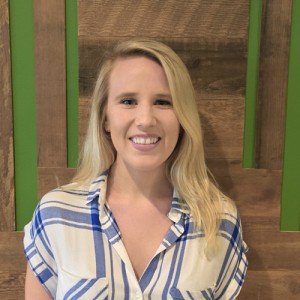

 Research, Inc. has added two new software engineers to its Labs & Engineering department in a move that will increase automation and make delivery of data to clients even faster and more efficient.
 Aaron turned his passion for soccer – he was a midfielder at Azusa Pacific University – into an entrepreneurial endeavor by founding GOALSHOT, a designer of soccer-training equipment that’s licensed internationally. Now he’ll help MFour score new clients and realize its goal of defining and dominating mobile research. Aaron earned two degrees at Azusa Pacific, a bachelor’s in political science and a master’s in education.
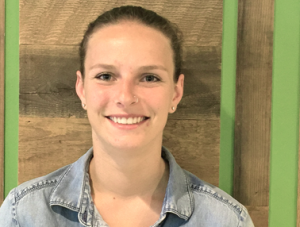 Lily has a sports industry background, too – she’s worked in marketing for the International Surfing Assn., and also for IMAX Corporation in Santa Monica. She is finishing her coursework as a senior in marketing and international business at the University of San Diego.