
admin

Recent Posts

Mobile Surveys Won’t Dumb Down Your Research. That’s Just a Myth.

Posted by admin on Apr 5, 2017 10:02:51 AM


mobilemyth3_900x300


We’ve all heard that all-purpose catchphrase, “keep it simple, stupid” – and the human craving for simplicity and clarity naturally makes us nod in agreement.


One of the prevailing myths about mobile research is that keeping it simple is all it can do. That is, mobile is fine for a few easy questions that respondents can answer quickly, but not suited to more complex projects. But the truth is that true, technologically advanced mobile research can do it all. Here are a couple of mistaken assumptions:

  • When using mobile, you must drastically pare down grid questions to avoid squeezing in more than a smartphone screen can comfortably accommodate.
  • Online, rather than mobile, is the only approach that can work for conjoint research projects that must capture insights into many different facets of consumer perceptions of a brand, product or service.

But whenever a myth presents itself, it’s important to look at the evidence – in this case by having a sophisticated conversation about the sophisticated solutions true, advanced mobile methodology puts in your hands. A mobile two-tap matrix lets respondents easily comprehend and successfully complete complex questions with many variables and answer choices. Two-tap design lets mobile panelists toggle instantly between questions and answer choices. And when your survey calls for nuanced design features such as logic and branching, the right advanced mobile approach gives you all the design complexity you need.


Whether your needs are simple or complex, you deserve to have a healthy, myth-free conversation about what true, advanced mobile research really can do. Just contact us at sales@mfour.com and tell us when you’d like to talk.


Topics: MFour Blog

Can You Afford to Believe the “Mobile Optimized” Myth?

Posted by admin on Apr 4, 2017 9:33:36 AM


mobilemyth2_900x300


Market research exists to dispel myths and misconceptions about consumer behavior and replace them with validated facts. So it’s not only important, but extremely appropriate, to dispel the myth that “mobile optimized” research represents a step forward for researchers who need to respond effectively to the smartphone revolution.


The “mobile optimized” myth is based on the notion that mobile research is merely a one-size-fits-all commodity, rather than a highly-specialized process that requires advanced technology engineered specifically for surveys fielded to phones and tablets. Here’s the distinction that busts the myth: commodity-grade “mobile optimized” surveys shoehorn the same old online methodology into a mobile interface. True advanced-mobile research, however, takes place in a mobile app. “Mobile optimized” offers nothing technologically intrinsic to smartphones – it just uses them as generic devices to connect users to online surveys.


The term you need to understand for using mobile technology to collect consumer data is “native app” – an app that turns a survey into an intrinsic feature of the smartphone, harnessing the vast capabilities that have made smartphones today’s definitive information and communications technology. Let’s consider the factual basis for evaluating the myth of “mobile optimization.”

  • 78% of American adults own smartphones, including 92% of Millennials (Pew Research Center).
  • Millennials average 3.5 to 4 hours per day using mobile apps. The average for all U.S. adults is nearly 2.5 hours a day. (comScore)
  • The comScore study concludes that “smartphone apps…already account for the vast majority of total mobile…time spent and are gaining share among every segment of the market.”

How does this impact mobile research? Because they require an Internet connection, “mobile optimized” online surveys take time to load in – and smartphone users won’t tolerate waits of more than two seconds. Native in-app surveys load instantly and don’t require a connection to the Internet. There’s no risk of a dropped Internet connection that’s likely to frustrate and disengage panelists, reducing your chances for fast, high-quality completes. 


So don’t be tempted to mistake “mobile optimized” for true, technologically advanced mobile. And don’t fall for the myth that all mobile research is created equal. There are other myths about mobile to explode. So please check out this week’s MFour blog for more about the myths you’ve probably heard, weighed against what you really need to know. And for full details about mobile research opportunities and solutions, please get in touch at sales@mfour.com


Topics: MFour Blog

Are Smartphone Screens Too Small for Market Research?

Posted by admin on Apr 3, 2017 9:51:16 AM


mobilemyth1_900x300


By now you’ve seen the statistics that show you’re living on a smartphone-saturated planet. And since you’re a market research professional, you’re putting some serious thought into what that portends for your livelihood. Is mobile data good data? Is it consistently reliable? Does it measure up to the online survey data you’ve built your career on? These are fair questions that deserve clear answers. In that spirit, here’s the first of several communications aimed at unraveling myths that have grown up around mobile. So is the screen too small?


It is small – no denying that. But what are you going to believe – the myth or your own hands and eyes? Chances are that you are among the 78% of adult Americans who now own a smartphone. You’re relying on it to avoid traffic on your daily commute. You’re depending on it to send important text messages. You’re using it to pick the best movie to take your kids to on Saturday—and you’ll use it to capture the beaming looks on their faces as they walk out of the theater floating on a magic carpet of delight. Then you’ll use it to send the pictures to their grandparents.


But take a survey? Maybe even a viewer-evaluation survey about that wonderful family film, sent to you by a researcher who GeoLocated you at the moment you’ve left the theater? Nah. The screen’s too small. If you believe that, then you’re admitting that we all have lyin’ eyes, because our eyes are on our smartphone screens. The myth that desktops and laptops are superior for research is a myth spun by sellers of last-generation online surveys and online panels. But what do your eyes tell you? And what do survey-taking consumers’ eyes tell them?


It’s only fitting that the best empirical evidence you can bring to bear on the myth of screen size is to find people who take consumer surveys on mobile and ask them. They’re telling you loud and clear with unsolicited public ratings and comments about Surveys on the Go® -- MFour’s native mobile research app. Week after week, month after month, year after year, it has enjoyed ratings of more than 4 stars out of 5 at the App Store and Google Play. Look it up and you’ll see endless commentary about how easy it is to take surveys when the platform is a native app and the device is a smartphone. It’s not about size. It’s about the experience—and MFour makes that experience flawless so you can get big insights.  


Columbus gambled that the earth was not flat. When it comes to mobile research, the biggest gamble is to remain in your safe, familiar harbor – until you realize that the tides have changed and standing still is not safe at all. To learn how to cut through the myth of the small screen, just contact sales@mfour.com.

Topics: MFour Blog

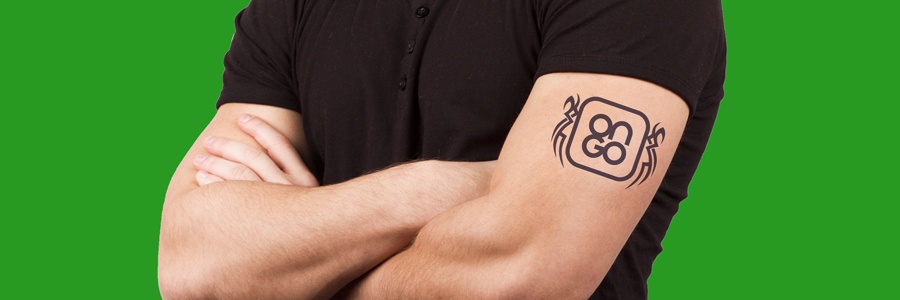
10,000 Mobile Panelists Get Surveys On the Go® Tattoos

Posted by admin on Mar 31, 2017 12:43:34 PM


aprilfoolsday_tattoo_900x300


As you’ve noticed, tattoos are everywhere, and MFour set out to survey members of the nation’s only all-mobile panel about tattoo consumption. Ink-credibly, we were unable to shut the survey down after the planned 6-hour fielding period. Talking about tattoos – theirs and others’ – was so engaging for respondents among the million-plus active panel members who use MFour’s Surveys on the Go® research app, that people were throwing down their smartphones in anger when they discovered the survey was already filled.


Outraged comments started pouring onto the Surveys on the Go® review pages at the App Store and Google Play. How dare we ask friends and relatives about tattoos, and refuse them the right to share their own crucial opinions on the 21st century’s most widespread form of truly committed personal expression?


We love our panelists. We take them seriously. So we reopened the study – with unlimited completes. Kudos to our Labs & Engineering team, for ingeniously installing instant emergency updates to our app and servers to keep the Surveys On The Go® system from crashing amid a flood of real time image and video responses capturing our survey-takers’ proudly-worn ink.


Among the hearts, dragons, risqué naughty bits, and heartfelt inked-in slogans, mottoes, and declarations of eternal love, we were shocked to see the Surveys On The Go® “OnGo” logo cropping up repeatedly – on arms, legs, backs, bellies, and even the occasional tush. Extending the survey from six hours to six days had so gratified our tattoo-loving panelists that a full 1% of them returned our love by rushing out to get permanent body ink.


MFour is truly humbled. And inspired.


CEO Chris St. Hilaire hit upon the most appropriate way to express his gratitude: “`Be heard, get paid’ is the Surveys On The Go® slogan – and today I’m announcing a new payment option for our panelists. Cash credits at tattoo parlors nationwide!”


“We’ll be shelling out a bundle,” the CEO added, “because we’re turning this into a tattoo tracker that’s never gonna end.”


Happy April Fools’ Day to one and all!


For a sampling of demographically representative tattoos we think we would have collected had we actually undertaken this study, just click here. And feel free to add them to your own personal collection on your next visit to your favorite tattoo artist.

Topics: MFour Blog

Data Scientist and Software Experts Join MFour as Growth Surge Continues

Posted by admin on Mar 30, 2017 9:21:09 AM


Welcome


MFour announces the hiring of veteran data expert Muhammad Amer as Director of Data Science, along with Mike Erickson and Michael Victory Trieu as Software Engineers.


Amer will play a leadership role in identifying, obtaining, and delivering the consistent, high quality data clients require to drive clear consumer insights and smart business decisions. Before joining MFour’s rapidly growing team, he was Vice President of Data Science for CJ Affiliate and Director of Data Science at YP. The father of three holds a Ph. D. in Computer Science from the University of Southern California. After spending his work days training a keen scientific eye on data-targeting opportunities and challenges, Amer enjoys training it on bullseyes and the occasional deer as an avid competitive archer and recreational bow hunter.


Mike Erickson will be a team leader in the Labs & Engineering department, driving continued advancements for the Surveys on the Go® research app and MFourDIY® – the nation’s only all-mobile DIY survey-building platform. He brings more than 20 years’ experience in software development and team management, including the founding of his own development and consulting company, Automated Solutions Group. One of Mike’s outside passions is coaching youth sports.


Michael Trieu will be involved in all aspects of software development for MFour’s app-based mobile research solutions. He arrives with experience in building and maintaining custom web applications for OneScreen Digital Media, Turn-key Systems and FortuneBuilders Inc. Michael earned a Bachelor’s degree in Information and Computer Science from the University of California, Irvine.


Welcome aboard, Amer, Mike, and Michael!

Topics: MFour Blog

Survey: 63% of Americans Plan to Be Pranksters on April Fools’ Day

Posted by admin on Mar 29, 2017 9:00:21 AM


aprilfoolsday3_900x300


No one really knows how April Fools’ Day got started, but the first all-mobile survey exploring how Americans plan to observe it found that 63% of us are ready to pull pranks, play tricks, and tell fibs. If it’s true that knowledge is power, perhaps some of the information we collected from 300 respondents ages 17 and older will help you form a game plan for fending off the pranks of others, or for perpetrating your own.

  • 38.1% of respondents who plan to play pranks said they will falsely announce a pregnancy, wedding engagement, or other major life event. Men and women were equally likely to say they’re plotting this sort of fib. “Spread fake news” was another popular falsehood – planned by 37.6%.
  • Beware of people offering you food, especially if they’re women. 27% of respondents said they planned to trick victims into eating something that doesn’t taste the way it should, with 33.7% of women and 20.6% of men intending to weaponize edibles for an April Fools gag.
  • Gird yourself against possible close encounters with creepy-crawlies. 33.9% of respondents planning pranks said they’d be deploying toy spiders, rats, snakes, etc., to get a rise out of their victims. Men stated a greater preference than women for fake vermin pranks, 37% to 29.3%.
  • Whoopie cushions, handshake buzzers, and similar gag items haven’t gone out of fashion. 28% of our prank-intending respondents expect to embarrass victims with noisemaking devices.
  • Creating chaos out of order has its fans: 19.6% of pranksters said they’ll re-organize someone’s office or cubicle without permission. 15.9% said they’ll cover pictures, screens and other surfaces people usually expect to be left alone.
  • 35% of male pranksters and just 13% of women said they intend to play the “Circle Game” – Google it if you don’t know what it is, but it’s one of those little competitions that end with the loser having to tolerate a punch in the arm.
  • “The safety of your own home” loses some of its meaning on April Fools’ Day. 79.4% of respondents planning pranks said they’d be executing them at home, compared to 39.7% at work. 54% said they plan to pull pranks while they’re with friends.
  • Most April Foolers want to be eyewitnesses to their own mischief rather than relying on a communications device. 29.6% said they’d try to prank people by text message, 22.2% by social media, and 16.9% by telephone call.
  • Friends (56.6%) and significant others (49.2%) are the most likely April Fools targets, trailed by parents (33.9%), siblings (32.8%), children (28%), and colleagues (21.2%). Only 3.2% of respondents who plan to pull pranks said they’ll be targeting someone they consider their nemesis. Women are significantly more likely than men to target a significant other (57.7% to 41.2%), while men have fewer qualms than women about April Fooling a friend (63.9% to 48.9%).

By and large, all this trickery, fibbing, and pranking is harmless. 58.7% of respondents said they’d never suffered any “bad consequences” from being targeted on April Fools’ Day, and 54.7% said they’d never experienced any bad consequences from perpetrating a trick. 58% of respondents said that they typically laugh when they’ve been April Fooled; very few reported ever becoming angry (5.3%) or brought to tears (2.0%). 27.3% said they retaliate by playing a prank on whoever pranked them.


Perhaps April Fools’ Day persists because it seldom results in real trauma. 6.0% of respondents said they’d suffered physical injury from being on the receiving end of a prank, and 8.0% said a relationship or friendship had been damaged because of what a prankster had done to them. Perpetrators of pranks reported similar results. 8.0% said they’d suffered a physical injury from carrying out a prank, and 7.0% reported that pranks they’d played had done real damage to a relationship or friendship. We also asked respondents to share memorable pranks they’d done or had done to them.

  • The most ambitious: “I duct-taped all my friend’s furniture to his ceiling.”
  • The liveliest: “Someone loaded my office with rabbits.”
  • Some underscored the hazards of snacking on April Fools’ Day: Green food coloring in cereal bowls, vinegar in popsicles, mustard masquerading as icing, red hot peppers in whatever.
  • The oddest: Replacing all the faces in framed family photos with a photo-shopped image of the distinctly non-glamorous actor, Wallace Shawn.
  • And one that was way, way, way off base: “I came back from a doctor’s appointment and explained I had cancer and four months to live. My boyfriend started crying, and I couldn’t hold back the laughter.”

Thanks, we’ll take the bunnies. Here’s wishing everyone a fun, trauma-free April Fools’ Day!


Topics: MFour Blog

25% of Americans Willing to Play April Fool Pranks at Work

Posted by admin on Mar 28, 2017 9:18:51 AM


aprilfoolsday2_900x300


Business means business, fooling around means fooling around, but on April Fools Day, one out of four Americans are willing to take their shenanigans to work. That’s one of the business-related takeaways from a survey of America’s only all-mobile market research panel. We collected responses from 300 panelists 17 and older about how they mark the annual day in which we all get license (well, more license than usual) to play pranks and tell fibs. Here’s part of what they told us:

  • 69% of respondents said they typically indulge in April Fools foolery
  •  25% said they carry their hijinks into the workplace
  • 29.3% of men report they’ll be April Fooling in the workplace; for women, it was 20.7%.
  • 36.3% of Millennials intend to play workplace April Fools pranks
  • Among Gen Xers, 23.4% said they’ll be pranking at work

21.8% of those who plan to play pranks said they’ll target colleagues, but colleagues were second only to parents (19.8%) as the people least likely to be pranked. Friends (53%) and significant others (46%) have the most reason to be on guard against trickery.


Hispanics were the ethnic group that reported the most enthusiasm for April Fools Day pranks – 76.7% said they plan to participate, compared to 61% of Caucasians and 60% of African Americans. But Hispanics were slightly below the national average when it came to taking the festivities into the workplace – 23.3% intend pranks there, as do 26.2% of Caucasians and 20% of African Americans.


The negative consequences tricksters can suffer when they go too far or prank the wrong person indicate a sense of propriety, or at least a sense of limits, when it comes to the workplace. 45.3% of all respondents said they’d experienced some kind of unpleasant blowback for tricks they’d played – but only 2.7% said that they’d suffered a “professional reprimand” for taking liberties on April Fools Day. That was the fewest among six possible consequences respondents were asked to choose among.


What type of businesses benefit from people looking to pull a prank on April Fools Day? Retailers might notch some extra sales from the 17.7% of respondents who said they’d be deploying whoopee cushions and other gag items that make embarrassing noises. And the market for fake vermin could see an uptick: 21.3% of respondents said they plan to unnerve unsuspecting victims with toy bugs, rodents, snakes and such.


Plastic wrap, duct tape, baking soda, ramen noodles, food dye and, of course, toilet paper, are other consumer items our respondents said they’ve deployed (or had used against them) on April Fools Day. But we’ll get into that tomorrow when the MFour blog will unveil further revelations about what happens when Americans turn into April Fools.

Topics: MFour Blog

Is April Fools Day Bad for Business? Americans Fess Up About Workplace Shenanigans.

Posted by admin on Mar 27, 2017 10:12:22 AM


aprilfoolsday1_900x300


Is April really the cruelest month, as T.S. Eliot proclaimed? The results of a new survey will assess whether it at least starts off that way. MFour gathered data from 300 members of the nation’s only all-mobile research panel for insights into how Americans mark April Fools Day. Does a national cruel streak surface? Or is it all in good fun? How willing are employees to bring April foolery into the workplace? And what do open-ended responses tell us about how far people are willing to go?


On Tuesday, we’ll focus on April Fools Day in the workplace, and Wednesday’s MFour blog will look at just how Americans expect to experience this annual day when they can claim a license to act obnoxiously. In other words, just how cruel or good-naturedly silly do we get when our usual expectations of proper behavior get lifted for a day? Innovative, in-app mobile research technology and an engaged panel of smartphone respondents get to the bottom of it as you hatch your own plots or plan your own defenses.

Topics: MFour Blog

Friday Roundup: Big Data Isn't Enough. For Real Insights, Talk to Real People on Mobile.

Posted by admin on Mar 24, 2017 10:30:31 AM


social_900x300


Here's your Friday roundup of 3 items from the MFour blog to keep you up to speed on mobile as you head into the weekend.

And here's a Friday tune to get you dancing into the first weekend of spring.

Topics: Uncategorized

Serving Up the Truth: Your Success Depends on Getting Mobile Right

Posted by admin on Mar 23, 2017 9:39:00 AM


Mobile Restaurant Orders 900x300 

When Burger King introduced its classic “Have It Your Way” ad campaign, it was talking about customizing what you have for lunch. Now the phrase is taking on a new meaning for restaurant chains as mobile technology allows customers to submit orders via smartphones ahead of time.


Blooomberg reports that mobile order-ahead options are maybe too successful for the restaurants that have begun to offer them. Many “were caught off guard with just how big of a hit the technology is turning out to be.” The obvious upside is convenience – instead of standing in line to order, and then waiting again for the order to be filled, diners call in advance and their meals or beverages are ready and waiting when they arrive. But there have been some unforeseen challenges:

  • At Starbucks, where nearly 1,200 stores have mobile ordering, lines to pick up orders sometimes give walk-up customers an impression that the store is over-crowded, causing them to skip a visit.
  • Responding to some early mix-ups, TGI Fridays is hiring what might be called mobile-order concierges at each outlet. Their sole task is making sure the orders move from the kitchen to the pick-up counter, promptly and to the right customer.
  • Chick-fil-A is speeding the process at some locations by running mobile orders out to arriving customers’ cars instead of asking them to come inside for a pickup. It’s a back-to-the-future solution reminiscent of how old-fashioned ‘50s drive-in restaurants used to do business.
  • Chipotle is letting mobile-order customers reserve a pick-up time in advance, which it says promises to cut their waits in half.

The rewards of getting it right clearly are impressive – mobile payments firm Crone Consulting told Bloomberg that if done right, mobile order-aheads can increase a store’s sales by 30%. Consequently, digital advance orders could account for half of all quick-serve meals five years from now. Currently, fewer than 10% of chains offer mobile advance ordering.


Consultant Richard Crone warned that this is a double-edged opportunity. “Product, process, and people have to be re-engineered to pull this off.” And if restaurants don’t get it right, “we could see a bunch of stores actually going out of business.”


Need we point out that market research is also going through transformative times that are full of opportunities and risks? The stakes are high, and there’s no denying that “product, process and people have to be re-engineered” for research success. Get it wrong, and you could lose your lunch.


Luckily, the shift to true-mobile consumer research doesn’t have to be anywhere as logistically wrenching and fraught with risk as the shift to mobile restaurant orders. MFour gives you proven, advanced-mobile solutions you can turn to right away. For many users, MFourDIY® – the only all-mobile do-it-yourself research platform – is an ideal way to embrace change and meet today’s mobile consumers where they live. For more info, contact sales@mfour.com.

Topics: MFour Blog

Subscribe to Email Updates

Recent Posts