
admin

Recent Posts

Here’s How To Tame the New `Wild West’ of Digital Advertising

Posted by admin on May 24, 2017 9:46:47 AM


Blog Lasso 24May17


Programmatic = problematic is an increasingly troubling equation for the advertising industry.


Basically, programmatic advertising is the industry’s attempt to prosper through automation. In a high-stakes game of musical chairs, algorithms determine which ads will end up on which websites and apps, and where the ads will be placed amid the publisher’s non-advertising content.


But the Interactive Advertising Bureau has been spelling out the ways in which programmatic has turned problematic. The very term, “programmatic,” says one of its white papers on the subject, “evokes a lot of confusion in the marketplace.” The IAB also reports that “approximately 20% of all digital advertising is sold by one machine talking to another machine—and growing rapidly. This creates significant opportunity to create efficiencies and new markets -- and continue to drive advertising dollars to digital. However, it also raises potential implications and concerns for both the buy and sell-side in the digital advertising ecosystem.”


Among these, says the IAB, are “a lack of clear technical standards,” “internal organizational challenges for publishers, agencies, and brands alike” as to payments and commissions, and “the limited transparency and proliferation of vendors involved in the programmatic transaction.”


The most problematic form of programmatic is the “open auction” method, which the IAB describes as “the Wild West of [advertising] auctions…[because] usually there is no direct relationship” between the publisher who’s selling digital ad space and the brand or agency that’s buying it.


As you might expect, brands are anxious for a clear read on whether their ads are winding up in the right place with the right exposure to the right audience. And the confusion is taking a toll. Standard Media Index, which tracks advertising spending, reported that the boom in digital advertising revenues seems to be over, with revenues up just 3% in the first quarter of 2017.


“The digital market hasn’t rebounded from the viewability and safety concerns that came to the forefront late last year, and advertisers are yet to jump back in and show they are confident that these issues have been meaningfully addressed,” said James Fennessy, Standard Media Index’s CEO.


This is what’s known as a crisis of confidence. And it’s why MFour has developed a new way for brands, agencies and publishers alike to measure the effectiveness of mobile ads, which despite the problems identified by the IAD and others, represent a large and growing share of digital advertising (Facebook, for example, generates 85% of its advertising revenues from mobile ads).


This new solution to the digital advertising conundrum is called Mobile Ad Metrics OnDemand. Advertisers can learn whether their mobile ads are appearing on the right audience’s screens, then survey validated recipients of those ads to measure their effectiveness: did they even see the ad? Recall the product? Have an emotional response and feel an inclination to learn more, to shop and to buy? The method provides insights into any kind of mobile advertising – whether placed programmatically or by more traditional means.


For more on how Mobile Ad Metrics OnDemand works, just click here; you’re also welcome to contact us at any time, at sales@mfour.com.
Topics: MFour Blog

4 Rules For 20-Minute Mobile Surveys

Posted by admin on May 23, 2017 9:47:34 AM


Blog Image 23May17


What are the best practices for conducting a survey that lasts 20 minutes or longer?


It has become commonplace to hear that the best practice for long surveys is to stop trying to use them. Today’s public is too distracted, too diminished in its ability to pay attention to a task for more than a few minutes. Or so you’re being led to believe.


It’s an enduring truth that form should follow function. And if the research function you’re facing is to get a few quick insights, then the form should definitely be a survey that’s short and simple. But what if you’re facing a business need that requires a deep dive for detailed data? If it’s true that long surveys can’t work, you’ll have to settle for not learning what you really need to know – and what could be sadder than that -- not to mention damaging to your standing with top management?


Well, cheer up. There are, in fact, best practices for successful surveys of 20 minutes or more – and here they are.

  • Don’t underestimate the staying power of an engaged human mind. If attention spans are as brief as some people claim, how do you account for the phenomenon of binge watching? More than half of Millennials – a generation that’s supposedly the epitome of Dory-like attention spans – report that they binge watch TV shows at least once a week.
  • Mobile apps = engagement. The average American spends more than two hours a day accessing media through mobile apps – Facebook, for example – and that extends to more than three hours for Millennials and Gen Z. Obviously, consumers are capable of staying glued to their phones, and the smooth functionality of a well-designed smartphone app is the best attention-adhesive.
  • Don’t mistake “mobile optimized” surveys for real mobile research. The MO of “Mobile Optimized" research is to connect respondents’ phones to the internet for an online survey. That’s just criminal, as anyone who’s experienced molasses-like loading times and dropped signals will attest.
  • Take care of your panelists and they’ll take care of you. Make sure your research provider devotes painstaking attention to keeping panelists happy with fair cash rewards and the superb in-app survey functionality that’s a reward in its own right for today’s tech-loving consumers.

So don't be afraid to go long. No matter what you’ve heard, when you combine advanced mobile-app research technology with a reliably engaged panel of smartphone lovers, surveys lasting 20 minutes or more become completely feasible. Follow these best practices, and you can expect 25% response rates, 95% completion rates, and drop-off rates of 5% at and beyond the 20-minute mark.


So you don’t have to stay in the shallow end of the research pool, after all. If complex insights are what you need, don’t worry – dive in deep. To learn more, just contact us sales@mfour.com.

Topics: MFour Blog

A Key Insight About Mobile Research Methods: In-App Always Wins

Posted by admin on May 22, 2017 9:38:22 AM


Want 20+ Minute Mobile LOIs?

You'll Have to Do Better Than This


Mobile Optimized screen


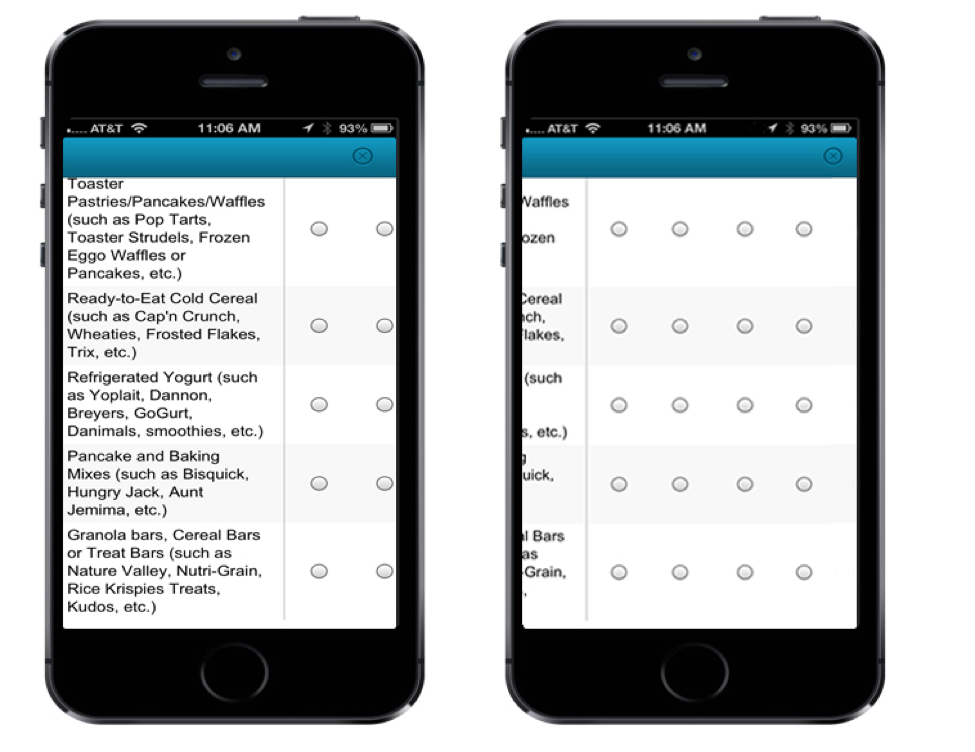
What you see above is something that literally drives survey respondents to distraction -- a deeply flawed mobile survey format that's guaranteed to frustrate and alienate. Not only does it look bad, but the technology that's being employed leads to even more frustration and alienation. Basically, it's forcing mobile respondents to use their smartphones in a banal, unsatisfying way: connecting to a website to take an online survey.

The poor display you see above, coupled with outdated survey technology, is responsible for one of market research's biggest myths: that mobile surveys have to be kept very short. 

Truth is, mobile respondents are perfectly willing to engage for 20 minutes or more, if you give them the kind of rewarding smartphone experience they enjoy and expect. It's all about the user experience: if it's clunky, respondents give up. If it's fluid, they finish -- even at LOIs of 20 minutes or more.

Accomplishing longer, deep-dive research projects is well within reach. The key is using the right technological platform for the Smartphone Era. It's now possible to embed surveys instantly in panelists' phones by using a native app. Smartphone users love apps, and in-app surveys ensure that they won't have to depend on a cell signal or WiFi, which are prone to interruption and to annoyingly slow load-ins of survey questions. The app platform also enables precise, location-based surveys that leverage proprietary GeoIntensity® and GeoNotification® technologies. 

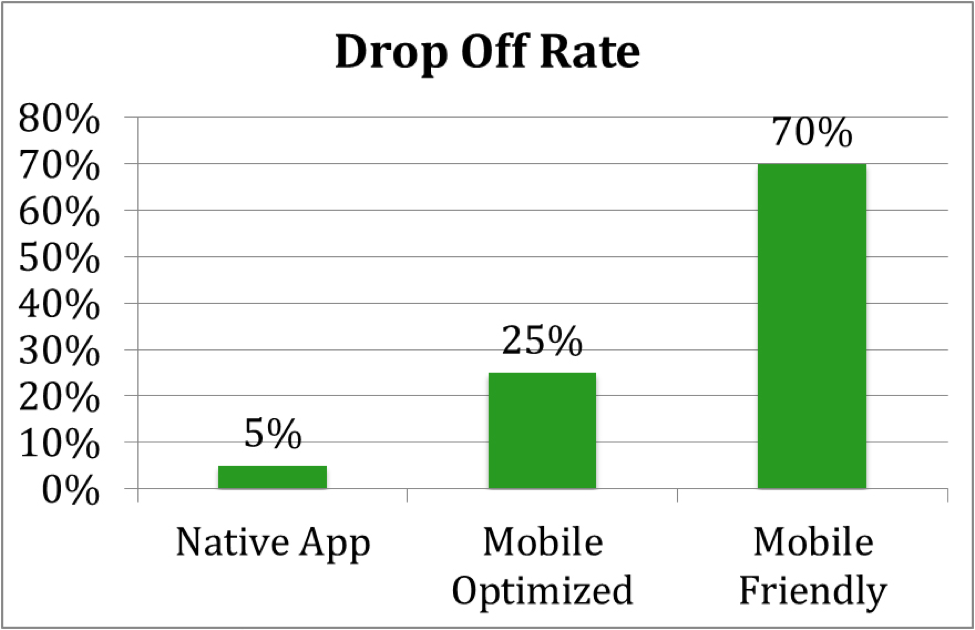
To illustrate the point, here's the data from a comparative study that tested engagement with a 20-minute survey launched in three separate mobile formats: Native App, Mobile Optimized and Mobile Friendly.

Mobile Survey Drop-Off Rates

Native App vs Mobile Optimized

Source: 2,139 surveys, 713 on each platform. Each survey ranges between 200 - 1,500 responses. Surveys conducted March 2014 - December 2014.

 As you can see, native app engagement eclipses "mobile optimized," to the tune of five times fewer drop-offs. And drop-offs were 14 times higher for the "mobile friendly" approach. To learn more about advanced, in-app mobile survey technology and the research solutions it provides,  just click sales@mfour.com.

Topics: MFour Blog

Why Advance-Testing Your Social Media Ads Is No Longer a Pipe Dream

Posted by admin on May 19, 2017 9:37:20 AM


something new


Here's your Friday roundup of 3 items from the MFour blog to keep you up to speed on mobile.


How To Get an 'A' in Social Media Ad Testing 101


Brands & Advertisers, Meet Your New Facebook Friend


Go Native To Get Social Media Mobile Ad Insights


And here's a Friday tune to get you ready for the weekend's social whirl.

Topics: MFour Blog

Learn the 4 Steps for Testing Native Social Media Ads in Their Natural Environment

Posted by admin on May 18, 2017 10:30:45 AM


Untitled design-147


Appearances matter in the mobile advertising realm – to the tune of billions of dollars.


We’re talking about “native” advertising – ads designed to fit in with surrounding non-ad content, increasing the chances that mobile audiences will pay attention.


The Interactive Advertising Bureau defines it as “a format…that takes advantage of the form and function of the surrounding user experiences…indigenous to mobile devices.” And native advertising is a very big deal, according to a Facebook-commissioned study on the rising importance of native mobile display ads:

  • By 2020, brands and companies are expected to spend $53.4 billion worldwide on native mobile display ads, accounting for 49% of all digital display advertising.
  • Advertisers will spend $8.9 billion worldwide and $3.9 billion in North America on native display ads placed in mobile apps, as opposed to on websites.

Those are very big bets, and just as they do in more traditional advertising channels such as TV, radio and print, brands will need to test their mobile campaigns -- an essential preliminary step to take if they hope to take full advantage of the native opportunities mobile advertising presents.


Until now there has been no reliable way to accomplish this – it has been a matter of launching the campaign and then trying to measure its effectiveness after the fact. But a new method called Emotional Brand Connections Social Media Ad Testing fills that need – and its concept is identical to the thinking behind native advertising. It turns a test ad into a native ad that shows up naturally in research panelists' social media news feeds – where it’s undifferentiated from all the regular content that surrounds it. Here’s how EBC Social Media Ad Testing works:

  • Identify consumers your campaign is targeting and match those characteristics against the members of a million-member active panel who take surveys in the same manner they typically get their social media content – by using a mobile app.
  • Place the test ad in the social media feeds of your targeted consumers.
  • Collect passive data that records how recipients respond to the native test ad. Get insights into whether the content is sparking positive behaviors such as clicking on the ad, turning on its audio, and liking or sharing it.
  • Send a survey to test recipients to obtain insights into crucial success indicators, including ad recall, opinions about the test ad’s content and concept, and whether the ad drives interest and an intent to purchase.

The bottom line is that advertisers now have a direct, natural pathway to timely insights into how their social media ads are likely to be received. If the test panel gives thumbs way up on the content and concept, brands can launch their campaigns with confidence. If there’s room for improvement, they’ll know it while there’s still time to make adjustments that will maximize the social media campaign’s appeal and effectiveness. Consumers’ social media feeds are a space where today’s advertisers need to be – and it only makes sense to test campaigns with the same native approach that will allow them to succeed once they’re launched. For more information, just contact us at sales@mfour.com.


Topics: MFour Blog

How To Ask Facebook Users Whether Your Mobile Ads Will Work

Posted by admin on May 17, 2017 9:54:04 AM

SocialAdTesting_900x300


Have marketing focus groups gone the way of Route 66?


The legendary roadway, immortalized in a 1946 hit song and an early 1960s TV show (both named “Route 66"), was the main drag for travelers driving long distances between St. Louis in the heartland and Santa Monica beside the Pacific. It was lined with thriving businesses, because that’s where the traffic was – until the advent of the interstate highway system turned most of Route 66 into a ghost town.


Consumers’ leap to social media has done much the same to the traditional, face-to-face consumer focus group. Why go to the expense of conducting a live focus group when you can cull data from Facebook or Twitter to tell you how your brand or ad campaign is doing? 


The problem is that these data only capture past actions on social media; they won't help brands get the insights they need about social media ad campaigns that have yet to be launched. As it stands now, marketers are spending $58.3 billion a year on mobile advertising -- most of it on Facebook and other social sites -- without being armed in advance with a roadmap telling them what to expect and what can be improved. If only someone could organize a focus group that would convene in today's social media space instead of in a conference room. 


Well, someone has. It's called Emotional Brand Connections Social Media Ad Testing -- a tool that lets you turn social media users who fit your campaign’s target demographics into the biggest, most natural ad-testing focus group ever imagined. EBC Social Media Ad Testing lets you place your test ad directly into mobile recipients' social media news feeds. Consequently, they'll experience the ad naturally -- as regular news feed content instead of as a formal test that's seeking their input. You'll get natural reactions because you've chosen to make the ad-testing process natural to the social media environment in which your campaign will take place. Briefly, here's how it works:

  • First, identify your ad’s target audience.
  • Access an all-mobile panel that’s large and representative enough to give you a good sample of the consumers you’re targeting. 
  • Place the ad you’re testing in the target panelists’ news feeds. It could be a film trailer, a video ad, a banner ad – whatever you’re about to launch. Recipients won't perceive that these ads are being tested, but will experience them as part of the regular ad content they're accustomed to receiving in their news feeds.

Now you’re ready to learn how well your social media ad is likely to perform.

  • Capture highly relevant passive behavioral data from the test recipients’ phones: how long do they engage with the ad? Do they click on it? Listen to the audio? Like or share it? 
  • Probe further by surveying the test ad's recipients. Obtain insights into unaided and aided ad and brand recall and awareness. 
  • Get insights into how recipients respond to creative content, including the ad's impact on their perceptions and emotions toward the brand and product. 
  • Is your test ad raising interest and intent to shop and purchase?

Armed with these insights, marketers will be able to make solid, well-informed decisions before launching social media ad campaigns, including whether and how to adjust creative content and the overall strategy. 


People no longer get their kicks on Route 66, but they do still travel cross country. Similarly, traditional face-to-face focus groups are not a proper fit for testing mobile ad campaigns, but there’s still a need to get the same kinds of pre-campaign insights in the new realm of social media. Emotional Brand Connections Social Media Ad Testing is designed to fill that need. It ushers in a new era in ad testing in which the kinds of insights focus groups used to provide can come alive in the challenging but exciting space of mobile social media. For more information, just click here.


Topics: MFour Blog

Social Media Ad Testing 101: Get Clear Insights in Today's Crucial Ad Space

Posted by admin on May 16, 2017 10:20:00 AM


SocialCopyTesting_900x300


Social media is where the most dynamic growth is happening in digital advertising, but it’s also where some of the greatest confusion lies for marketers. Facebook, including its Instagram subsidiary, gets 85% of its advertising revenue from mobile devices. But until now there has been no clarity on how to test whether $58.3 billion in annual U.S. mobile advertising is having the intended effect. Emotional Brand Connections (EBC) Social Media Ad Testing provides a reliable beacon to cut through the fog.


Reach Consumers Where They Live
EBC Social Media Ad Testing takes place in people's actual mobile newsfeed, not on a public page or a fake substitute.


How it Works

  • Pick the intended audiences for the ad you want to test
  • Proprietary ad injection technology places the ad in the respondent's actual newsfeed
  • Consumers see your test ad as a regular mobile ad 

What's Measured?
As targeted consumers scan their social sites, their natural behavior is captured. This includes, but is not limited to:

  • Visibility time and reach
  • Time spent viewing the ad
  • Whether they turned on the audio or viewed on mute
  • Whether they tapped to expand the display
  • Whether they liked and/or clicked on it

Does Your Ad Get Noticed and Trigger the Desired Outcome?
After you've collected their passive behavior, respondents are taken to a mobile survey environment and asked questions including:

  • What brands do they recall seeing advertised?
  • Do they recall your ad?
  • What message do they take away from your ad?
  • What reactions does your ad trigger?
  • Is the content likable? distinctive? memorable?
  • Is the caption engaging and relevant?
  • How does your ad impact people's emotional connection with your brand?
  • Does the ad create favorable impressions of your brand and push a purchase?

Bottom Line

  • Mobile is where consumers are (77% smartphone penetration in the U.S., 92% for Millennials 18-29).
  • Social media is where mobile citizens congregate (91.5% of Facebook usage is mobile)
  • Social newsfeeds are consumers' windows on the world

EBC Social Media Ad Testing cuts through the fog that obscures mobile ad measurement in social media, and blazes a path to clear insights. For more information, just contact us at sales@mfour.com.

Topics: MFour Blog

Why Brands Can’t Afford To Place Blind Bets on Mobile Advertising

Posted by admin on May 15, 2017 10:25:39 AM


SocialCopyTesting1_900x300


It probably isn’t breaking news that mobile advertising is on the rise as brands and companies focus their marketing where their consumers are congregating.


But specific data is always helpful, both to quantify what’s already intuitively apparent, and to deepen insights into how businesses should respond to the challenges and opportunities mobile ad campaigns present. So far, attempts to measure mobile ads’ effectiveness have created more confusion than confidence. Which, given the stakes, is very disconcerting.


Here are some specific data and predictions from the Interactive Advertising Bureau (IAB), eMarketer and Zenith Media.

  • U.S. mobile ad spend in 2015: $20.7 billion
  • U.S. mobile ad spend in 2016: $38.6 billion (+76.8%)
  • Predicted U.S. mobile ad spend in 2017: $58.3 billion (+51%)
  • Mobile ads’ 2016 share of all digital advertising spending: 50.5%
  • Mobile ads’ predicted 2017 share of all digital ad spending: 70.3%
  • 2016 rate of increase of mobile video advertising dollars: 145%
  • Facebook’s predicted 2017 global mobile ad revenues: $28.7 billion
  • Mobile’s 2017 Q1 share of all Facebook ad revenues: 85%.
  • Mobile’s share of Twitter ad revenues: 90%
  • Mobile’s share of Yahoo! ad revenues: 32%

These numbers raise some essential questions on which these huge bets on mobile ads depend:

  • You clearly need a reliable, demographically diverse test group of mobile consumers who represent your target audience -- the only reliable source for pre-campaign data on how your planned mobile ad will be perceived. But where can you find a mobile panel that fills that need?
  • How do you get insights in time to adjust the creative content of a planned mobile campaign?
  • How can you get reliable advance insights to form realistic goals and estimated metrics for your social media campaign?

In this week’s blog posts we’ll be talking about Emotional Brand Connections Social Media Ad Testing, a new solution for ad testing that fills these needs because it's designed specifically to test social media mobile advertising – so stay tuned. If you'd like to get full details right now, just click here


Topics: MFour Blog

Learn How Mobile GeoLocation Gets You Speed and Precision

Posted by admin on May 12, 2017 9:37:19 AM


SpeedAndPrecision_900x300


Here's your Friday roundup of 3 items from the MFour blog to keep you up to speed on mobile.


Learn How Mobile GeoLocation Gets You Where You Need to Go


Location Research History: We're Not in Kansas Anymore


Why `Better Late Than Never' Research is Nonsense


And here's a Friday tune to send you soaring into your weekend.

Topics: MFour Blog

Use Mobile GeoLocation to Reach Shoppers Before it’s too Late

Posted by admin on May 11, 2017 10:36:34 AM


GeolocationShopping_900x300


When it comes to obtaining quality consumer insights, those who hesitate are lost. And relying on slow-mo online survey methods is a sure way to lose your mojo.


The fast track to what's in consumers’ hearts and minds is mobile GeoLocation. Just as the Information Highway – the Nineties metaphor for the then-novel Internet – revolutionized how we access the world’s wealth of publicly-available data, GeoLocation studies made possible by Smartphone Era technology are revolutionizing how researchers can pinpoint surveys to gain richly illuminating consumer data with unprecedented precision and speed. 


If you want to delve into the technical side of how it works, you can Google terms such as “geofence” and “cell tower triangulation.” For consumer insights purposes, it’s enough to know that GeoLocation lets you track and validate mobile survey panelists’ presence when they arrive at a store or other venue that’s important to your research.


If you want insights into the complex web of thoughts and emotions that drive purchasing decisions and attitudes toward brands, you can’t afford to hesitate. With every hour that passes after a shopping experience, the thoughts and emotions you need to mine for insights will fade into the memory-haze of everyday living.


Online methodology settles for screening a general panel to find people who’ve recently visited a quick-serve restaurant, for example. But good luck finding many who are still digesting their meal. Instead, you’ll end up foraging for data from people who’ve already hit the bottom of that slippery slope where fresh experience rapidly deteriorates into a vague recollection.


With mobile GeoLocation, you can talk to diners while they're still in the restaurant or just after they've left. The freshness of your survey is as important to your success as the freshness of the food was to their satisfaction with the meal. The same principle -- and the same opportunity -- applies whenever time and place matter (and don't they always?). By going the in-location route, you’ll get insights into what’s happening while it’s still happening. But data from an after-visit GeoLocation study is also supremely fresh and vivid, thanks to response rates of 25% within an hour and 50% within a day.


Opting for the online method is like buying products that have passed their use-by date. It means you're willing to settle for weeks- or months-old recollections. You may fill your belly with data, but it will be too stale to be even mildly nutritious. You filled your study's quota and got your completes -- but with what quality or reliability? Eventually, bad data will make you look bad, and undermine your ability to play a positive role in business decisions. You hesitated, and you lost.


The main takeaway here is that mobile GeoLocation studies are only partly about location. They’re also crucial in your constant fight against time. GeoLocation technology coupled with an engaged mobile panel gives you your best chance to understand what’s in consumers’ hearts and minds before they themselves have forgotten it.


It’s a paradox of the Smartphone Era that the old assumption that speed compromises quality and depth no longer holds true. It’s slowness that will make your data superficial – and probably just plain wrong. It’s important for you to understand how mobile GeoLocation studies can get you the fast, vivid insights you need. Don’t hesitate -- just click here to set up a live, one-on-one demo.


Topics: MFour Blog

Subscribe to Email Updates

Recent Posts