
Is 92 the Magic Number for Consumer Insights?

Posted by admin on Oct 2, 2017 9:23:53 AM


Number 92 blog image 4Oct17


What does hot-shot high school basketball player LaMelo Ball have to do with market research?


The Los Angeles area star scored 92 points in a game last season, the first time a high school baller had hit the 90-point mark since 2005. Basketball fans are waiting to see whether LaMelo will eventually outshine his older brother, Los Angeles Laker Lonzo Ball, who was the second player picked in the most recent NBA draft.


Ninety-two is also a magic number for marketers and insights professionals to remember. Flurry Analytics’ latest study of U.S. telecommunications usage found that the average American spends five hours a day using a mobile device – and that 92% of that usage takes place inside a mobile app, eclipsing the 8% of time spent accessing and creating content with a mobile browser. Meanwhile, Pew Research Center has reported that as of 2016, 92% of Americans ages 18 to 29 owned smartphones.


If you're not persuaded by magical thinking and prefer to stick to commonsense logic, here are some fundamental truths to consider when putting together your playbook for obtaining the most representative and useful consumer insights: 

  • Consumer research needs to reach representative numbers and kinds of consumers.
  • Consumers have flocked to mobile (desktops and laptops get far less usage time than mobile). It's where they literally represent themselves in the information universe, by downloading, uploading and sharing content. 
  • Recent GreenBook Research Industry Trends Reports (GRIT) have voiced the urgent need for market research to get mobile surveys right.
  • Mobile-app research is the way to achieve representation and engagement, because mobile apps are where average U.S. consumers can be found 4 hours and 36 minutes a day. As opposed to “mobile optimized” research (which actually should be called “mobile browser” research), which is trying to dig for insights in the sparsely inhabited online mobile zone where the average person spends just 24 minutes a day.

And here are a couple of bonus data points for basketball buffs:

  • Just two college basketball players over the past 35 seasons have made 92% of their free throws over the course of their NCAA careers – Blake Ahearn of Missouri State and Derek Raivio of Gonzaga, who both played from 2004 to 2007. Ahearn shot 94.57% from the line, and Raivio hit 92.7%
  • No NBA player has achieved a career free-throw average as high as 92%; only 21 players have ever made 92% or more of their free throws in a single season. Steve Nash has come the closest over the course of an entire career, averaging 90.43%. Stephen Curry, at 90.1%, is the only active player who’s above the 90% mark for career free-throw accuracy.

That’s our play by play for today. To wrap it up, the score is 92% to 8% in favor of Mobile App Research with a dedicated panel of app-using respondents. Which method  do you want to bet your next project on? For a productive conversation about mobile-app research, just get in touch at solutions@mfour.com.


For an entertaining video overview of mobile research, just click here. And to see how Anheuser-Busch used mobile geolocation studies to help launch a new brand, click here.  

Topics: MFour Blog

Need Natural Path 2 Purchase Insights? Try Mobile.

Posted by admin on Sep 29, 2017 9:50:51 AM


Path 2 Purchase roundup blog size


Here's your Friday roundup of 3 items from the MFour blog to keep you up to speed on mobile. Just click and read!


Learn How Anheuser-Busch Runs Mobile Product-Launch Studies


How All-Mobile Methodology Boosts Path 2 Purchase Insights


Did You Get The Most Out Of P2PXpo? Yes, If You Met These Guys.


And here's a Friday tune to ease you into Autumn.

Topics: MFour Blog

Make Mobile Your Roadmap for Path to Purchase Insights

Posted by admin on Sep 28, 2017 9:30:47 AM

Path to Purchase blog size


Now that this year’s Path to Purchase Expo (P2PX) is a wrap, we’d like to add one more takeaway for attendees and non-attendees alike. Here’s a short guide to using mobile research to understand the path to purchase from start to finish and beyond.

  • First, find a representative panel of consumers whose paths to purchase you intend to trace. To get in touch with today’s consumers, you have to make their phones your touchpoint. A well-designed mobile research app can put you in comfortable and reliable contact with the people whose comings and goings and opinions and emotions and experiences you need to understand.
  • Test the ads you’re relying on to lead consumers down the path. Unique mobile solutions let advertisers test social media messaging in consumers’ natural newsfeeds on Facebook, YouTube, Twitter and Instagram. You know it’s a test, but your targeted consumers don’t, because they’ll experience the test ads no differently from the rest of the content they’re receiving. Social Ad Testing doesn't just measure clicks. It gives you deeper insights by letting you survey the test recipients. Clicks are worth counting, but answers about what's driving that interest can give you insights into your ad's potential that are based on more than inferences. If the test feedback is strong, you can launch the campaign with confidence that it will raise awareness, favorable perceptions, interest and intent to buy.
  • Just how effective is your ad campaign? Advertising needs measurement. The key here is the unique ID each smartphone has. You can match mobile consumers' smartphone IDs and demographic profiles against ad-delivery codes to see whether the ads are really reaching your target consumers. Then you can double back and survey these verified ad recipients to see whether a mobile ad lifted awareness and intent to shop and buy.
  • Mobile consumers go places with their phones – and that’s where geolocation research comes in. Find panelists who’ve passed in view of an out of home sign such as a billboard or a bus shelter, and survey them immediately to measure the OOH ad’s effectiveness. Find shoppers while they’re in the act – locating them in-the-moment in the exact stores you’re interested in. It’s the old in-person research shop-along or exit survey – brought into the present by harnessing smartphone capabilities. You survey them about products of interest and any facet of their shopping experience -- before time passes and compromises their recall and, consequently, your data.
  • The path to purchase is also the path to non-purchase: find and survey people who shopped but didn’t buy. Or who did buy – but it was your competitor’s product instead of your own.
  • Go beyond the point of purchase. Don’t just say “hooray” because shoppers bought your product. Follow them home and send them a mobile product-satisfaction survey. Find out whether they’re eager to get back on the path to purchase your product again – or what you should consider changing if the verdict isn’t good.

There’s an old blessing that goes, “may the road rise with you.” Mobile research puts you on the road to reaching the right consumers at the right moment and in the right way. For a productive conversation on how mobile solutions can meet your specific research needs, just get in touch at solutions@mfour.com.


For an entertaining video overview of mobile research, just click here. And to see how Anheuser-Busch used mobile geolocation studies to help launch a new brand, click here.  



Topics: MFour Blog

New Hires Boost Research Services & System Admin

Posted by admin on Sep 27, 2017 9:45:52 AM


J Cook T Visconti 900x300

James Cook (L) and Tracy Visconti 


Tracy Visconti and James Cook are the latest additions to the growing MFour team, with Tracy dedicated to helping clients launch successful projects as a Research Manager for Client Solutions, and James providing internal efficiency and consistency as System Administrator.  Both bring veteran expertise to the company.


Tracy arrives with more than 20 years’ experience in market research. At MFour he’s working with clients to ensure survey feasibility, quality programming and consistent fulfillment of sample requirements. He also is coordinating teamwork throughout the process of building and executing clients’ research. Tracy’s past positions include Director of Strategic Insights & Research for the entertainment company, Viacom, and conducting travel and hospitality research for The Venetian/The Palazzo resorts in Las Vegas. He holds an MBA degree from Hofstra University, and a Bachelor’s degree in Applied Psychology from Ithaca College. Tracy keeps fit playing tennis and running, and asserts his mental agility as a Scrabble devotee.


James brings nearly 15 years’ experience in a wide range of roles in IT support and system administration for companies in variety of industries, including Direct TV and Porsche. At MFour he’ll apply this wide-angle knowledge to ensure consistent top-functionality of internal tools that allow MFour teams to bring quality, consistency and innovation to clients’ projects. Playing the electric guitar and being a dad are James's passions. Outside work, he shreds with a heavy metal band named Titanskull, and spends lots of time in fun activities with his son. He’s also a connoisseur of vegan cuisine.


Welcome aboard, Tracy and James!

Topics: MFour Blog

Watch: Anheuser-Busch Test-Markets a New Brand

Posted by admin on Sep 26, 2017 10:51:26 AM


Mexican beers occupy an important slice of the U.S. market, and in the spring of 2016 Anheuser-Busch decided to go after a share by marketing the Mexican brand Estrella Jalisco. It chose the Los Angeles area for its pilot launch. Ben Cline, a Manager of Behavioral Insights for Anheuser, needed data and insights into how Estrella was faring in its limited initial rollout, to guide decisions about how Anheuser should proceed with a wider launch.


It was especially important to get insights into convenience store shoppers. In the company’s research experience, it could expect to obtain only about 10% of its survey responses from c-store buyers – barely a fifth of the proven real traffic. Anheuser needed to explore the convenience store channel far more accurately in order to maximize its chances for success as it introduced Estrella Jalisco to U.S. beer shoppers.


Click on the video to see Cline talk about the Estrella c-store study, and other advantages Anheuser has gained from its ongoing working relationship with MFour. To contextualize the video, here’s an overview of how the mobile geolocation c-store beer study was conducted.


METHODOLOGY

  • MFour already had geofenced hundreds of convenience stores in the Los Angeles area where Estrella was being launched.
  • Members of the proprietary panel who use MFour’s Surveys On The Go® mobile research app were geolocated as they entered and exited any of the c-stores under study.
  • Just as they left the store, these consumers received push notifications asking them to take a survey on their phones. MFour geolocation studies typically elicit a 50% response rate in one day.

RESULTS

  • Anheuser-Busch obtained in-the-moment insights into how its new brand and those of its competitors were perceived by beer shoppers at convenience stores.
  • Mobile data arrived much faster and closer to the shopping experience than any other survey method would allow.
  • With recall bias all but eliminated, Anheuser was able to proceed with confidence in the data that would inform important decisions about the new beer brand’s wider rollout.

For a productive talk about how advanced mobile app survey technology combined with an engaged, highly consistent panel can fit your own specific research needs, just get in touch at solutions@mfour.com.

And for an entertaining video introduction to in-app mobile research, just click here.


Topics: MFour Blog

See Why Mobile's a Natural for In-Store P2P Insights

Posted by admin on Sep 25, 2017 9:36:01 AM


ToddAndBlake_900x300

Todd Costello (L) and Blake Skorich


Marketers, retailers and advertising professionals are gathering this week for the Path to Purchase Institute’s P2PX Event outside Chicago in Rosemont, IL. As the Institute describe it, “P2PX is where solution providers showcase the latest tools to reach shoppers and demonstrate the breadth of what's available in the industry.”


More specifically, the event promises “vigorous education,” and an opportunity  for marketing and advertising professionals to “discover best practices that benchmark their programs against the industry and find ways to drive change within organizations.”


All of which makes Todd Costello and Blake Skorich men with a purpose. When attendees get to the MFour booth at P2PX, they can expect a warm greeting from the two Solutions Executives, followed by vigorous education on what natural mobile solutions can do, and a dialogue on best practices in the mobile research realm.


Especially important is understanding the role of smartphone apps to the digital shopping experience. Consumers' reliance on apps for digital experiences, including shopping, makes it crucial to deploy app-based mobile solutions that let you track and understand the digital shopper along the entire path to purchase.


Among the topics you can learn about at MFour's booth are how to capture data from verified shoppers by following their digital tracks on their phones. And then how to take it a step further by surveying them when it matters most -- while they're in a store shopping, or just after they've left with a basket of purchases.


"Marketing leaders are in need of quick, reliable intelligence on how consumers are approaching digital commerce," says Todd -- and that intelligence is best scouted at the very source, the phones on which shoppers are researching purchases in advance and in the store aisles.


Blake is eager to share details on how advanced mobile research can give brands a faster, more cost-effective, more reliable and less biased update of traditional in-person shop-alongs and clipboard-and-pen exit interviews. “I’m going to ask how they’re talking to shoppers in-store, and if they’re not, we’ve got a solution,” he said.


If you’re just starting to learn how mobile research works, Blake and Todd would love to acquaint you with the three “geos” – geofencing, geolocation, and GeoValidation® – that make in-store mobile intercepts and after-visit interviews ideal for tracking the final steps along the path to purchase with dead-on immediacy and accuracy. Respondents are validated by location, and mobile lets you validate purchasers by asking them for photos of their receipts and the relevant products they've bought.


If you’re an advertiser focused on the entrance to the funnel, MFour’s duo can walk you through smartphone-powered digital ad measurement and ad testing possibilities, including matching consumers with their phones' Ad IDs and Social Media Ad Testing. With Facebook, Instagram, YouTube and Twitter figuring so prominently in marketing strategies, Social Ad Testing provides crucial, pre-launch insights into whether concepts and creative are ready to go and make a big impact, or if they require some retooling before they’re ready to meet consumers during their social media journeys.


“Natural” is perhaps the most important word  you’ll be hearing from Blake and Todd. Social Media Ad Testing is natural because it injects those test ads right into mobile panelists’ personal newsfeeds, where they can experience them as actual, active ads, with no biasing awareness that these are just tests. It’s a goldmine for behavioral data on how recipients interact with the test ads, and also an opportunity to follow up with a survey interview for evaluative responses and insights about concepts and creative.


The in-store research Blake wants to tell conferees about is itself a natural process. The  smartphone lets you locate shoppers while they’re thinking and feeling the very thoughts and emotions you need to understand, with no advance notice that they’re going to be part of a market research study. You’re finding them unawares, until they get a push notification on their phones telling them that they have an opportunity to share the shopping experience they’re having right now – or have just finished having. For them, the mobile clipboard is a nice surprise, not an unwelcome intrusion – that’s why they signed up in the first place for Surveys on the Go® -- the advanced mobile survey app that supports the most representative all-mobile panel of U.S. shoppers and consumers, whose engagement is reflected in the app’s consistent user rating of 4.5 stars out of 5 at the iOS and Android app stores.


Whether you’re interested in an introduction to the basics of app-based mobile research, or if you just want to get down to pragmatic specifics about how smartphone-powered research will bring home your next project better than the online or non-app mobile solutions you’ve been using, just come on by.


Of course, you can have the same kind of one-on-one talk about how mobile app research panel and the power of their smartphones can be put to work to meet your specific data needs without heading to Chicago. For a productive conversation, just get in touch by clicking here.


And for a humorous look at mobile, click here.

Topics: MFour Blog

8 Top Gen Z Insights Are Telling You Mobile's A Must

Posted by admin on Sep 22, 2017 10:06:33 AM


Gen Z Blog Size 22Sept17


Here's your Friday roundup of 3 items from the MFour blog to keep you up to speed on mobile. Just click and read!


Getting To Know Gen Z Means Meeting Them on Mobile


Exactly Who Is a Millennial, Gen X or Gen Z? The Experts Disagree.


With Online Surveys, Nobody Knows You're a Dog - Or A Bot


And here's a Friday tune to get you rolling into the weekend.

Topics: MFour Blog

8 Reasons To Survey Gen Z with a Mobile App

Posted by admin on Sep 20, 2017 9:51:20 AM


GenerationZ logo


After 20 years or so of trying to understand what Millennial consumers want, ready or not – here comes Gen Z. The generation whose oldest members are now of college age is shaping up as another generation that’s bringing far more change than continuity. And that’s a challenge for marketers and market researchers.


The National Retail Federation (NRF), is trying to help, by sponsoring a series of reports about Gen Z consumers, based on a worldwide survey of 13- to 21-year-olds carried out by the IBM Institute of Business Value.


Early research snapshots of this group reveal them as even more immersed in technology than even the famously tech-focused Millennials. Instant information and the devices for accessing it are Gen Z’s birthright. After all, as the NRF puts it, they’re “the first true digital natives.” And a core generational characteristic is how exacting and demanding its members are when it comes to the technology they use. Experiences won’t satisfy if they are not technically problem-free, so getting technology right is crucial for engaging Zers as consumers and research panelists. Here are a few of the NRF/IBM study’s findings:

  • 75% of Gen Z members said they use a smartphone – more than double the 30% who use desktops, and a consumer landslide over the 45% who use laptops.
  • “Technology has provided a vehicle for Gen Zers to interact with brands on their own terms…their familiarity with technology means they are not easily fooled.”
  • “The fluidity and speed with which Gen Z cycles through media platforms and apps potentially make them more challenging to target….”
  • “They are less likely than other generations to be brand loyal as traditionally defined. If brands are slow to engage or [if they] break their promises, then Gen Zers will quickly switch to a competitor.”
  • “If a product, service or experience does not live up to expectations, they will take their business and their influence elsewhere.”
  • “Many iconic brands will need to challenge long-standing business practices and marketing strategies to remain relevant to Gen Zers and meet their experience expectations.”
  • “Gen Zers expect brands to be on their channels and to interact with them on a personal level, just as they engage with their peers….. static marketing planning and execution are simply not enough with this generation.”
  • “To help win the hearts and minds of today’s youngest generation of consumers, brands should….be there when they want you; meet them where they want.”

One of the most important statistics to keep in mind in planning an approach to Gen Z is that they aren’t just growing up mobile, but as users of mobile apps. As it stands, even without Gen Z, 92% of adults’ time spent on mobile is spent inside a mobile app, according to Flurry Analytics.  Research methodology must adjust accordingly if it’s to meet consumers where and when they want to be reached – or else not reach them at all. We’re all living in the Smartphone Era, in which there’s no real engagement without mobile-app engagement. To learn how to get on track quickly with innovative mobile-app survey solutions to fit your own research needs,  just get in touch at solutions@mfour.com.

Topics: MFour Blog

See How Mobile App Surveys Take The Bite Out of Bots

Posted by admin on Sep 19, 2017 10:18:20 AM


Robot Dog Scary


“On the Internet, nobody knows you’re a dog,” is the caption of the most-reproduced cartoon in the history of The New Yorker magazine, which is famed for its wryly humorous graphic jokes.


“On the Internet, nobody knows you’re a dog,” is the caption of the most-reproduced cartoon in the history of The New Yorker magazine, which is famed for its wryly humorous drawings.


The cartoon by artist Peter Steiner appeared in 1993, at the dawn of the internet. A dog sits on a chair in front of a desktop computer, one paw on the keyboard. He turns to a canine buddy and explains how it lets him infiltrate human society undetected: “On the Internet, nobody knows you’re a dog.” Here’s a Washington Post article that shows the cartoon.


A few years after the cartoon ran, market research began to gravitate toward the internet with the introduction of online surveys. They arrived just in time to solve the problem of dwindling response rates and prohibitive costs of telephone surveys. Online research was a sensible and effective compromise – a way to stay in touch with consumers at a reasonable cost. But panelists’ ability to remain incognito online, like the dog in the cartoon, has spelled trouble for data accuracy and reliability ever since.


The biggest threat comes from survey bots, computer programs that zip through surveys while cleverly mimicking human respondents – all to pocket the incentives panel providers pay in return for supposedly honest answers. An update of the classic New Yorker cartoon might replace the dogs with evil-looking robots, above a caption that reads, “On the Internet, nobody knows you’re a fraud.”


Online research providers are starting to openly acknowledge the bot problem, and they’re trying to assure their clients that they’re on the case with various validation processes designed to detect and root out online panel fraud. That may be fine as far as it goes. But as any decent military strategist would tell you, the key to winning a battle is to seize the high ground so you won’t have to charge uphill, and to arm yourself with weapons that really work.


The high ground in the fight for data quality is the smartphone. The weapon that will defeat fraud and keep data accurate and clean is the mobile survey app. Only a real, human panelist can own a phone and download an app to it. Only an app can load an entire survey into a phone, so each panelist can answer it offline, in a secured space that’s removed from the online realm where survey bots hunt their prey. There’s more to tell –about the data-validation qualities inherent in each smartphone’s unique device ID, for example, and how a survey app that delivers great user functionality becomes an engagement magnet. The result is a consistent panel that can fill research quotas without desperation tactics such as river sample and multi-sourcing.


For starters, all you need to remember is this: when your panelists participate in advanced, app-centered mobile research, everybody knows they’re human. For a productive conversation about how bot-proof in-app mobile can meet your specific research needs, just get in touch at solutions@mfour.com.


And for a fast, entertaining video introduction, just click here.


Topics: MFour Blog

How Should We Define Today’s Consumer Generations?

Posted by admin on Sep 18, 2017 9:37:27 AM


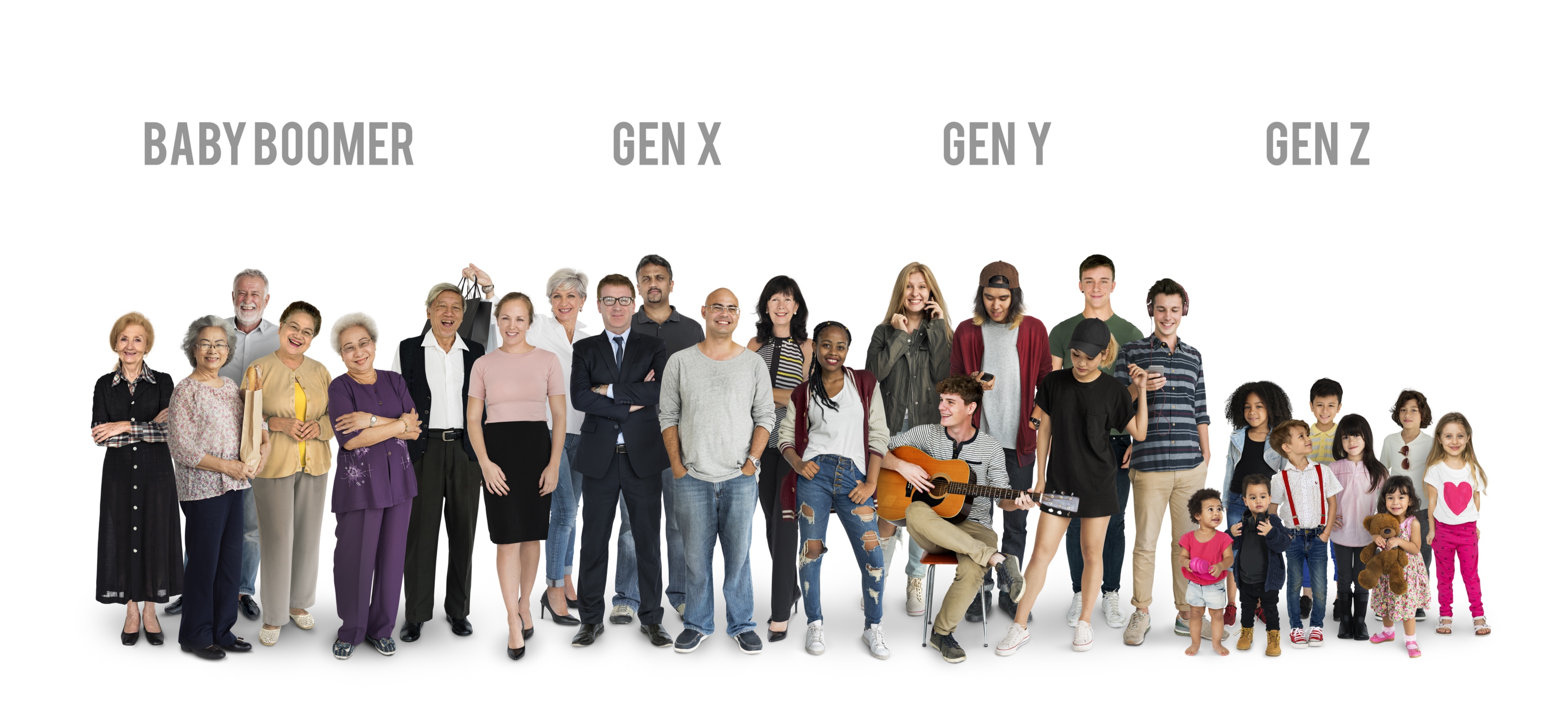
Generations


So who are we really talking about when we’re talking about consumer generations?


A great deal of brainstorming and research goes into understanding consumers' generational tendencies. It's crucial to learning how to tailor messages, products, and marketing approaches to each age group as precisely as possible. But when it comes to generations, there's hardly any precise agreement on as basic a question as where each one begins and ends.  If you ask the U.S. Census Bureau who Millennials are, for example, you’ll get a different answer than if you ask the respected, nonprofit and nonpartisan Pew Research Center.


With that in mind, here’s how some experts are tracking America’s important but apparently moving generational targets.


Millennials:

  • The Census Bureau says they were born between 1982 and 2000, meaning that as of Dec. 31, 2017 they'll all be 17 to 35.
  • A Pew Millennial is older than a Census Bureau Millennial – Pew says this generation was born between 1981 and 1997, making its members 20 to 36 years old.
  • Jean Twenge, a professor at California State University, San Diego (and author of books profiling Millennials and the younger Gen Z) thinks the Millennials are older still – born between 1980 and 1994, making them 23 to 37 this year.

Gen Z

  • The Census Bureau thinks they’ve been born since 2001, making the oldest Zers 16 years old.
  • Pew identifies them as 19 and under.
  • Twenge, who calls them iGen because they’re the first generation that’s come to awareness in the Smartphone Era and can’t remember a time before the internet, pegs them as the cohort born between 1995 and 2012, making them 5 to 22.

Gen X

  • The Census Bureau says they’re 36 to 52 this year; Pew classifies them as 37 to 52, and Twenge says 38 to 52.

Baby Boom

  • The three experts agree on the Boomers: they are 53 to 71 this year, having been born between 1946 and 1964. Those years are clear historical markers: 1946 saw veterans of World War II returning from the fighting and eagerly getting on with family life, and 1964 was the year of the Gulf of Tonkin Resolution that escalated U.S. involvement in the Vietnam War – just as the oldest Boomers were turning 18 and thus eligible to be drafted to fight in it.


If merely defining the generations by their birth years is an uncertain business, what does that say about the challenges of understanding them as consumers? One way to start is by embracing the vast research potential of the technology that brings all four major consumer generations together: their smartphones. Getting mobile research right becomes increasingly important as each generation grows increasingly tethered to this century’s definitive technology. More than 90% of Americans who are approximately 20 to 30 have smartphones or tablets; the Gen Zers coming up behind them are all but inseparable from their phones, making the smartphone their primary window on the world.


Knowing today’s consumers requires realizing that the ground is shifting, and that going forward it will take a full immersion in mobile research to identify and interpret shifts in how the generations are living, thinking, behaving, shopping and buying. For a productive conversation about how you can get ahead of the curve and meet your specific projects’ needs with a proprietary U.S. panel gathered eagerly around a mobile research app, just contact us at solutions@mfour.com.


Topics: MFour Blog

Subscribe to Email Updates

Recent Posts