Surveying The Damage: Mobile Insights Post-Harvey & Irma

Posted by admin on Sep 15, 2017 9:53:19 AM


Hurricane Blog


Here's your Friday roundup of 3 items from the MFour blog to keep you up to speed on mobile. Just click and read!


MFour's Hurricane Survivors Survey: "We Lost Everything"


Why the New iPhones Are Another Stake Through Online's Heart


Watch: Vistar Media Goes Mobile To Get Ad Measurement Right


And here's a Friday tune to get you rolling into the weekend.

Topics: MFour Blog

Harvey & Irma Survey: At least 25% Who Suffered Damage Are Uninsured

Posted by admin on Sep 14, 2017 3:13:20 PM


hurricane quote 900x300


One out of four respondents to a new survey of residents of Houston and South Florida said they have no insurance coverage for property damage sustained in Hurricanes Harvey and Irma, and many more are unsure whether they’re covered or not.


In the Houston area, 29.4% of respondents who’d suffered hurricane damage said they had no insurance coverage, and 29.4% said they were covered for all or a portion of their losses.


In Florida, 20.7% said they had no coverage for storm damage, and 31.9% said they were covered. 41.2% in Houston and 47.4% in Florida said they were unsure whether they had insurance to offset their losses.


The findings are from a survey by MFour Mobile Research of 250 respondents who were in Harvey’s path and 250 who experienced Irma. Respondents also were asked to put their hurricane experiences in their own words. Some examples:

  • “It was terrifying and I and my family are all traumatized by this event....The thought of us losing everything we worked hard for was heartbreaking.” – Houston respondent.
  • “It was horrible. Took 17 hours to get to Atlanta, then 14 to come back home. When I came back my house was destroyed. We lost everything. Everything.” – South Florida.
  • “We drove to a suburb, Cypress, Texas, and we thought it would be fine. We were proven wrong when about five tornadoes touched down and houses around us experienced horrific damage.”
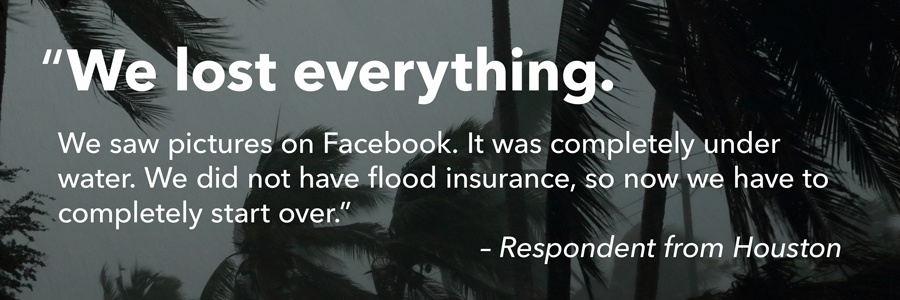
  • “We lost everything. We saw pictures on Facebook. It was completely under water. We did not have flood insurance, so now we have to completely start over.” – Houston
  • “I evacuated 3 days before and all was very well. I evacuated cuz I wanted to care for my family, that’s all. I don't want them to get hurt.” – South Florida
  • “I chose not to evacuate because I didn’t have enough common sense to leave. I will not stay again.” – Houston

Among other findings:

  • Scarred by their experiences in Hurricanes Harvey and Irma, 8.8% of survey respondents in Houston and 7.9% in South Florida said they are highly likely to uproot and leave their areas permanently within the coming year.
  • A large majority of Houston area respondents said Hurricane Harvey was not just a hardship, but a nasty surprise – with 72.4% of those surveyed saying the hurricane damage was worse than they expected.
  • In contrast, only 14.4% of people surveyed in South Florida said the damage from Irma turned out worse than expected – perhaps an indication that Texans were caught unawares, and their experience informed Floridians’ greater fears.
  • In Houston, 44.8% reported feeling endangered at some point during the Hurricane, compared to 33.2% in South Florida.
  • Asked about their chief concerns or uncertainties in the hurricanes’ wake, 48.4% in Houston listed friends’ and families’ personal well-being or their own personal health as the top concern, and 34.4% listed damage to property – their own or friends’ and families.’  For 16.4%, jobs or education were the chief concern.
  • For Florida respondents, 32% were most concerned about family and friends’ well-being or their own health; property concerns were foremost for 27.6%, and 22% cited disruption to their jobs or education.
  • In Houston, 25.2% of respondents said they had put themselves “in harm’s way” to help others during the hurricane, and 21.2% said others had done the same to help them or their families.
  • In Florida, 20% reported having put themselves in potential danger to help others, and 2% said others had done the same for them.
  • Government rescue efforts were almost twice as likely to be rated excellent by South Florida respondents (48.8%) compared to Texans (26.8%). As for charities’ hurricane responses: 58.4% in Houston found them excellent, compared to 37.6% in South Florida.
  • Factoring in those who rated responses as “good,” government agencies got a positive grade from 69.6% in Houston and 78.8% in Florida. For charities, it was Houston, 81.6% and Florida, 68.4%.
  • 4.4% in Florida and 6.8% in Texas said the government aid response was poor; 4% in Florida and 5.2% in Houston felt charities responded poorly.

For a summary of key data in chart form, just click here: Hurricane Irma & Harvey Topline 


For questions, interview  requests and more detailed data from the study, please contact Allison Fletcher at afletcher@mfour.com or 714-400-7323.


Methodology:

MFour Mobile Research surveyed members of its Surveys On The Go® research panel ages 18 to 64 in areas most affected by Hurricanes Irma & Harvey, including the Houston DMA and the Miami-Ft. Lauderdale and Tampa-St. Petersburg DMAs. The survey was conducted Wednesday, Sept. 13. The data provide a snapshot drawn from the first 500 completed responses received, 250 each from the Harvey and Irma affected regions. The data should not be taken as statistically representative of the regions' overall demographics.


Topics: MFour Blog

The New iPhones "Hope To Make Laptops Obsolete"

Posted by admin on Sep 13, 2017 10:12:37 AM


Blog Social Media Ad Test 900 x 300 26July17


The big tech news this week is, of course, Apple’s introduction of two new iPhone models that put more computing power than ever into consumers’ hands. It’s one more step forward for mobile, and one more step toward obsolescence for desktops/laptops.


“The New iPhone and its Competitors Hope To Make Laptops Obsolete” is how the Los Angeles Times headlined the rollout’s impact – you can click here for the full article.


Here are a few of its highlights:

  • "The new phone’s main selling point, aside from being sleeker and shinier than iPhones past, will be the breadth of its capabilities."
  • “I know a lot of people who prefer to do everything on their phone. They almost don’t want a computer anymore,” said Lindsay Sakraid, director of content marketing at consumer deals site DealNews.com.
  • “The next big horizon is doing more with your smartphone than just checking Facebook and email. It’s about allowing us to do what we’ve been doing with our desktop PCs for the last 25 years, but in a smaller form factor,” said Patrick Moorhead, president and principal analyst at Moor Insights & Strategy.
  • Annette Lin, a 28-year-old arts writer and designer, told the Times that “If I could type better on a phone, I’d probably go everywhere without a computer.”

Meanwhile, Pew Research Center reports that a significant and growing segment of the U.S. public is cutting the cord with home broadband.

  • 77% of American adults owned smartphones as of 2016.
  • 12% had abandoned home connections to the internet and rely on smartphones alone.
  • That rises to 17% for Americans ages 18 to 29.

Of course, many people who also own laptops and desktops turn to their phones first as device of choice. Taken together, the picture is one of a rapid shift toward mobile – with tech giants such as Apple and Samsung gung ho about accelerating the progression to a new reality centered on smartphones and mobile apps. The Smartphone Era has vast implications for consumer research, because, as the Los Angeles Times article suggests, mobile is where businesses and the researchers who help them keep up with consumer preferences must go to meet those consumers.


For a productive conversation about how advanced mobile research can meet your own specific insights needs, just get in touch at solutions@mfour.com.


And for a quick, entertaining intro to app-powered mobile research, just click here.


Topics: MFour Blog

Watch: Mobile OOH Engagement Gives Vistar Media "A Better Alternative"

Posted by admin on Sep 12, 2017 9:56:23 AM


Click here to watch Vistar Media CEO Michael Provenzano tell you why he's been partnering with MFour for a year and a half to track how well his clients' billboards are driving consumer awareness and action. One key is MFour's advanced geolocation technology, which allows it to "map" thousands of billboards or other signage nationwide, then identify consumers when they come within 80 meters of any mapped sign. The other is a uniquely representative U.S. panel of more than 1.3 million members, who use and can be located with the Surveys on the Go® mobile research app. MFour's capabilities have given Vistar a huge boost in its mission of bringing unprecedented accuracy and insights to out-of-home ad measurement.


For a detailed account of how Vistar and MFour have innovated research in the $29 billion a year OOH advertising sector, stay tuned for another video newsletter, coming Tuesday, Sept. 19.


Meanwhile, for a productive conversation about how state-of-the-art mobile can meet your own specific research needs, just contact us at solutions@mfour.com.

Topics: MFour Blog

MFour Adds Team Members in Sales and Product Development

Posted by admin on Sep 11, 2017 10:06:07 AM


Hiring J Ebenstein K Sausser 900x300

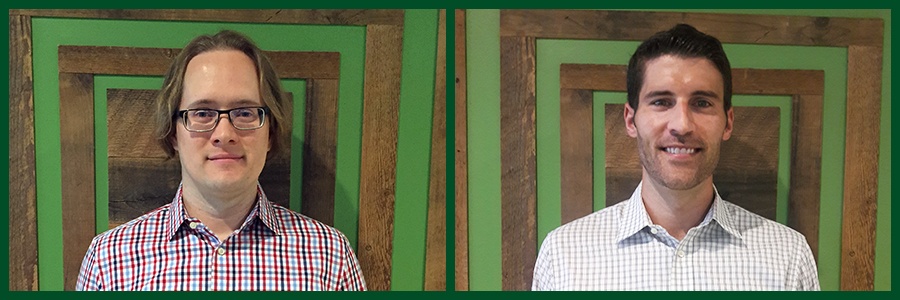
Jason Ebenstein (L) and Kyle Sausser


MFour has added two new employees who’ll guide clients to its standard-setting, in-app mobile research solutions, and oversee the development and launch of new research tools and products that will give clients more options for high quality mobile data.


Kyle Sausser joins the team as a Senior Solutions Executive. He’s an experienced technology solutions expert, including a Senior Major Account Executive position at IT research and consulting firm Gartner, Inc., At Gartner he worked with top management of Fortune 1000 companies to help them get the most out of Gartner’s research and consulting services. Now Kyle will help leading market research firms and end clients exploit the vast data and insights capabilities of in-app mobile research technology. He holds a Bachelor’s Degree in Marketing from Arizona State University, and is pursuing a Masters in Business Administration from the University of Southern California’s Marshall School of Business. Kyle enjoys travel with his wife, attending concerts and sporting events, and getting outdoors as a hiker, surfer and volleyball player. He’s also active with USC’s Challenge for Charity, which involves MBA candidates in volunteerism and philanthropic fundraising.


Jason Ebenstein joins MFour as a Senior Product Manager, taking a leading role in conceiving innovations and advances  in mobile research technology, and helping bring these enhancements and new data options to fruition. He arrives with seven years of experience in software product development, including past positions as a product manager for HireRight, Telogis and TeleCommunication Sytems, Inc. Jason earned a Bachelor’s degree in Information Technology from the University of Central Florida.


Welcome aboard, Kyle and Jason!


Topics: MFour Blog

See How Mobile Progress Leaves Online Behind

Posted by admin on Sep 8, 2017 9:57:47 AM


Progress


Here's your Friday roundup of 3 items from the MFour blog to keep you up to speed on mobile. Just click and read!


How Mobile vs. Online Is Like Horsepower vs. Horses


When A Brand Takes A Stand, A Mobile Health-Check's A Must


Download Our App And You'll Know What We're Talking About


And here's a Friday tune to get you pumped for the weekend.

Topics: MFour Blog

When Brands Take Stands, Quick Mobile Health-Checks Are a Must

Posted by admin on Sep 7, 2017 10:38:36 AM


Controversy


One unusual aspect of the Trump presidency has been business leaders’ willingness to take firm stands on specific issues and events. The latest example is the administration’s decision to reverse the “Dream Act” policy that gave protected status to about 800,000 undocumented, foreign-born workers and students who’d come to the United States as children.


As AdAge reports, that action brought a fast response from tech sector CEOs, who haven’t hesitated to voice opposition to policies they see as threats to their pipeline of immigrant talent. The DACA announcement also drew a response from CPG titan Proctor & Gamble, which issued a statement urging Congress to  “find a legislative solution to provide employers certainty and allow the U.S. to continue to benefit from the contributions of the 800,000 Dreamers.”


When businesses take positions on hotly-debated issues such as immigration enforcement, they enter a complex arena. Any political stand or legal or regulatory controversy involving a brand has the potential to influence how consumers think and feel about it. In the case of DACA, some may see brands' support of Dreamers as a praiseworthy statement of principles. But some may take offense at what they interpret as an inappropriate mixture of business with politics. And like anything that can impact consumer sentiment, brands need to know exactly what's going on -- and fast.


In a far more extreme instance than anything brands might face regarding a stand on DACA, consider the textbook case of how Johnson & Johnson responded quickly and effectively in 1982 when news broke that several Chicago-area consumers had been fatally poisoned when they took Tylenol capsules, murdered by an unknown predator who had stalked stores' pain-remedy aisles, injecting cyanide into bottles of Tylenol. For a fascinating Fortune magazine account of how Johnson & Johnson's rapid response -- a response based on survey data -- saved one of the nation's most famous brands, click here. And note this passage in particular:


[Johnson & Johnson's CEO] called in...J&J's oldest advertising agency, to begin polling consumer attitudes. Initially he wanted to know how the public was reacting to the crisis, but he also knew the surveys would be indispensable in building a data base for what was obviously going to be, as he put it, "a very complicated communications problem."


Fast data from telephone surveys put Johnson & Johnson on the right track to a successful response that saved the Tylenol brand -- in the process providing the classic model for effective corporate crisis management. Thirty-five years later, there's no faster way to get a quick, reliable read than to reach out to a representative panel that’s gathered around a mobile survey app. Smartphone apps, far more than desktop browsing, are the leading pipelines to news and information exchange for today’s consumers. Consequently, fielding an in-app mobile brand-health survey will get the best crucial speed-read on consumer sentiment.


Researchers with pressing deadlines can expect reliable real-time data, speeded along thanks to completion rates of 25% in an hour and 50% in a day. Fast survey data from an engaged, representative in-app mobile panel can make the difference between spinning wheels or getting a crucial running start on managing the impacts of unusual or unexpected events. With accurate intelligence about the what, the why, and the emotions sparked by an unusual event, brands will give themselves the best chance of making the right decisions on messaging and actions going forward. Whatever the circumstance, they won't be flying blind.


To get a quick, real-time read on how an event is impacting a brand, researchers who use in-app mobile technology centered around an engaged, all-mobile panel that uses a state-of-the-art survey app can connect with a thousand or more relevant consumers in just a day. For more information on how to best execute quick-response, event-driven consumer research -- or any research that has to get done in a hurry -- just get in touch at solutions@mfour.com.


And for some humorous relief from the stresses of the moment or the politics of the day, click here for an entertaining video introduction to in-app mobile. 



Topics: MFour Blog

See Why Online Research Is Today's Horse-Drawn Carriage

Posted by admin on Sep 6, 2017 9:23:36 AM


horse carriage 900x300


At the intersection of technology and commerce, there’s no denying that history repeats. Take, for example, the growth of automobile ownership in the United States. A hundred years ago, the economy was irrevocably transformed when automobiles replaced horse-drawn vehicles. Today, the shift from personal computers to smartphones redefines how consumers get around – not in physical space, but in the emotional and intellectual space where they inform themselves and project their personalities. For market researchers who need to get inside consumers' heads and understand their emotions, the implications are obvious.


The latest data documenting mobile’s ascendancy over the desktops and laptops that defined the era of online research come from Salesforce’s Shopping Index report for the second quarter of 2017. It looks at how shoppers access information about brands and products. And by every measure, mobile dominates.


First, to get some historical context on epochal changes in consumer preferences, let’s go back 100 years, to when automobiles put horses out to pasture.

  • In 1913, there were 1.3 million motor vehicles of all types registered in the United States. By 1917, there were 5.1 million. The Age of the Automobile had arrived.

Now here are some of Salesforce’s findings about digital shopping in the U.S.

  • Mobile devices accounted for 44% of purchase orders placed online in Q2 2017, up from 32% in 2015.
  • Orders placed on personal computers fell from 68% to 56%.
  • Traffic from smartphones to retail websites grew from 44% of all visits in 2015 to 59% in Q2 2017.
  • Factoring in tablets as well, traffic on mobile reached 65% of visits.
  • Retailers received 35% of their website visits on PCs in Q2 2017 – down 12 points from Q2 2015.
  • Mobile’s role also is growing among in-store shoppers: 59% used their mobile devices for shopping intelligence while inside a store.
  • Mobile traffic from social media sites to retail sites accounted for 11% of all online shopping visits in Q2, 2017 – up from 4% in 2015. For PCs, the 2017 total was 2%, up from 1% two years earlier.

“Social is fast becoming the face of the brand, an important part of the marketing mix, and the point at which shoppers interact with a brand for the first time,” the Salesforce report affirms.


Insights such as these are helping everyone develop some horse sense about how to reach today’s consumers, including the need to establish best practices for testing and measuring the effectiveness of social media advertising. But the decision to trade up from online to mobile research is only the first step in your journey into the Smartphone Era. Next comes picking the best mobile methodology.

As brands such as PepsiCo, Anheuser-Busch and Warner Bros. have discovered, in-app, rather than “mobile optimized,” is the choice that fully exploits smartphones’ powerful research capabilities, enhanced by proprietary, uniquely mobile technologies such as GeoIntensity® and GeoNotification® that enable precise, location-based surveys.

For a productive conversation about how in-app mobile can meet your specific needs, just contact us at solutions@mfour.com.


And for an entertaining video introduction to in-app mobile research, just click here.

Topics: MFour Blog

Want To Know About In-App Mobile? Take This Test Drive.

Posted by admin on Sep 5, 2017 9:24:21 AM


Test Drive


Insights professionals increasingly recognize that they need to reach consumers on mobile, because that’s where consumers are spending their time. The conversation is shifting from “whether” to use mobile to “how.” 

So far, most of the discussion has focused on optimizing survey design for mobile. Should questions be phrased differently on mobile? Should there be fewer answer choices? Can you use grid questions? Do you need to keep surveys short? Do you need to add “gamification” features to hold attention?

These aren’t necessarily bad questions, because well-thought-out survey design should always be an important part of consumer research. But focusing on design doesn’t get you answers to the two fundamental questions you need to answer correctly if you want to get mobile right.

  • Do you know the difference between in-app mobile surveys and “mobile optimized” surveys?
  • And which one should you use?

Once you’ve opted for in-app mobile, the rest will take care of itself. And a good way to get acquainted is to take a top-of-the-line mobile app for a test drive, and experience mobile survey design and functionality first-hand. You can start immediately by downloading the Surveys on the Go® app for iOS or Android.

Answer some detailed demographic questions to establish your profile, and you’ve joined the the world’s largest, longest-running and fastest-growing all-mobile panel – more than 2 app downloads in the U.S., with 2,000 or more joining each day, solely from word of mouth.

Your profile will help determine which survey invitations you receive, including location-based studies that are made possible by the app's state-of-the-art GeoIntensity® and GeoNotification® technologies. As a consumer yourself, you’ll be helping brands and companies learn what they need to know about their target audience.  As an insights professional, you’ll be paying close attention to your experience with the app – and seeing for yourself how the app handles complex survey design, and whether it’s suitable to longer interviews.

There’s a chance you’ll experience some location-based research, getting survey pushes while you’re shopping or just after you’ve visited a store. And you may be asked to evaluate video content such as movie trailers and mobile ads, or to create a “video selfie” and tell about a consumer experience in your own words while you’re actually having that experience, or just after. You’ll be happy you don’t have to make any semi-educated guesses about something did or might have done in the past few weeks or months. With in-app location studies, memory bias is becoming just a memory.


Meanwhile, you’ll be earning  some coffee money, with the option of getting cash via PayPal, Visa or Amazon gift card. Each survey has a cash reward that varies with the length and complexity of the project. And when you’re terminated, you’ll still get a token amount for your trouble, usually a dime.


So try some hands-on learning about how mobile surveys work. Your experience as a mobile panelist will enhance your decision-making about that big decision between mobile-optimized and in-app mobile. To get started with your app download, just click here. And if you’d like to have a productive conversation about in-app mobile and how it can meet your specific needs, just contact us at solutions@mfour.com.


Topics: MFour Blog

Marketing Has Gone Mobile. Why Hasn't Market Research?

Posted by admin on Sep 1, 2017 9:40:14 AM


Get Moving


Here's your Friday roundup of 3 items from the MFour blog to keep you up to speed on mobile. Just click and read!


What Mobile Marketing Can Teach Market Research


5 Reasons To Mobilize Against Panel Fraud


Don't Let "Mobile Optimized" Surveys Sell You Short


And here's a Friday tune to ease you into a relaxing holiday weekend.

Topics: MFour Blog

Subscribe to Email Updates

Recent Posts