

Why Big Data & Consumer Surveys Are Partners, Not Foes

Posted by admin on Oct 30, 2017 9:38:34 AM


Are Big Data and survey-based research destined to be enemies? It's a much-discussed question with huge implications for consumer insights. Will inconceivably large packets of passive data from consumers' journeys across websites and on their smartphones reveal more about them than they can possibly reveal about themselves when they answer researchers' written questions?


It seems more productive to reframe the question. When it comes to Big Data and surveys, can they be used to complement each other to achieve "both-and" insights solutions instead of clashing in a battle of "either-or?" First, here's the gist of what Big Data does:


Amasses incredible amounts of consumer information from multiple digital touchpoints and passive inputs.


  Makes inferences from the data to model consumer behavior.


And here's what Big Data omits:


The uniquely human dimension – the “why” and "how" that form consumer sentiment and drive the “what” in what they do.


Thoughts, feelings and motivations, expressed by the people who have them.


Now let's look at how Big Data and survey data can be combined for a solution to one particularly thorny research challenge: measuring mobile ads' effectiveness.


First, identify a bucket of Big Data that will be relevant to the task of ad measurement.


In this case, it's a huge list of the unique codes that identify each mobile device.


Next, obtain the identifying code for each mobile device that received the ad.


Now you can make Big Data and survey panel methodology work together.


First, match the identifying codes for all the devices that have received the ad (a large bucket of Big Data), against the codes for phones used by members of a proprietary, app-based consumer research panel.


The matches from these two lists make up the ad-measurement study's pool of survey-takers. It represents a synthesis of Big Data (the mobile device codes) with technologically advanced mobile survey methodology (recruitment and engagement of a validated, proprietary panel, exemplified by the more than 1.3 million active U.S. members who use MFour's Surveys on the Go® research app to participate in consumer research on their phones).


  Because each panelist has provided detailed demographic data upon sign-up, advertisers can see who these validated ad recipients are -- and gain important insights into  whether a mobile ad is reaching the right audience. 


 Then, to measure the ad's effectiveness, the advertiser can survey verified ad recipients and ask about awareness of the ad, the brand and the product, along with the consumer's interest in shopping and buying. 


 –  Advertisers can take the process even a step further, by recontacting the initial respondents who said they intended to shop. After a period of time has gone by, send these panelists another survey, asking whether they did, in fact, shop for or buy the advertised product.


There are many other ways in which turning Big Data and mobile-app survey data into allies can yield illuminating insights. For a productive conversation about how combining the two kinds of data can meet your specific research needs, just get in touch by clicking here.

Topics: MFour Blog

With $9.1B Spent, Halloween's a Boo-tiful Time for Mobile Insights

Posted by admin on Oct 27, 2017 10:12:33 AM


Here's your Friday roundup of 3 items from the MFour blog to keep you up to speed on mobile. Just click and read!


Get To Know Halloween Shoppers While They Break Retail Records


6 Tips for Becoming a Savvy Mobile Solutions Shopper


Driving and On-the-Go Mobile Don't Mix. It Can Wait.


And here's a Friday tune to kick off your pre-Halloween festivities.

Topics: MFour Blog

Smartphones Rule, But NOT Behind the Wheel

Posted by admin on Oct 26, 2017 9:27:46 AM

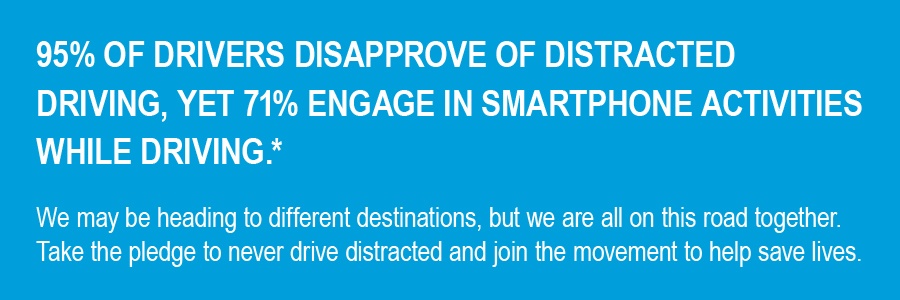
Graphic from itcanwait.com.


As much as we applaud what the Smartphone Era and innovative mobile-app research technology combined with a dedicated mobile panel are doing for the quality, consistency, timeliness and speed of market research, there is one piece of bad news about mobile that nobody should ignore: smartphones and driving make a deadly mix.


This detailed Bloomberg report sorts through the evidence, and concludes that a 14.4% jump in annual traffic fatalities in the United States during 2015 and 2016 doesn’t just correlate with the rise in smartphone adoption, but that drivers’ misuse of phones should be regarded as a significant cause. Miles driven rose just 4.5% over the two years.


Fatalities declined from more than 50,000 a year in the late 1970s to a low of about 32,000 in 2011, as automakers upped their games when it came to safety design, and consumers began to demand high safety ratings and features such as anti-lock brakes. But the two consecutive years of rising traffic deaths lifted the annual toll to about 37,000 in 2016.


So to users of the Surveys on the Go® app, and to everyone else who’s participating in the Smartphone Era – please be safe. Please remember that there’s no such thing as smart use of a smartphone when you’re behind the wheel.


Here are some educational resources:


 "From One Second to the Next," a wrenching short documentary on YouTube by the acclaimed film director, Werner Herzog, puts a tragic human face to the consequences of texting-while-driving. It’s presented by the four leading mobile carriers, AT&T, Sprint, T-Mobile and Verizon.


"It Can Wait” is a website devoted to preventing texting-while-driving. There, more than 21.6 million people have taken a pledge to let it wait when you’re driving and the impulse hits to use your phone.


The anguished words of a weeping young man in Herzog’s film pretty much say it all: “Do you know how selfish it was of me to make that decision to text and drive? Knowing every day that you killed two people is one of the hardest things that you can live with….I put my phone away, and I save those two men’s lives. It’s that simple….And it’s that easy for you going forward to save someone’s life.”


As much as we appreciate our SOTG panelists’ engagement – which typically generates a 25% response rate within an hour of receiving a survey notification, and 50% within a day – it’s crucial that all of them, and all of us, realize that responding to a survey push-notification or doing any other task on a phone is a no-go when you’re behind the wheel.

Topics: MFour Blog

Let Halloween Shoppers Give You a Treat: Vivid Mobile Insights

Posted by admin on Oct 25, 2017 9:33:52 AM


Halloween is shaping up as a sweet treat for brands and retailers, according to estimates from the National Retail Federation.


The NRF predicts a record $9.1 billion in sales of the products that make Halloween Halloween – a bewitching 8.3% revenue boost from the $8.4 billion spent in 2016. The NRF reports that the average U.S. consumer expects to spend $86.13 on candy, costumes, decorations and pumpkins, and other products that define the holiday.


– Predicted spending breakdowns include $3.4 billion for costumes, $2.7 billion for candy and $2.7 billion for decorations – including pumpkins.


Brands and retailers looking for insights into this week’s last-minute Halloween shoppers can look to mobile research as a right tool for the job.


In-store intercepts using smartphones’ GeoLocation feature catch shoppers in the store aisles. There, you can ask them about your own Halloween displays, or a competitor’s.


After-visit surveys, taken just after the shopping experience, are another excellent opportunity to obtain insights while the emotions of shopping and buying are still fresh, vivid and immediate.


Millennials, many of whom are now parents of little trick or treaters, are uniquely accessible on an all-mobile panel.


Fielding a survey just after Halloween to hear about consumers' holiday experiences could yield immediate and useful insights, including how emotional impressions from this Oct. 31 might influence shopping and buying plans for Halloween, 2018.


– Preliminary estimates for the Thanksgiving to New Year’s holiday season also look promising: Deloitte predicts spending will break the $1 trillion mark, with a 4% to 4.5% increase over 2016.


For a step-by-step account of how MFour helped a major brand maximize sales of a special holiday snack food by identifying the right aisle for its placement, just click here and scroll down to "case study." 


And for a productive conversation about how mobile app technology and a proprietary, all-mobile panel can accomplish your specific project needs, just click here.

Topics: MFour Blog

Here's What To Talk About  When You're Talking Mobile

Posted by admin on Oct 24, 2017 9:30:07 AM


Here are some key points to consider when you talk to suppliers of mobile research technology and mobile sample.


The best approach is to talk very specifically about the research you’re trying to accomplish, and see which solutions the mobile provider can bring to bear.


Some grounding in the broader basics of mobile is important, but even If you’re exploring mobile research for the first time, you’ll pick up a lot of the background info as a by-product of talking about your specific needs.


First, make sure to establish which kind of mobile the supplier is offering, because there are two approaches, not one. The first is mobile-app research. The other is known as “mobile web” or “mobile optimized.” Compare the specific solutions you’re offered by vendors of either approach, with special attention to panel sourcing.


An important comparison is how each approach addresses low online response rates, poor data quality, panel duplication and survey fraud. Mobile-app takes the process offline by embedding surveys inside the app; mobile-optimized keeps the questionnaire on the internet.


Get a sense of whether the mobile provider wants you to change your own processes and procedures, such as survey design. And get a clear understanding and strong assurances about the consultative help you can expect along the way. Experience counts, so determine how much experience the provider and its staff have with mobile research processes.


 – Does the vendor advise or require you to sacrifice some sophistication to carry out mobile research? The principle to remember is that panelists can readily handle longer, more sophisticated mobile surveys – but only if the display has perfect clarity and the respondent can move through it with intuitive ease. Mobile consumers demand excellent experiences on their phones, and will reward excellent survey functionality with strong engagement, However, they'll punish poor functionality by disengaging, perhaps permanently.


The fun part in talking about mobile lies in getting to know the specific tools –GeoLocation for real-time, in-store or after-visit surveys, harnessing smartphones’ video and photo capabilities for real-time insights and ironclad validation, and a great deal more. To have that conversation, just get in touch by clicking here.



Topics: MFour Blog

Learn About Mobile from A to Z at TMRE

Posted by admin on Oct 23, 2017 9:41:30 AM


The mass-adoption of smartphones frames every conversation about mobile research.


Pew Research Center reports that 77% of American over 18 owned smartphones as of the end of 2016, rising to 92% for those 29 and under. 


A comScore study that factored in 13- to 17-year olds put smartphone penetration at 81% in December, 2016 – nearly double the 42% of Americans who’d adopted smartphones as of 2011. It only affirms that the younger the group, the tighter its embrace of mobile devices.


Instead of "gotta get mobile," however, the conversation should now be about what, specifically, mobile can do for your research. If you're attending TMRE: The Market Research Event in Orlando this week, be sure to stop by the MFour booth to talk to some of the world's leading experts on advanced, app-based mobile research.


Vardan Kirakosyan, MFour's Vice President of Operations, can speak with unrivaled authority about survey design, programming, fielding, analysis and reporting. Senior Solutions Executive Scott Worthge and Solutions Executive Blake Skorich are brimming with ideas about how mobile technology and an all-mobile panel can handle research scenarios. Tell them what you need to accomplish, and they'll put the best mobile approach at your disposal. So come on by for a one-stop, A to Z immersion in what mobile-app research can do, and how it's done.


If you're not going to TMRE, you can have the same kind of productive conversation about how you can harness mobile-app technology and panel to meet your projects' specific requirements, just by clicking here.


Topics: MFour Blog

Here's How To Transition Online Trackers To Mobile

Posted by admin on Oct 20, 2017 11:18:02 AM


Here's your Friday roundup of 3 items from the MFour blog to keep you up to speed on mobile. Just click and read!


Here's How To Get Trackers in Tune with Mobile


Looking Into Mobile? You Deserve Project-Specific Answers


Quality People Deliver Quality Client Service


And here's a Friday tune to give your weekend a slinky start.

Topics: MFour Blog

MFour Adds Team Members in Sales  and Survey Fielding

Posted by admin on Oct 19, 2017 9:40:47 AM

Ruth Bruno (L) and Shannon Coey


Ruth Bruno and Shannon Coey have joined the MFour team -- Ruth as a Solutions  Executive who’ll help clients find innovative mobile answers to their projects’ needs, and Shannon as a Fielding Expert who’ll help ensure successful execution of those projects.


Ruth arrives with more than 14 years’ experience in the market research industry. Previously she was a Senior Account Manager at Actionable Research, where she worked extensively with clients in the dental health industry. She’s an alumna of Irvine Valley College and the Southern California College of Medical and Dental Careers. Ruth’s passions include spending quality time with her daughters and doing charitable work with Helping Hand Worldwide, where she leads a team that distributes food to the disabled and elderly. She also describes herself as a “huge sports fanatic,” both spectator and participatory.


Shannon brings proven organizational skills to the crucial function of fielding clients’ projects reliably and consistently to deliver quality data. Besides her work for MFour, she is the Volunteer Coordinator at the nonprofit Community Foundation of Orange, handling recruitment and coordinating assignments for a roster of 350 volunteers. She’s also passionate about the arts and creativity, including creating hand-crafted signs and elegant calligraphic script. She has a side business, Scribbled Calligraphy, that puts her artistry to work. Shannon holds a Bachelor’s Degree in Communication from Chapman University.


Welcome aboard, Ruth and Shannon!

Topics: MFour Blog

Keeping Online Tracking Data Relevant as You Switch to Mobile

Posted by admin on Oct 18, 2017 9:30:05 AM

Stay Go Blog


A hit song from 35 years ago has a lot to say about the state of consumer tracking studies today.


“Should I Stay or Should I Go,” by the Clash, has stood the test of time brilliantly – as confirmed by its prominent, recurring use in the Netflix sci-fi series “Stranger Things,” one of the biggest hit TV shows of 2017.


In the show, a teenager plays the song for his younger brother and tells him it will “totally change your life.” The little brother then gets hurled into a nether world where he has to hide from a predatory monster – and softly singing “Should I Stay or Should I Go” to himself helps him avoid panicking.


“Should I stay or should I go now?

If I go, there will be trouble,

And if I stay it will be double.”


The Clash’s refrain has echoes for trackers because they are at a crossroads where disruptive technological change is clashing with tracking studies’ mission of providing continuity while compiling a long-term, ongoing measure of consumer sentiment.


The disruption is consumers’ wholehearted and near-universal adoption of mobile devices, relegating the desktop and laptop computers that power online research to secondary status. As one expert, Gartner analyst Mikako Kitagawa, put it in explaining why PC sales are fading, “the whole mechanism of consumer computing usage is through smartphones. We go to sleep and wake up to them. You maybe open your personal laptop once a day, but your smartphone is an indispensable item in your daily life.”


Trackers have long been conducted as online studies, but online is being supplanted by mobile research, for the simple, unavoidable reason that it’s growing hard to find enough respondents who spend significant time in front of a PC. Problems with the representativeness and engagement of online panels are now widely acknowledged, prompting experts such as the editors of the twice-yearly GreenBook Research Industry Trends Report (GRIT) to advocate a greater emphasis on mobile surveys as the best solution.


But trackers present a special problem. They are predicated on yesterday’s and last year’s data being directly comparable with the data being collected today and tomorrow. Should you stay with the online methodology that generated your historical data? Or should you go with mobile, which you’ll need to keep your trackers properly aligned with today’s consumers? 


The Clash didn’t sing about standing still as an option, and it isn’t an option for insights professionals as they confront the reality of the Smartphone Era. One promising solution is to move to mobile tracking, but gradually, working in mobile sample bit by bit and taking measures to align it with a tracker's online data. At first, use mobile to include otherwise “hard to reach” Millennials, Gen Z, Hispanics, African Americans, parents of children 18 and under. 


As time goes by, insights professionals who use trackers will have to reckon with the fact that online, PC-oriented surveys are going the way of the vinyl LPs and singles that Clash fans snapped up back in 1982, when “Should I Stay or Should I Go” was released. But in the interim there are proactive measures that can bridge the gap between the online methodology that generated a tracker’s historical data, and the mobile data that’s crucial to an accurate understanding of consumer sentiment now and going forward.


For a productive conversation about how a mobile-app survey panel and advanced mobile research features can meet your tracking studies’ requirements (along with many other uses), just get in touch by clicking here.

Topics: MFour Blog

Let's Eavesdrop On Online Panel Providers' Tales Of Woe

Posted by admin on Oct 17, 2017 10:31:21 AM

Eavesdopping Blog 17Oct17


The trustworthiness of online panels is dissolving like pennies in a tub of sulfuric acid, but don’t take our word for it. There’s an active conversation among panel providers themselves about the predicament they’re in. The state of that conversation is reflected in the excerpts below, which can be found online in eBooks and podcasts available at InnovateMR.com.

  • “Data quality issues have proliferated throughout the industry, with increased incidences of fraud..."
  • Uniqueness is a major challenge for online panel development, leading to high levels of overlap between panels as sample companies all fish from the same pond.”
  • “With a smaller pool to draw from, many respondents belong to multiple panels...Their responses…can skew the results of a study, simply due to limited population sample.”
  • “Bots are becoming increasingly sophisticated, to the point that the data…is nearly indistinguishable from real data. It’s a mess as [fraudsters] increasingly use bots to mimic people and fill out surveys…”
  • “[Bots] don’t stand out the way they used to. [In the past] we would be able to see bot activity because it [had] completion time of one minute. Now the scripting can mimic behaviors of a real human.”
  • “And [bot creators] know the various checks that companies employ…and so they’re mimicking human behavior in a closer way than they ever have before. So it makes it very difficult…to be able to say without a doubt… that this [respondent] is good and this [respondent] is bad.”

There’s more, but how much angst can a person absorb all at once?


On the brighter side, the prospects for representativeness, panel reliability and engagement, and freedom from fraud have never been better for market research. All you need to do is seize the opportunity presented by the mobile apps that dominate consumers’ smartphone use.


For a productive and strictly upbeat conversation about how advanced mobile-app research can meet your projects’ specific needs, and relieve you of the kinds of worries you’ve just read about, please get in touch by clicking here.

 

And for a quick, entertaining video overview of mobile research, click here.

Topics: MFour Blog

Subscribe to Email Updates

Recent Posts