How Mobile Ad Testing Immunizes Campaigns Against Failure

Posted by admin on Jun 2, 2017 9:29:03 AM


Blog Friday Roundup 2June17
Here's your Friday roundup of 3 items from the MFour blog to keep you up to speed on mobile.


How Mobile Ad Testing Immunizes Campaigns Against Failure


How To Make Brand Messaging Succeed on Social Media


Mobile GeoLocation Stands on the Shoulders of MR Giants


And here's a Friday tune to remind you it's June.

Topics: MFour Blog

High Stakes Research: Testing Your Mobile Social Media Ads

Posted by admin on Jun 1, 2017 9:23:30 AM


SocialMedia


There’s nothing more urgent for insights professionals than finding ways to mine reliable data about consumer attitudes from the booming mobile social media landscape. Facebook alone generates more than $22 billion a year in mobile advertising revenue – just one sign of how crucial it is to meet consumers in the social space that occupies so much of their time and attention.


One newsworthy development is the establishment of a U.S. group called the Social Media Research Association, whose aims include helping to “connect…members with the latest tech platforms…[and] guidelines for best practices.”


Another is the debut of a new technique – reported on by Research Live and other industry publications – for testing social media advertising content before a campaign begins. Launched by MFour in partnership with Kantar Added Value, it’s called Emotional Brand Connections Social Media Ad Testing.


Brands and ad agencies can inject test ads into targeted mobile consumers’ actual news feeds to understand whether the concept and content drive awareness and favorable attitudes toward brand and product. Advertisers can then reliably fine-tune, then retest their social media campaigns to achieve maximum effectiveness. The difference-maker is having your test ads appear in consumers’ news feeds as natural content, indistinguishable from the regular ads they receive. Bias goes down, lifting your understanding of how ads really will fare in the mobile social media environment where your brand needs to thrive.


For the Research Live report, just click here. And to learn more, just contact us at sales@mfour.com.

Topics: MFour Blog

Mobile Content Injection Gives Ad-Test Research a Shot in the Arm

Posted by admin on May 31, 2017 9:16:27 AM


Untitled design-173


The old saying that “a picture is worth a thousand words” sells pictures short. Today, pictures can connect in an instant with millions, if not billions of eyes, thanks to the smartphones that dominate how consumers access social media and streamed entertainment.


The question for brands and advertisers, then, is what kinds of pictures they need to paint with video ads, mobile banner ads, film trailers and other visual messaging. Clearly, just throwing videos and pictures into the maw of social media, smartphone apps and the mobile web is an awfully haphazard and unpromising way to approach an advertising campaign. 


But what if you could test those visuals in advance by injecting them into the very mobile environment in which they’ll either succeed or fail at driving sales? You’d know whether the pictures you’re painting with your ads are really telling your story to mobile consumers – or even being noticed by them. And if these test consumers tell you your planned campaign is falling short, that will give you a chance to revise and retest until they tell you you’ve gotten it right.


If this sounds good, then why not do it? The technology and representative panel needed to test any kind of visual content with mobile consumers are available right now. And  here’s how it works:

  • On the technical side, smartphones’ powerful media capabilities allow you to test commercials, film trailers, and any other visual marketing content by injecting them directly into the phones of consumers you most want to reach.
  • On the consumer panel side, you can reach more than one million active members who fully represent your target demographic and are eager to engage with surveys via a mobile research app.
  • The app receives your test ad, the targeted panelists are notified, and you’ll soon be getting insights into how well the ad is performing with precisely those consumers you most need to reach.

In this era of proprietary content escaping and going viral prematurely, you need assurances that the ads you’re injecting into phones can’t be shared or transmitted. These safeguards are built into the process – recipients will enjoy seeing and commenting on your test content, but they can’t download, share, or take screenshots of them. Like an ephemeral private Snapchat or Instagram post, it’s seen by the eyes authorized to see it, then disappears.


The newest addition to visual-injection research is Emotional Brand Connections Social Media Mobile Ad Testing. Social media mobile advertising is crucial – for Facebook, it represents 85% of ad revenue – so it’s imperative that you get an advance read on how effective your planned campaigns on social media will fare.  With EBC Social Media Ad Testing you’ll get natural, unbiased advance data from the same environment in which the ad must live or die. Think of injected test ads as social media mobile advertising’s canaries in a coal mine. If they flourish with your targeted respondents, then your campaign’s ready to roll. If not, you’ve got a warning that will help you fix what’s wrong, test it again, and feel confident that you’ve come up with a mobile social ad that’s primed to succeed.  For more information about mobile content injection, just contact us at sales@mfour.com.

Topics: MFour Blog

Research Objectives Don’t Change, But Mobile Technology Opens New Vistas

Posted by admin on May 30, 2017 9:49:57 AM


Blog Image GreenBook Essay


Everything old is new again, and that includes market research. The objective of understanding consumers’ motivations, feelings and behaviors hasn’t changed over the hundred years or so since systematic market research began. But technology changes constantly, giving researchers ever more powerful tools to harness.


Chris St. Hilaire, MFour’s co-founder and CEO, takes a look at how the past and present overlap in an essay that’s just been published on the GreenBook Blog. What did a dozen researchers who fanned out across a town in rural Kansas in 1920 with clipboards and pencils have in common with today’s most technologically savvy insights experts? To find out, just click here.

Topics: MFour Blog

Mission Possible: Quality 20-Minute LOIs with In-App Mobile

Posted by admin on May 26, 2017 9:51:26 AM


Blog Friday Roundup No Hurrying 26May17


Here's your Friday roundup of 3 items from the MFour blog to keep you up to speed on mobile.


Mission Possible: Quality 20-Minute LOIs with In-App Mobile


Mission Impossible: Quality 5-Minute `Mobile Optimized' Surveys


Mobile Social Ad Testing Rides to Your Brand's Rescue


And here's an unhurried Friday tune to ease you into Memorial Day weekend.

Topics: MFour Blog

MFour Expands Its Engineering Team in a Continuing Push for Mobile Innovation

Posted by admin on May 25, 2017 9:26:41 AM


Blog Hiring J Romano J Inocando 25May17

Joseph Romano (L) and Jefren Inocando


MFour has added two new team members whose technical skills will help drive the company’s ongoing innovation of new, cutting-edge technology that advances the state of the art in mobile market research. Joseph Romano and Jefren Inocando continue a surge in hiring to meet the needs of a fast-growing client roster, as MFour seizes the opportunity for rapid growth without diminishing quality, consistency, and innovation.


Joseph joins as a Quality Assurance Engineer who will test and validate data to ensure successful research outcomes for MFour clients. He’ll also help create new automated testing features to enhance speed and efficiency. Joseph’s resume includes five years at Blizzard Entertainment, where he helped test features for multiple iterations of its World of Warcraft game. Before that he’d toured nationally and internationally as a professional World of Warcraft gamer. He holds an Associates Degree in Computer Networking Systems from ITT Technical Institute-Bensalem.


Jeffrey joins as a Software Engineer, focusing on software development. He’s a former freelance web developer and holds a Bachelor’s Degree in Computer Science from Mapua Institute of Technology.


Welcome aboard, Joseph and Jefren!

Topics: MFour Blog

Here’s How To Tame the New `Wild West’ of Digital Advertising

Posted by admin on May 24, 2017 9:46:47 AM


Blog Lasso 24May17


Programmatic = problematic is an increasingly troubling equation for the advertising industry.


Basically, programmatic advertising is the industry’s attempt to prosper through automation. In a high-stakes game of musical chairs, algorithms determine which ads will end up on which websites and apps, and where the ads will be placed amid the publisher’s non-advertising content.


But the Interactive Advertising Bureau has been spelling out the ways in which programmatic has turned problematic. The very term, “programmatic,” says one of its white papers on the subject, “evokes a lot of confusion in the marketplace.” The IAB also reports that “approximately 20% of all digital advertising is sold by one machine talking to another machine—and growing rapidly. This creates significant opportunity to create efficiencies and new markets -- and continue to drive advertising dollars to digital. However, it also raises potential implications and concerns for both the buy and sell-side in the digital advertising ecosystem.”


Among these, says the IAB, are “a lack of clear technical standards,” “internal organizational challenges for publishers, agencies, and brands alike” as to payments and commissions, and “the limited transparency and proliferation of vendors involved in the programmatic transaction.”


The most problematic form of programmatic is the “open auction” method, which the IAB describes as “the Wild West of [advertising] auctions…[because] usually there is no direct relationship” between the publisher who’s selling digital ad space and the brand or agency that’s buying it.


As you might expect, brands are anxious for a clear read on whether their ads are winding up in the right place with the right exposure to the right audience. And the confusion is taking a toll. Standard Media Index, which tracks advertising spending, reported that the boom in digital advertising revenues seems to be over, with revenues up just 3% in the first quarter of 2017.


“The digital market hasn’t rebounded from the viewability and safety concerns that came to the forefront late last year, and advertisers are yet to jump back in and show they are confident that these issues have been meaningfully addressed,” said James Fennessy, Standard Media Index’s CEO.


This is what’s known as a crisis of confidence. And it’s why MFour has developed a new way for brands, agencies and publishers alike to measure the effectiveness of mobile ads, which despite the problems identified by the IAD and others, represent a large and growing share of digital advertising (Facebook, for example, generates 85% of its advertising revenues from mobile ads).


This new solution to the digital advertising conundrum is called Mobile Ad Metrics OnDemand. Advertisers can learn whether their mobile ads are appearing on the right audience’s screens, then survey validated recipients of those ads to measure their effectiveness: did they even see the ad? Recall the product? Have an emotional response and feel an inclination to learn more, to shop and to buy? The method provides insights into any kind of mobile advertising – whether placed programmatically or by more traditional means.


For more on how Mobile Ad Metrics OnDemand works, just click here; you’re also welcome to contact us at any time, at sales@mfour.com.


Topics: MFour Blog

4 Rules For 20-Minute Mobile Surveys

Posted by admin on May 23, 2017 9:47:34 AM


Blog Image 23May17


What are the best practices for conducting a survey that lasts 20 minutes or longer?


It has become commonplace to hear that the best practice for long surveys is to stop trying to use them. Today’s public is too distracted, too diminished in its ability to pay attention to a task for more than a few minutes. Or so you’re being led to believe.


It’s an enduring truth that form should follow function. And if the research function you’re facing is to get a few quick insights, then the form should definitely be a survey that’s short and simple. But what if you’re facing a business need that requires a deep dive for detailed data? If it’s true that long surveys can’t work, you’ll have to settle for not learning what you really need to know – and what could be sadder than that -- not to mention damaging to your standing with top management?


Well, cheer up. There are, in fact, best practices for successful surveys of 20 minutes or more – and here they are.

  • Don’t underestimate the staying power of an engaged human mind. If attention spans are as brief as some people claim, how do you account for the phenomenon of binge watching? More than half of Millennials – a generation that’s supposedly the epitome of Dory-like attention spans – report that they binge watch TV shows at least once a week.
  • Mobile apps = engagement. The average American spends more than two hours a day accessing media through mobile apps – Facebook, for example – and that extends to more than three hours for Millennials and Gen Z. Obviously, consumers are capable of staying glued to their phones, and the smooth functionality of a well-designed smartphone app is the best attention-adhesive.
  • Don’t mistake “mobile optimized” surveys for real mobile research. The MO of “Mobile Optimized" research is to connect respondents’ phones to the internet for an online survey. That’s just criminal, as anyone who’s experienced molasses-like loading times and dropped signals will attest.
  • Take care of your panelists and they’ll take care of you. Make sure your research provider devotes painstaking attention to keeping panelists happy with fair cash rewards and the superb in-app survey functionality that’s a reward in its own right for today’s tech-loving consumers.

So don't be afraid to go long. No matter what you’ve heard, when you combine advanced mobile-app research technology with a reliably engaged panel of smartphone lovers, surveys lasting 20 minutes or more become completely feasible. Follow these best practices, and you can expect 25% response rates, 95% completion rates, and drop-off rates of 5% at and beyond the 20-minute mark.


So you don’t have to stay in the shallow end of the research pool, after all. If complex insights are what you need, don’t worry – dive in deep. To learn more, just contact us sales@mfour.com.

Topics: MFour Blog

A Key Insight About Mobile Research Methods: In-App Always Wins

Posted by admin on May 22, 2017 9:38:22 AM


Want 20+ Minute Mobile LOIs?

You'll Have to Do Better Than This


Mobile Optimized screen


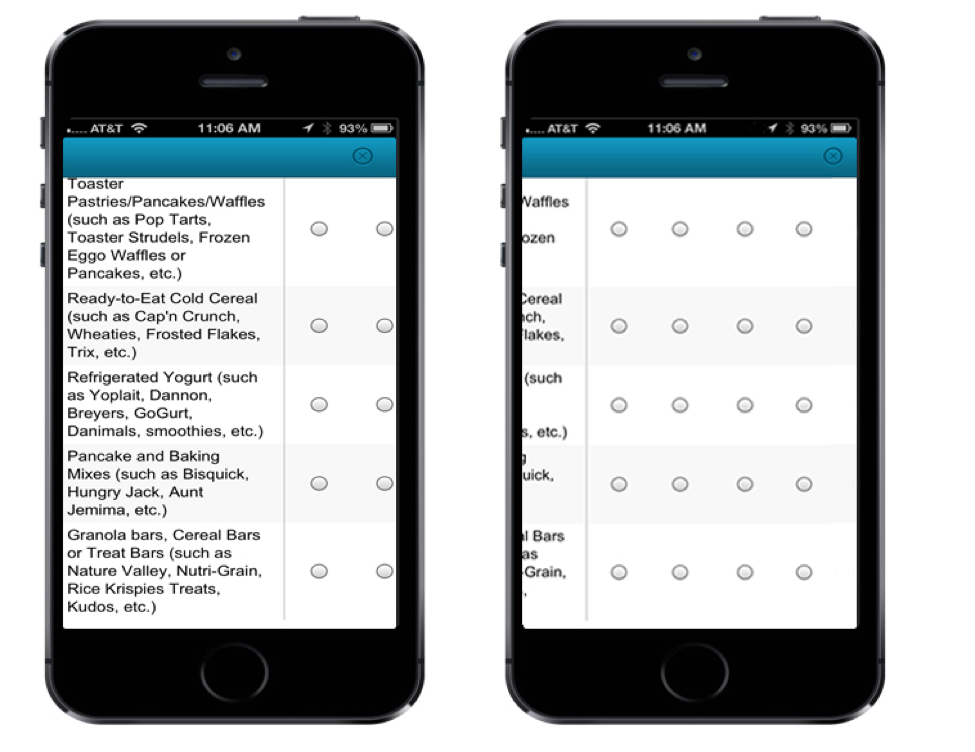
What you see above is something that literally drives survey respondents to distraction -- a deeply flawed mobile survey format that's guaranteed to frustrate and alienate. Not only does it look bad, but the technology that's being employed leads to even more frustration and alienation. Basically, it's forcing mobile respondents to use their smartphones in a banal, unsatisfying way: connecting to a website to take an online survey.

The poor display you see above, coupled with outdated survey technology, is responsible for one of market research's biggest myths: that mobile surveys have to be kept very short. 

Truth is, mobile respondents are perfectly willing to engage for 20 minutes or more, if you give them the kind of rewarding smartphone experience they enjoy and expect. It's all about the user experience: if it's clunky, respondents give up. If it's fluid, they finish -- even at LOIs of 20 minutes or more.

Accomplishing longer, deep-dive research projects is well within reach. The key is using the right technological platform for the Smartphone Era. It's now possible to embed surveys instantly in panelists' phones by using a native app. Smartphone users love apps, and in-app surveys ensure that they won't have to depend on a cell signal or WiFi, which are prone to interruption and to annoyingly slow load-ins of survey questions. The app platform also enables precise, location-based surveys that leverage proprietary GeoIntensity® and GeoNotification® technologies. 

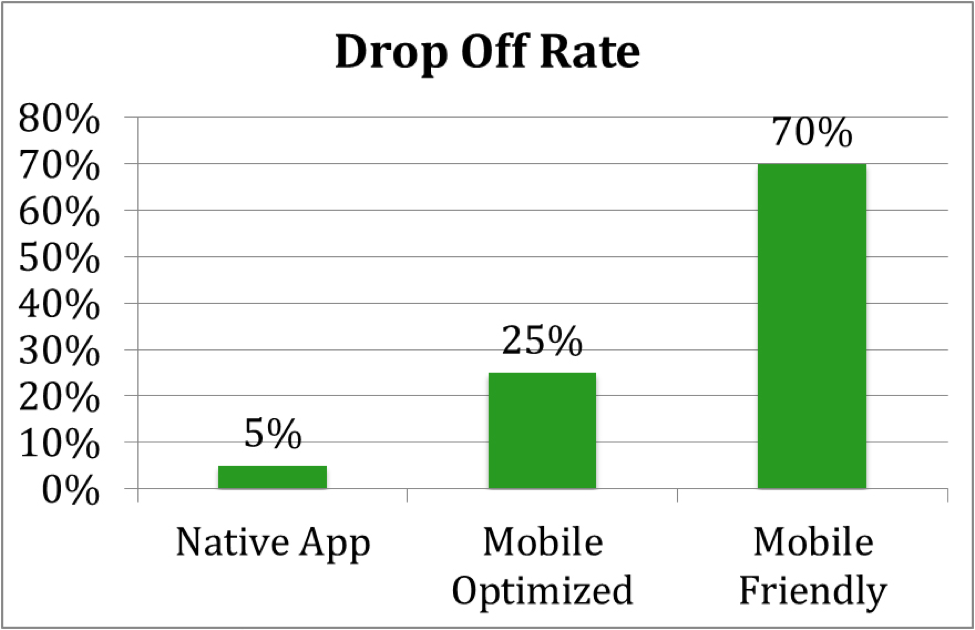
To illustrate the point, here's the data from a comparative study that tested engagement with a 20-minute survey launched in three separate mobile formats: Native App, Mobile Optimized and Mobile Friendly.

Mobile Survey Drop-Off Rates

Native App vs Mobile Optimized

Source: 2,139 surveys, 713 on each platform. Each survey ranges between 200 - 1,500 responses. Surveys conducted March 2014 - December 2014.

 As you can see, native app engagement eclipses "mobile optimized," to the tune of five times fewer drop-offs. And drop-offs were 14 times higher for the "mobile friendly" approach. To learn more about advanced, in-app mobile survey technology and the research solutions it provides,  just click sales@mfour.com.

Topics: MFour Blog

Why Advance-Testing Your Social Media Ads Is No Longer a Pipe Dream

Posted by admin on May 19, 2017 9:37:20 AM


something new


Here's your Friday roundup of 3 items from the MFour blog to keep you up to speed on mobile.


How To Get an 'A' in Social Media Ad Testing 101


Brands & Advertisers, Meet Your New Facebook Friend


Go Native To Get Social Media Mobile Ad Insights


And here's a Friday tune to get you ready for the weekend's social whirl.

Topics: MFour Blog

Subscribe to Email Updates

Recent Posts