
Welcome to Mobile 101 – Easy Tidbits Telling You What You Need To Know

Posted by admin on Jul 10, 2017 10:13:46 AM


mobile 101


In 1960, a revolutionary consumer technology reached a milestone, and now history is repeating.


1960 was the year that marked television ownership's growth to to the point the of saturation, with just short of 90% of American households equipped with at least one television set. TV ownership had leaped tenfold from 1950, when just 9% of U.S. households could tune in. In little more than a generation, we’d gone from a chicken in every pot (the slogan Herbert Hoover used to win the presidency in 1928), to a couch potato in every living room.


Now the Smartphone Era is completing its first decade – and the boom in adaptation has been even more explosive than it was in TV’s early years. The first Apple iPhone, introduced in 2007, established pocket-sized, multi-application computers as mass consumer products. By 2011, 35% of U.S. adults owned a phone, according to the Pew Research Center, and in the ensuing five years the total more than doubled, to 77%. For Americans under 30, smartphone saturation already exceeds 90%.


Mobile consumer surveys designed strictly for smartphones and tablets debuted in 2011 with the introduction of the Surveys on the Go® research app. In 2010, MFour’s founders had recognized that mobile devices were well on their way to defining how consumers would access and transmit information in all its dimensions – sound and text, still pictures and video. Mobile was consumers’ new comfort zone, and they saw that market research’s new challenge was to reach survey respondents in the information zone that was most convenient, and where they felt most at home.


Mobile surveys of varying quality, consistency and technical capacity are now in relatively common use: 65% of research clients and 77% of suppliers surveyed for the most recent GreenBook Research Industry Trends (GRIT) report said they’d tried some form of mobile. But most of them still have no idea what real mobile research is, because they’ve only had exposure to “mobile optimized” approaches that merely switch the same old online research methodology to a smaller screen. Because there’s still a lot of haze and misunderstanding surrounding mobile research, we’ll periodically share some granular tidbits of information to help you better understand the technology, methodology, uses and best practices of real mobile research – in short, what you need to understand to take full advantage of the most all-encompassing consumer technology since the television set.


Think of it as Mobile 101. We’ll start at the beginning with an upcoming post that will tell you what a “native” mobile app is, and why that matters to making data fraud-proof. So stay tuned! For more information right now, just contact us at solutions@mfour.com.

 

Topics: MFour Blog

Fight for Your Right to Fraud-Proof Data

Posted by admin on Jul 7, 2017 9:31:32 AM


Blog pic Stop Fraud 900 x 300 7July17


Here's your Friday roundup of 3 items from the MFour blog to keep you up to speed on mobile.


Read the Declaration of Independence from Online Panel Fraud


What the iPhone's 10th Birthday Means for Market Research


Take a Tip from Savvy Cows: USE MOR MOBL


And here's a Friday tune to get you winging into your weekend.

Topics: MFour Blog

Savvy Cows Know It, and So Should You: USE MOR MOBL

Posted by admin on Jul 6, 2017 1:23:48 PM


Blog Cow 900 x 300 6July17


Maybe you’ve seen those cute billboards for Chick-fil-A in which 3-D spotted cows team up to scrawl messages around the theme, “EAT MOR CHIKIN.”


Judging by this report from Business Insider, chikin – uh, chicken – has indeed been making a big move on quick-serve restaurants’ menus, even among brands known more for hamburgers or Mexican food. Instead of cute cows writing on billboards, the article cites lower wholesale prices for chicken as a key driver of the trend.


But QSR brands need to get it from the horse’s mouth, so to speak, if they really want to understand what consumers think about their menu items, and why they buy or don’t buy. Have you noticed that nearly every human does a great deal of talking into a smartphone – often in the midst of a meal? If you want horse's-mouth consumer insights on QSRs or any other product or vertical, in-app mobile surveys are the way to go. In a nutshell, here’s why:

  • Panel fraud has reached pandemic proportions for online surveys, and the last thing you need is infected data.
  • Buying online panel without full transparency that allows you to be absolutely sure of its sourcing and representativeness is a recipe for being defrauded or, best case scenario, having to weight your data heavily in an attempt to compensate for a dearth of completes from the demographic groups you need.
  • Each smartphone has a unique ID, which assures you that you’re talking to real, validated, individual consumers and not fraudsters who double-dip or fail to truly engage with a survey.
  • In-app mobile is the only mobile method that matters. “Mobile optimized” surveys that are taken on phones are really online surveys by other means, because they require respondents to follow a link to a questionnaire that puts them online, where dropped connections or slow loading times often make survey-taking an off-putting grind instead of an engaging opportunity for consumers to be heard while getting paid.
  • With in-app mobile studies, all your questions load instantly into respondents’ phones, enabling them to complete the questionnaire offline, where there are no connectivity issues. Just as important, those evil survey bots that lurk online have no way of preying on an offline, in-app survey.

Back to the chikin, er, chicken.

  • Is price really the leading driver that’s landing more poultry on QSR grills and fryers? It’s a reasonable inference, but why assume when you can get answers from actual mobile consumers whose purchases you’ve validated by asking them to use their phones to photograph and submit their receipts?
  • Does it make sense to survey a QSR customer a week, or even a few days, after the meal you need to ask about? Do you remember what you had for lunch the day before yesterday? Or even where you bought it?
  • The antidote to recall bias is a GeoLocation-driven survey that captures Point-of-Emotion® insights from consumers while they’re ordering or eating, or just after they’ve left a restaurant with their takeout orders.
  • You can’t count your sales before they hatch – but you can do advance mobile testing of ad content across any channel, to give you the best chance to make your campaign lay golden eggs.
  • The latest innovation is testing mobile social ads by injecting them into target audience members’ actual news feeds to passively measure how they engage with them, followed by a survey to measure brand and product awareness and intent to shop. Consumers also will tell you what about your ad is working, or not working – and why.
  • And yes, you can GeoLocate and survey actual mobile consumers who’ve been exposed to any billboards, including ones that might feature cute critters making appeals to our sympathies and senses of humor.

We could go on and on about the advantages of in-app mobile research, but we’ve made ourselves hungry, and it’s time for lunch (today it’s a cow product, but don’t fret, billboard bovines – it’s only yogurt). To sum up: USE MOR MOBL. And to learn more, just get in touch at solutions@mfour.com.

Topics: MFour Blog

MFour’s Growth Surge Continues with 3 New Hires in Technology & Survey Operations

Posted by admin on Jul 6, 2017 9:57:05 AM


Blog new hires Xa Fletcher Haldane 6July17

(L-R) Matthew Xa, Brandon Fletcher, Katherine Haldane


MFour has hired three more tech and survey operations employees as it continues to hone and extend its innovative mobile market research technology and its delivery of high-quality, consistently reliable data.


Katherine Haldane joins the team as a Software Engineer focusing on implementing new features and optimizing performance for the Surveys on the Go® research app, now used by more than 1.3 million active panelists who give SOTG consistent ratings of 4.5 stars out of five in the App Store and Google Play. Katherine previously developed and maintained flagship products for Surfline/Wavetrack Inc. and Resolution Interactive Media. She holds a diploma in Computer Programming Analysis from Fanshawe College in Ontario, Canada. Katherine’s leisure interests lie in realms both digital (video games) and non-digital (camping, rock climbing and cosplay).


Brandon Fletcher and Matthew Xa come to MFour as Software Programmers and Data Experts who’ll play key roles in conducting clients’ research projects. Brandon will focus on survey design and data analysis. He holds a Bachelor’s degree in Political Science and a Master’s degree in Communication Studies, both from California State University, Long Beach. There, Brandon honed his ability to amass relevant data and draw persuasive insights as a member of the debate team, including competing in tournaments nationally and in China. Matthew’s duties include survey programming and quality assurance. He holds a Bachelor’s degree in Psychology from California State University, Fullerton; his credentials also include a black belt in Taekwando.


Welcome aboard, Brandon, Katherine and Matthew!

Topics: MFour Blog

Declare Independence from Online Panels

Posted by admin on Jul 5, 2017 10:31:01 AM


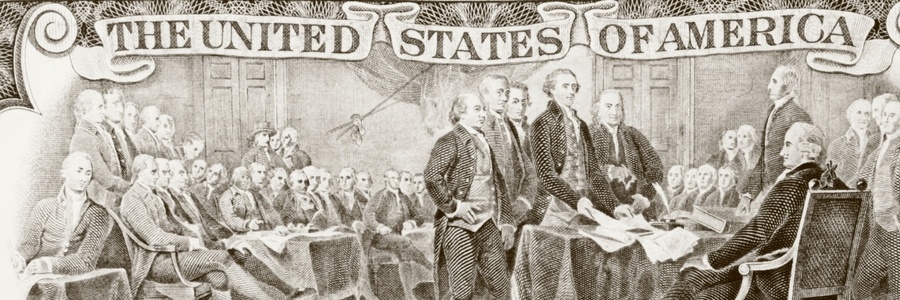
Blog Declaration 5Jul17


It took 1,458 words for the Founding Fathers to declare independence on July 4, 1776. Revolutionizing market research isn’t quite as complicated as launching a new democracy, so here’s a declaration in 70 words:


We hold these truths to be self-evident:

  • All Businesses Have a Fundamental Right to Quality Data
  • Panel and Data Are One
  • Panel Quality Is Data Quality
  • Bad Panels Mean Bad Data
  • Bad Data Drive Mistaken Analysis
  • Mistaken Analysis Drives Wrong Conclusions
  • Wrong Conclusions Drive Clients to Wrong Decisions
  • Wrong Decisions Are Extremely Bad for Business
  • Quality, In-App Mobile Panel, Data & Insights Are Here, and They’re Yours By Right

King George III would have torn up this declaration and fought to save online research and the status quo. Innovative thinkers like Thomas Jefferson and Benjamin Franklin would have signed our declaration in an instant. And then they would have gone to battle for it.


How about you? You've grilled your burgers, you've flown your Stars and Stripes, and you've thrilled to the cherry bombs bursting in air. Now you're back at work, and it's time to revolutionize what you can accomplish. Insist that your panel providers back up their product with full, transparent details about how they're sourcing your data. Demand that they tell you the specific measures they're taking to fight survey bots, double-dipping and other forms of panel fraud. And remember: when it comes to consumer panels, paying for anything less than validated quality amounts to taxation without representation. Our founders refused to take that lying down. How about you?


To learn more about revolutionary in-app mobile, just contact us at solutions@mfour.com.

Topics: MFour Blog

Stop Bots & Fraudsters! End Panel Sharing Now!

Posted by admin on Jun 30, 2017 9:35:36 AM


Bots_900x300
Here's your Friday roundup of 3 items from the MFour blog to keep you up to speed on mobile.


Stop Bots and Fraudsters! End Panel-Sharing Now!


When the Beatles Sang About Market Research


To Tip or Not To Tip: MarketWatch on Our Survey of Uber Riders


And here's a Friday tune to get you banging into the pre-4th of July weekend.

Topics: MFour Blog

What the iPhone’s 10th Birthday Means for Market Research

Posted by admin on Jun 29, 2017 9:41:13 AM


Blog iPhone 10th Birthday 900 x 300 29Jun17


Ten years ago today, on June 29, 2007, the Apple Store on New York’s 5th Avenue opened for business, and in streamed the first U.S. consumers to buy an iPhone – a distinction they’d earned by camping out four days ahead of time to ensure they’d be first at the sales counter.


Now we can look back on how Apple’s iPhone and its iOS operating system kick-started a new era in the history of communications and information sharing – along with Google’s Android operating system, which debuted in the U.S. on Oct. 22, 2008, when the first Android-powered smartphone, the T-Mobile G1, went on sale.


But when the history of market research is written, students of the industry will marvel at how a discipline that exists to provide sharply-honed, statistically reliable, up-to-the-minute data and insights into any and every shift in consumers’ attitudes and behaviors could have failed for so many years to understand the implications of what went down on June 29, 2007.  


Before we go further into that aspect of the story, let’s journey back to the events of ten years ago.


The world had first learned of Apple’s new smartphone at 9:44 a.m., Pacific Time, on Jan. 9, 2007, when Steve Jobs paused during his keynote address at the Macworld 2007 conference in San Francisco and told a cheering crowd that “today Apple is going to reinvent the phone, and here it is.” The iPhone, he proclaimed, was not just “a revolutionary mobile phone,” but “a breakthrough Internet communications device” whose functions could be controlled with a simple finger-tap. “It’s the Internet in your pocket, for the first time ever.”


(Ironically, in retrospect, Jobs then turned the mic over to Google’s CEO, Eric Schmidt, whose company had worked with Apple to provide built-in Google Browser and Google Maps apps for the iPhone 1 but would soon become Apple’s fierce operating system competitor.)


When tech reviewers got their hands on the devices, even skeptics concurred. The Wall Street Journal reported that the iPhone was “on balance, a beautiful and breakthrough handheld computer.” The New York Times pronounced it “a real dazzler,” and mused that “maybe all the iPhone hype isn’t hype at all.”


The cautionary lesson for market research is what iPhones and Android phones did to the market they entered. The BlackBerry, introduced in 2000, was the hottest smartphone on the market when the iPhone arrived, but it lacked Internet access. BlackBerry reached its sales apogee in mid-2009, when, according to Statista, it commanded 20.9% of global market share, compared to 17.1% for iOS and 3.5% for Android. The world leader, by far, at the time was the Nokia-associated Symbian operating system, which at the start of 2009 commanded a 51% market share.


Talk about creative destruction: since then Apple’s share of a soaring smartphone operating system market held steady and Android, licensed to multiple manufacturers, has skyrocketed. Meanwhile, Blackberry and Symbian rapidly sank into the dustbin of tech history. Nokia ended Symbian’s run in 2013, and the BlackBerry’s market share for 2016 was barely a rounding error, at 0.0048% of the global market.


“[BlackBerry] never quite managed the transition to smartphones successfully…and after several strategic shifts announced…that it would no longer make its own phones,” Statista’s report recounts.


There will be a passage almost identical to the one above in that hypothetical future history of market research. It will list a number of major research providers who “never quite managed the transition to smartphones successfully,” and suffered BlackBerry-esque consequences. And it will talk about how researchers who came to embrace the idea of connecting with consumers via their smartphone apps enjoyed a new era of prosperity driven by the fraud-proof quality data and insights that in-app mobile survey technology and app-using panelists made possible.


MFour began pioneering in-app mobile research in 2011, when it launched the Surveys on the Go® research app and began attracting a U.S. panel that now numbers more than 1.3 million active members. It started when MFour’s founders recognized that every third person or so seemed to have a smartphone in hand, and reckoned that this was just early days for what they were sure would soon be a transformational, all-encompassing technology. They saw that market research needs to reach consumers when, where and how they want to be reached – and that the answer was, increasingly, on their smartphones.


If there’s one statistic that crystallizes what’s happened since MFour got started, it’s this one from eMarketer: in 2016, U.S. smartphone users spent 3 hours and 15 minutes a day accessing the Internet with mobile apps, as opposed to 50 minutes using browsers. The mobile app is king, and if you page through our blog posts, you’ll find lots of details about what that means to market research.


So happy birthday, iPhone, and thanks for the revolution, Apple (and you, too, Google). Here’s to the next ten years of mobile excitement and mobile prosperity. And here’s a salute to the market research clients who are already on board, and a welcoming toast to the many more insights professionals, advertisers and marketers who will soon join in. As the takeover by iOS and Android has shown, it’s amazing how fast the changes come once a good idea sinks in. To find out more, just get in touch at solutions@mfour.com.


Topics: MFour Blog

A Call to Online: Stop Panel Sharing Now!

Posted by admin on Jun 28, 2017 9:43:47 AM


Bots_900x300

There’s a complete cure for panel fraud, and it’s available to any insights professional who isn’t wedded to online research. The cure, of course, is in-app mobile research, in which unique smartphone technology transports clients and their projects to a research habitat where real mobile consumers love to gather, where human fraudsters can’t hide, and where survey bots can’t enter.

A public window into the specific problems that are causing trouble for online panel providers recently emerged in what its participants call the Data Quality Download Podcast Series. The two conversations posted so far are intelligent, earnest, well-meaning exchanges between veteran online panel and online data professionals. Here are some of the key points from the first installment, which focuses on two leading issues: the need to identify and reject suspect survey responses, and the unrelenting problem of hard-to-detect survey-taking bots that mimic real respondents.

  • Q: “Sometimes there’s a debate between the sample providers and research firms on how much sample should be rejected, and on what criteria...what's reasonable?
  • A: “There is no average, there is no norm you can expect [for] what you have to scrub out... it’s all over the map…because there are so many different sample sources out there…and so many blends of sample methodologies."
  • For studies involving multiple-source panels, "scrubbing can be as high as 30 or 40%."
  •  “A constant vigilance has to be applied to make sure your data is going to be good, and you can have confidence in the insights that your customers are going to use.”
  • “[Bot fraud] is a very dynamic, very evolving challenge for the industry. It’s getting increasingly sophisticated….You have to acknowledge that this happens in our space…so we can be really proactive and get in front of this issue. Putting our head in the sand does not help anyone, right?"
  • An attempt at finding a more coordinated and systematic approach to developing fast, effective ways to detect bot attacks is getting started, “but...we’re in the early stages of that."
  • Fighting online panel fraud will require providers to "create predictive checks and algorithms that can move the industry forward....If we can rely on these predictive elements rather than human review on the back end, that’s a huge time savings and it really helps."

The podcasts so far have not brought up a crucial opportunity that should be part of any conversation about solving panel fraud and safeguarding data quality: in-app mobile research, with its proven effectiveness in preventing fraud by bots or humans. Here are important additional points for you to factor into your own thinking about data quality, panel quality, and panel fraud:

  • When they commission a properly sourced and fielded in-app mobile study, or conduct one themselves on an in-app mobile DIY platform, researchers see almost no need to reject any of the completes they receive.
  • Bots can’t break into the in-app mobile survey space. In-app surveys load instantly into panelists’ phones. Respondents answer them offline, the entire experience taking place in-app, which means inside the phone.
  • The bots are left lurking online, where they can and do find other prey.
  • "Mobile optimized" research simply substitutes a smartphone screen for a desktop or laptop. "Mobile optimized" respondents have to click on a link and enter the treacherous online space to take what's actually only a mobile-mimicking survey.
  • Each smartphone is individually identifiable, and each identified smartphone is in the hands of a validated human consumer. Fraud-minded respondents are detected quickly and permanently frozen out of the survey app.
  • More than 1.3 million active panelists who use the Surveys on the Go research app will take your surveys in a mobile safe space that's a realm apart from the online universe where bots run rampant.

The podcast series about online research's struggles against panel fraud is fascinating and well worth listening in on, including this second installment. But if you're serious about panel fraud and its consequences for your data, it's even more important to have a clear, informative and productive conversation about in-app mobile. Just contact us at solutions@mfour.com.

Topics: MFour Blog

MarketWatch Uses Mobile App-Tracking Data To Report on Uber Tipping

Posted by admin on Jun 27, 2017 1:50:10 PM


Blog Image Uber Survey 22Jun17


It’s rare for consumers to voluntarily pay more for a service, but that seems to be the case among Uber riders surveyed by MFour. 79% of the Uber app users in our study said the rideshare company’s recent decision to make it easy to add a tip to the fare by using its app's regular payment feature is a “great idea” or “good idea.”


Developments at Uber are always big news, and the survey of 1,112 MFour panelists who use the Uber app drew coverage from MarketWatch, whose reporter, Kari Paul, used that key insight for a story headlined,Yes, most people believe Uber drivers deserve tips. She also probed some of the ins and outs of rideshare tipping.


Some experts quoted in Kari’s story worry that riders will feel pressured into “guilt tipping,” because Uber drivers get to rate their customers and could warn against those they perceive as ungenerous. But MFour’s survey findings suggest that a large majority of Uber riders are happy to have an easy option to show their appreciation in a way most drivers will really appreciate.


With its app-tracking capability, MFour can quickly identify which members of its all-mobile Surveys on the Go® panel of more than 1.3 million active users have a given app, then send them a timely survey. Thanks to MarketWatch for staying on top of the Uber story.


For more details on the rider survey, click here.

Topics: MFour Blog

How John, Paul, George & Ringo Became Market Research Visionaries

Posted by admin on Jun 26, 2017 9:13:02 AM


Blog Beatles Panel image 900 x 300 26Jun17

If you have even a passing interest in pop music, you’ve probably heard that this month marks the 50th anniversary of the release of the Beatles’ classic 1967 album, “Sgt. Pepper’s Lonely Hearts Club Band.”

What you may not know, even if market research is your passion, is that the Beatles, wizardly visionaries that they were, used one of the album’s songs to foreshadow the Great Online Panel Disaster of 2017 by half a century.

“She’s Leaving Home” tells the sad tale of one generation literally being left behind as the new one sets out to claim its place in the world. Most people – well, virtually all people -- think it’s about a young woman who can’t stand living at home anymore, so she writes a farewell note and heads off to live the rest of her life, leaving her stunned mum and dad to ask where it all went wrong.

“Why would she treat us so thoughtlessly,” they ask. “How could she do this to me?”

We’re here to tell you that it’s all an elaborate metaphor. The bereft parents are online research. The teenaged “she” who leaves them is today’s public, which has had it with taking online surveys and insists on something new – something that respects and responds to the fact that the world now revolves around smartphones instead of desktops and laptops.

The harmonizing Beatles get to the crux of the matter in the last verse, making it clear that mobile consumers need something more from their research experiences, while baffled suppliers and buyers of online research panels can only wring their hands.

“She (what did we do that was wrong?)

Is having (we didn’t know it was wrong)

Fun (fun is the one thing money can’t buy).

Something inside that was always denied for so many years.

She’s leaving home, bye bye.”

In-app mobile surveys meet consumers where they want and need to be, by providing fun, engaging, seamless and technologically gratifying experiences on the phones they love. The Beatles knew it – and now you do, too.

Hey, music fans are entitled to their own interpretations, right? And every researcher is entitled to the engaged, tuned-in panel that’s the fundamental building block of the quality data and insights that are fundamental to smart business decisions. If panel problems are taking the fun – and the effectiveness – out of your work, we should talk. Just get in touch by clicking here.

Topics: MFour Blog

Subscribe to Email Updates

Recent Posts