admin

Recent Posts

How Do Mobile Best Practices Drive Panel Quality? Take Six Minutes To Get Tuned In

Posted by admin on Apr 27, 2017 10:46:30 AM


[embed]https://www.youtube.com/watch?v=eM0ZKGObLVg[/embed]


If you want the lowdown on innovations and best practices in recruiting and managing research panels, here’s an opportunity to hear it from the guy who has the most experience when it comes to panel cultivation and engagement in the crucial mobile research sphere.


Chris St. Hilaire, MFour’s co-founder and CEO, had a chat this week with Bob Lederer for Bob’s “Business Research Daily Report” on YouTube. Check out the interview for a 6-minute overview of the panel quality issues facing market researchers, and how mobile best practices for sourcing  consistent, quality data provide alternatives to online panel methodology. The discussion focuses on common errors in panel recruitment, management and engagement that can compromise quality, consistency and reliability.


Thanks, as always, to Bob for providing and moderating a daily forum that elevates the conversation about the issues that are on market researchers’ minds, and keeps us all up to date on the innovations and opportunities that are moving the industry forward. And for   your own one-on-one conversation about mobile solutions, just contact us at sales@mfour.com.


Topics: MFour Blog

Study Finds 85.6% of Americans Believe Their Love Will Last Forever

Posted by admin on Apr 26, 2017 10:30:39 AM


Couples1_900x300


You can’t really quantify love, but since April is National Couples Appreciation Month (as the folks at NationalDayCalendar.com have declared), and survey data is MFour’s business, we decided to try. Here’s what we found in a study of 400 men and 400 woman ages 18 to 70 who are currently married or in a relationship.


The key takeaway is that when it comes to love, American couples believe overwhelmingly that their romances will last  – regardless of cold, hard, academic research data to the contrary. An oft-cited University of Denver study concluded that if current socioeconomic factors remain unchanged, 42% to 45% of new American marriages can be expected to end in divorce. But when we popped the bottom line question -- “Will you be with this person forever?” -- our respondents didn't hesitate to affirm their faith in lasting love. Optimism prevailed over pessimism by a margin of six to one.

  • Asked if their relationship would be unending, 60.6% chose “Yes, absolutely” and an additional 25% picked “Yes, most likely” – a combined 85.6% optimism rate.
  • Only 3.9% picked “no,” and 10.5% chose “not sure” – for a 14.4% pessimism rate about their relationships.
  • When it came to certainty that a relationship would last -- a "Yes, absolutely" answer -- there was a wide gap between married respondents (74.3%) and those who identified themselves as "in a relationship" (48%).
  • Factoring in "Yes, most likely" responses, the overall optimism rate totaled 93.1% for married respondents and 78% for "in a relationship" respondents. 
  • Men (84.8%) and women (85.6%) were nearly equal in their optimism about lasting love.
  • Optimism prevailed among the young (83.8% for respondents ages 18-34) and the middle aged (88.1% for ages 35-70).
  • Whether they identified as heterosexuals (86.1%), gays or lesbians (81.3%) or bisexuals (85.2%), our respondents believed their current relationship is certain or most likely to last.
  • Whites (89%), African Americans (81.4%), Hispanics (78.8%) and Asians (80%) all expressed optimism that they’ve found lasting love with their current partner.
  • Optimism about love carries across regions: the Northeast (84.9%), the Midwest (86.4%), the South (89.7%) and the West (78.4%).

The survey also delved into some of the obstacles couples have to overcome.


Arguments

  • Asked who typically wins, 64% of respondents said that they and their partner come out “about even” – a solid vote for a balance of power in lovers' disputes.
  • But that means there was a consistent loser in 36% of relationships – and respondents reported a distinct advantage to women when there’s a battle of the sexes.
  • Among male respondents in opposite-sex relationships, 26.7% said they typically lost arguments, and only 10.9% said they usually won.
  • It was the reverse for women: 23.3% said they usually won arguments, and only 9% said they typically lost.

Money

  • In opposite-sex relationships, when couples go out, it’s the man who usually picks up the tab – true in 50.3% of relationships if you believe the survey’s male respondents, and 46.6% if you believe the women.
  • Women typically pick up the tab in only 10.8% of relationships, if you ask men, or 6.8% if you ask women.
  • 46.6% of women said they and their partners share about equally in picking up the tab; only 39.7% of men concurred.
  • Talk about a generation gap: 63% of Baby Boom men (ages 56-70) said they usually pay the tab, compared to 46.3% of 18- to 29-year-old Millennial men.

Trust


Heterosexuals were asked whether they would feel uncomfortable if their partner had a friend of the opposite sex who is very attractive.

  • 62.9% said they would be “very comfortable” or “somewhat comfortable” with that friendship, and 37.1% said they’d be very or somewhat uncomfortable.
  • Women reported more uneasiness than men – 42.7% said they’d be uncomfortable about that attractive other, compared to 31.6% of men.
  • Age and marital status were indicators for trusting one’s mate with a very attractive friend of the opposite sex: Among 18- to 29-year-olds, 53.6% of respondents said they’d be comfortable with such a friendship, compared to 68.9% of respondents 30 and older. 68.7% of married people said they’d be comfortable with their mate having a "very attractive" friend of the opposite sex, compared to 55.7% of those who aren't married.
  • 64% of Caucasians and African Americans said they were comfortable with a spouse or lover having a very attractive friend of the opposite sex, compared to 58% of Hispanics and 54.5% of Asian Americans.

Annoying Behavior


We gave respondents a list of potentially problematic behaviors on the part of a spouse or partner and asked them to identify which would make them uncomfortable.

  • Accessing one’s smartphone without permission was the least-tolerated offense – bothersome to 41% of respondents
  • Other leading irritants were leaving the bathroom door open (28.8%), using a partner’s social media password (25.9%) and flatulence (19.9%).
  • Nearly a third of respondents (31.9%) said none of these behaviors would make them uncomfortable with their partner.
  • Women were more tolerant than men, with 34.8% saying they’d be OK with all the behaviors on the list, compared to 29% of men.

Do these results make love any less mysterious? Probably not. Will they add some interesting grist to the never-ending conversation about love? We certainly hope so. And what's our take on the overwhelming faith our survey respondents expressed in having found a lasting love? In a word, “amen!”


Thanks, as always, to our respondents – who were among more than one million active panelists who use MFour’s Surveys on the Go® research app, taking surveys strictly on the mobile devices today’s consumers (and lovers) love to use. Just contact us at sales@mfour.com and we’ll set up a one-on-one demonstration of how innovative, in-app mobile research technology and an engaged, all-mobile panel deliver quality and consistency.


Topics: MFour Blog

Here's Your 4-Step Plan for Taking the Guesswork Out of OOH Ad Measurement

Posted by admin on Apr 25, 2017 10:11:35 AM


OOHAdMatch_900x300


Out of Home advertising is everywhere, and that poses a big conundrum for advertisers. You can’t be everywhere, so how do you get reliable insights into who’s being exposed to your signs and the impact your OOH campaigns are having?  Advanced mobile research technology has an elegantly simple solution. It begins with the fact that, among many other capabilities, smartphones are consumer locators.


Step 1: Question whether guesswork is good enough.

  • In the traditional approach, click-counts, road- or foot-traffic counts and speed and sightline and angle readings feed algorithms that estimate your OOH audience.
  • Start to understand that there’s a new solution for the Smartphone Era: Real-Time Mobile OOH Measurement.

Step 2: Decide on the mobile option, then study some easy geography.

  • Compile latitude and longitude of every sign in your campaign.
  • Given latitude and longitude, you can GeoFence anything that’s standing still – including OOH signage from giant mural billboards to bus shelters and shopping mall kiosks.

Step 3: Field your real-time OOH audience survey.

  • Access an all-mobile panel whose members have agreed to take location-based surveys using a survey app they’ve downloaded to their phones.
  • Panelists’ phones tell you when they have entered the radius of one of your GeoFenced signs (usually 50 meters in all directions).
  • These are naturally-captured audiences, not recruit-and-sends.
  • When a panelist enters a sign’s GeoFenced radius, it automatically triggers a push notification that a survey is available.

Step 4: Evaluate your data for ad measurement insights.

  • Check awareness of the sign, awareness of the brand, awareness of the advertised product or service, and intent to shop.
  • Get campaign momentum insights by surveying different sets of exposed consumers at regular intervals.
  • See whether late-stage respondents who may have had multiple exposures show more awareness and interest than respondents surveyed early in the campaign.
  • For lift measurement, establish a control group of demographically similar, non-exposed consumers.
  • Compare control group and exposed consumers’ responses to get lift metrics – including brand and product awareness and intent to shop or purchase.
  • No more guestimates about OOH’s impact, thanks to real data from real consumers in real time, for reliably real insights.

Interested? Take the first step to mobile OOH measurement by contacting us at sales@mfour.com. We’ll be more than happy to set up a live, one-on-one demo to take you through all the details.


Topics: MFour Blog

MFour Increases Sales Staff To Meet Snowballing Demand

Posted by admin on Apr 24, 2017 10:06:10 AM


Pics D Jeong K Sandman


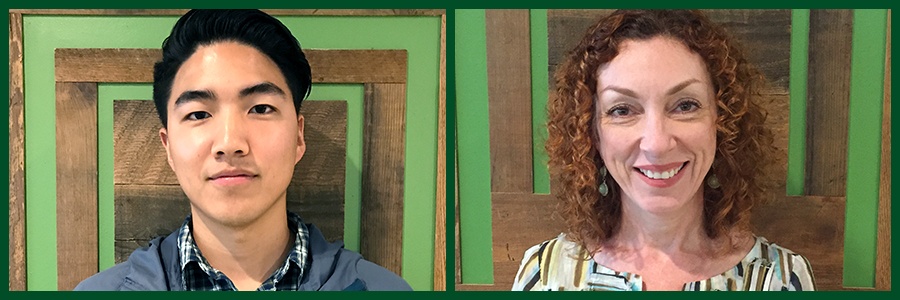
Kate Sandman and David Jeong have joined the MFour sales team as the company continues its rapid growth to meet snowballing demand for its advanced mobile research products.


Kate joins as a Senior Solutions Executive, bringing extensive experience in helping market research clients obtain the solutions they need. At MFour she will be a point person in educating marketing and promotional agencies about the  powerful capabilities of MFourDIY® -- the only all-mobile, do-it-yourself survey-building tool. Kate has held sales posts at Instar America and GfK Custom Research and is a graduate of the Kelley School of Business at Indiana University. In her free time she’s a volunteer care-giver for abandoned kittens, raising them until they’re ready to be placed with an owner. Besides setting you up with mobile DIY research solutions, Kate might talk you into taking home a furry bundle or two. She’s also an architecture and design aficionado, with a special fondness for Mid-Century Modern.


David joins the team as a Solutions Development Representative. He’s reaching out to research firms and brands, introducing them to the capabilities of MFour’s advanced mobile survey technology and all-mobile panel in driving successful research projects. David earned a Bachelor’s degree in Kinesiology from California State University, Long Beach. He loves to hike and fish.


Welcome aboard, Kate and David!

Topics: MFour Blog

On the Horizon - American Association for Public Opinion Research Conference

Posted by admin on Apr 21, 2017 10:41:41 AM

MFour will be attending the 5/18 AAPOR conference in New Orleans. Come say hi!

Topics: Upcoming Events

On Your Rader: TMRE in Focus Conference

Posted by admin on Apr 21, 2017 10:40:10 AM

MFour will attend the 5/1  TMRE in Focus conference in Chicago. We'll see you there!

Topics: Upcoming Events

Big Data Innovation Summit 2017

Posted by admin on Apr 21, 2017 10:19:11 AM

MFour just finished up at the Big Data Innovation Summit 2017 in San Francisco, where our Chief Product Officer and Director of Panel Michael Smith presented on first-party advertising measurement. Great job Michael!

Topics: Upcoming Events

Make Big Data Your Ally for Insights into the Human Dimension

Posted by admin on Apr 21, 2017 9:46:25 AM

BigDataSummit5_900x300


Here's your Friday roundup of 3 items from the MFour blog to keep you up to speed on mobile.

Big Data + Mobile Survey Panel = Human-Dimension Insights

How To Avoid Stepping on Big Data's "Hidden Landmine" 

Candy Means Love on Mother's Day. Can Big Data Tell You Why?

And here's a Friday tune to get you revved up heading into your weekend.

Topics: MFour Blog

Why Big Data Alone Won't Help Sellers Max Out on Mother's Day

Posted by admin on Apr 20, 2017 10:34:41 AM


BigDataSummit4_900x300


Mother’s Day is Sunday May 14, and when marketers and brand managers come to work on May 15, they'll already have reams of Big Data to sort through -- including comprehensive numbers on sales and revenues for each gift item in their product lines.


What they won’t know is why one brand of gift-boxed chocolates raised its market share by 5%, while a leading competitor experienced a commensurate decline. What did one brand do right? Where did the other fall short? How and why did consumers make those particular choices for their moms? And why candy instead of flowers or fancy toiletries?


Big Data – quantitative information that pours in from passive tracking of consumers’ digital footprints – won’t tell the story of “why this brand and not the other.” It won’t reveal why candy got the nod over flowers – or vice versa. And it won’t be able to give insights into how satisfied boxed-candy customers were with the product itself.


Savvy insights professionals will want answers to those questions about motivations and satisfaction. Big Data will take them part way there -- by helping them frame the right questions about the human dimension --  the "why," the "why not," and the "how satisfied." 


Exceptionally savvy brands and retailers won’t wait until after the fact, but will be on the case right away, seeking insights into shoppers' emotions and motivations during the weeks and days leading up to Mother’s Day. Some will be able to use those on-the-fly, real-time insights to make effective adjustments in messaging, pricing and product placement.


MFour combines advanced survey-app technology and an engaged all-mobile panel of more than one million active members to take you to the real-time Point of Emotion® where consumers decide what to buy, and how satisfied they are with what they've bought. For those attending the Big Data Summit in San Francisco, Michael Smith, Chief Product Officer and Director of Panel, will be talking today about how to make Big Data work in tandem with data obtained through mobile surveys to generate a 360-degree understanding of both the “what” and the “why.” His talk, focusing on combining Big Data and survey data for mobile ad measurement, begins at 2:30 p.m. If you can’t be there, don’t worry – you can schedule a one-on-one live demo with an MFour representative to talk about how mobile surveys can work for you. Just click here.

Topics: MFour Blog

Big Data Can Cause Big Problems if You Neglect the Human Dimension

Posted by admin on Apr 19, 2017 9:56:54 AM


BigDataSummit3_900x300


Big Data promises to be a goldmine, as long as consumers don’t think they’re getting the shaft.


That, in essence, is the message of a study by Boston Consulting Group that assesses opportunities and risks of Big Data's ability to compile an exhaustive digital record of consumers’ quantifiable activities in shopping, customer service contacts, social media and more.


The study concludes that the human dimension has to be respected, even as marketers and brands move to make the most of the data they can collect at every touchpoint in their customers’ daily digital pathways.


Humanizing Big Data is important to Michael Smith, MFour’s Chief Product Officer and Director of Panel. He’ll give a presentation Thursday at 2:30 p.m. at the Big Data Summit in San Francisco that explores how advertisers and brands can gain deeper insights by surveying mobile panelists who, thanks to Big Data, have been identified and validated as actual recipients of mobile ads.


Getting back to Boston Consulting Group’s article, “Bridging the Trust Gap: The Hidden Landmine in Big Data” – well, the headline is right on point.


The opportunities are immense: BCG “conservatively estimates that trusted uses of big data and advanced analytics could unlock more than $1 trillion in value annually by 2020.” But, the article cautions, “recent BCG consumer research has uncovered a previously hidden obstacle to successfully unleashing this enormous opportunity: data misuse.”


Meeting the letter of the law for consumer privacy isn’t enough, BCG researchers say. People don’t care about legalisms – they want to be treated fairly and respectfully, trusting that their data won’t be misused. Most consumers’ don’t mind having their data tracked, so long as it’s used to improve a company’s products or services, or to give back desired and agreed-upon benefits such as discounts and useful product information. But “data misuse occurs when consumers are unpleasantly surprised upon learning that data…has been used in new ways…outside the purpose for which it was gathered,” BCG’s authors note. The “research suggests that consumers’ reaction to data misuse…can cause them to reduce their spending with a company by about one-third.”


It’s telling that Boston Consulting Group obtained these insights by surveying 8,000 consumers worldwide about their views on how their behavioral data is used. It’s a reminder that you can’t ignore the human dimension. Big Data can deliver unprecedented efficiencies in ushering shoppers to the point of purchase. But capturing motivations and emotions to truly understand consumers will always be an indispensable part of the process. Talking to real consumers is still the best way to find out whether their expectations are being met – and what consequences ensue when they aren’t. If you've got questions that need answers from real consumers, please get in touch at sales@mfour.com. We'd love to have a conversation about how advanced mobile data solutions can get the job done. 

Topics: MFour Blog

Subscribe to Email Updates

Recent Posts