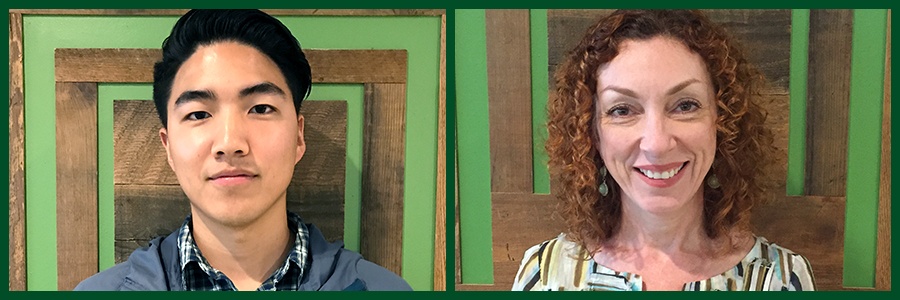
Rob Chrone Joins MFour’s Team as Chief Financial Officer

Posted by admin on May 4, 2017 9:15:05 AM


NewHireRobChrone_900x300


Rob Chrone has joined MFour’s team as Chief Financial Officer, bringing 20 years’ experience as a financial and operations executive at growing technology companies. Rob’s previous positions include Chief Financial Officer for Vantage Media and CFO and Chief Operating Officer at email security company FrontBridge Technologies. He’s played key roles in raising investment capital and in mergers and acquisitions, including Microsoft’s acquisition of FrontBridge. Rob is a certified public accountant and holds a Bachelor’s degree from Stephen F. Austin University.  His arrival at MFour continues the company’s rapid growth, which recently has received endorsements from both the private sector ($5 million in new funding from Kayne NewRoad Ventures Fund II) and the public sector ($680,000 in job-creation tax credits from California’s state government). Rob said he’s particularly excited because “MFour offers a differentiated market research platform and has been growing rapidly. Client demand is strong and increasing. It should be a fun ride.”


Welcome aboard, Rob!


Topics: MFour Blog

Learn How Innovative Mobile Technology Solves the Panel Quality Crisis

Posted by admin on May 3, 2017 9:26:30 AM


BlogPanelQuality_900x300


Desperado, why don’t you come to your senses?


With apologies to the Eagles, this isn’t just a question to kick off a classic rock ballad about a lonely guy who’s afraid of commitment. It’s a question that many market researchers need to ask as they try to deal with the continuing decline of online panel quality.


We’ll be periodically highlighting why issues of panel quality and consistency have reached the point of desperation – as demonstrated by the wake-up calls issued by the authors of the two most recent editions of the GreenBook Report on Industry Trends (GRIT). And we’ll be calling your attention to a solution to the problem, by going through the best practices for innovating your way out of the bad-data desert. The solution lies in advanced, in-app research technology that gives survey respondents the high-quality mobile experiences today’s consumers demand.


To start, here’s the context for why it’s crucial to focus on panel quality and the best practices for achieving it.


The 2016 Q1-Q2 edition of GRIT found a striking disparity between how panel providers perceive their product’s quality, and how it looks to their clients. The clients, it should go without saying, are the best judges of whether the data they obtain from online panels is reliable enough to let them do their job of generating insights that can stand up to a reality check in the real world of business decision-making.


The bar graph on Pg. 44 of the report says it all. More than half of the data collection providers GreenBook surveyed, and nearly half of the sample providers, said panel quality is getting better. But it was just the opposite for insights professionals who have to tease meaning out of data and provide analysis that can withstand a reality check. Barely 20% of GRIT respondents from full service MR firms, and fewer than 20% of corporate research insights professionals, saw an improvement in panel quality. More than 40% said survey sample was getting worse. In other words, those who have a vested interest in obtaining quality data are getting desperate, while those who are supplying it want the industry to think everything’s still peachy.


Here’s the key insight GRIT’s authors distilled from their respondents’ comments:


“Surprisingly, [insights professionals think that] technology, or lack thereof, is the prime culprit for sample getting worse: from bots, to survey design, to mobile enabled surveys, all these are driving sample quality down. Many respondents have a strong sense that there are only professional survey takers and fraudulent bots that are taking all the surveys because there is a race to the bottom in terms of cost.”


Are there any more damning words when talking about technology than “lack thereof?” When it comes to success in market research, or any other 21st century business, there’s no margin of error when it comes to getting the technology right. What’s crucial to understand is that it’s a fatal mistake to view panel and survey technology as separate, independent and unrelated inputs. Successful research depends on five core insights into how the consumers you need to engage experience technology:

  • Consumers use smartphones for their personal activities; desktops and laptops are devices for the workplace.
  • Consumers don’t just use smartphones – they view them as necessary appendages to perceiving, thinking, expressing and acting.
  • Consumers don’t merely dislike having slow, cumbersome experiences on their phones. They simply won’t tolerate them. Research must be mobile, and its design and delivery must sparkle.
  • Consumers' first choice for mobile experiences is to access them through apps, not browsers and web connections that are vulnerable to dropped connections and other problems that compromise functionality and lead to frustration and disengagement.
  • Successful research is impossible without the right incentives. One is fair cash payments for honest, thoughtful survey responses. The other is an engaging technological experience – a reward in its own right for today’s mobile consumers.

Act accordingly, and soon you won’t have to feel like a desperado when your research data comes in. As we periodically revisit this subject, we’ll be going into more specifics on how panel quality and innovative mobile research technology have become intertwined in a double-helix that needs to be part of the research industry’s DNA. If this makes sense to you, you’re invited to get full details on the best practices right now. Just contact us at sales@mfour.com.


Topics: MFour Blog

Why "Mobile Optimized" Is Just Yesterday's Buzzword

Posted by admin on May 2, 2017 10:06:50 AM


InAppAdvertising_900x300


Ever wonder why market research breeds buzzwords – “agility,” "mobile optimization" and “gamification,” for example? In a bid to coin a new one (which you’re invited to ignore at will), we propose “propinquity.” There may not be an odder word in the dictionary, but its meaning lies at the very heart of our industry: “the state of being close to someone or something; proximity.”


One of the most important tools for achieving propinquity (or, if you insist on plain English, “a connection”) with consumers is the smartphone app. According to comScore, 61.7% of Americans’ time in digital space is devoted to mobile apps. Where the people are is where businesses must go -- including consumer research. Surveys don't need to be gamified if they take place inside a quality, user-friendly mobile app that meets consumers in their comfort zone. The name of the game for engaging them is innovative app technology that exploits what apps are all about -- eliminating the need for the web connections and email notifications that keep "mobile optimized" research tethered to last-generation technology.


Here’s a quick how-to on one important new use for in-app research: measuring mobile ad campaigns that now account for $36.6 billion in annual U.S. spending. It involves a nationwide bank's bid to promote its mobile banking app with mobile advertising geared especially toward Millennials, a generation that typically spends a lot more time with financial technology smartphone apps than in propinquity with a teller's window.

  • First, seek out a representative research panel that takes surveys via a mobile app. Members can be consistently and efficiently targeted by the detailed demographic data they provide when they first download the app.
  • Understand the importance of mobile Advertising IDs. To measure mobile ads, you need to know which phones have received them. Each smartphone has a unique ID, and advertisers have access to the ID code for each phone on which an ad was displayed.
  • Match the universe of all Ad IDs collected in a campaign against the IDs of mobile panel members. Bingo! Each match is a validated ad recipient you can survey.

Some advertisers may just want aggregated demographic data that makes it clear whether the ads are being targeted properly to the likeliest or most-desired profiles of consumers. That alone can inform useful business decisions about improving targeting and eliminating wasted spending. In this case, the banking client wanted deeper insights that required surveying 200 ad recipients representing preferred consumer demographics. The bank knew it would be talking to just the right people about whether they were aware of its app and its in-app advertising. Other questions dug for insights into perceptions of the bank’s brand and services – and its competitors’.

  • To measure the campaign’s effectiveness, a mobile survey was sent to a demographically comparable control sample of panelists whose phones had not received the bank’s mobile ad. The bank found that ad recipients’ brand awareness was 12% higher than among non-recipients.

The moral of this story is that you shouldn’t waste any brain cells remembering “propinquity” or any other buzzwords, but you need to grasp that the standard for innovation, quality and consistency is in-app mobile research.


Interested? Take the first step to mobile ad measurement and brand research by contacting us at sales@mfour.com.


Topics: MFour Blog

$36.6 Billion in Mobile Ads Make Valid Measurement a Must

Posted by admin on May 1, 2017 10:20:18 AM


MobileAdMeasure_900x300


How can we measure the boom growth in mobile advertising?


Well, we can run the aggregate numbers: a new report from the Interactive Advertising Bureau says that marketers in the U.S. spent $36.6 billion on mobile ads in 2016. For the first time, ads delivered to smartphones and tablets accounted for more than half of all digital ad spending.


You can look at percentage growth: annual mobile ad spending rose 76.8% over 2015 – accelerating the already stupendous growth rate of 65.6% between 2014 and 2015.


Or you can break it down to the human-sized dimension of per capita ad spending. Advertisers spent an average of $39.32 per American in the mobile realm during 2014, $64.41 in 2015 and $112.92 in 2016. Meanwhile, eMarketer estimates that mobile ad spending will reach $50 billion for 2017 -- a 36.6% growth rate. 


It's easy to understand why mobile advertising is taking off -- that's where consumers are; therefore, it's where marketing must be. But do advertisers really know how well their campaigns in the new mobile frontier are doing? 


Until now, there hasn’t been a clear answer to that. But given the rising stakes, advertisers can’t afford to be foggy about whether those billions of dollars are hitting the bullseye and driving consumers along the path from awareness to interest to purchase.


There is, in fact, a way to cut through the fog – a research method that’s intrinsic to the same phones on which all those ads are appearing. Each phone has its own distinctive Advertising ID, and researchers who use Ad IDs will acquire a beacon of clarity through the fog. By following best practices in mobile ad measurement, advertisers can learn whether they’re getting the most from the goldmines they’re staking on smartphone users getting the message.


Stay tuned for more tomorrow on how you can access the advanced technology and best practices that MFour is pioneering to measure the effectiveness of mobile ads. And if you just can’t wait, that’s OK – feel free to get in touch right now at sales@mfour.com to set up a one-on-one demo at a convenient time.

Topics: MFour Blog

Get Saved! Hear the New Gospel on Panel Quality

Posted by admin on Apr 28, 2017 10:10:55 AM


FridayRoundupPhones_900x300


Here's your Friday roundup of 3 items from the MFour blog to keep you up to speed on mobile.


Get Saved! Hear the New Gospel on Panel Quality


Measurement Should Never Be a Guessing Game


Learn the Best Practices in Mobile GeoLocation Studies


And here's a Friday tune to get you floating into your weekend.

Topics: MFour Blog

Best Practices: Use Mobile GeoLocation for OOH Ad Measurement

Posted by admin on Apr 27, 2017 11:00:05 AM


CaseStudyOOH_900x300 

What’s the best way to measure ad lift from out-of-home ad campaigns? Here’s a case study showing how it can be done using an advanced, all-mobile approach. The key is to harness technology that allows researchers to locate and push surveys to panel members when their smartphones’ GPS location function signals that they’ve come within a short distance of OOH signage. It's an innovative alternative to the guesstimates you may have been relying on, derived from traffic counts and other methods that massage second-hand data. The mobile approach lets you  access actual, GeoValidated® passers-by who definitely were exposed to your signs, moments after they've come within view of them.


The Challenge

A global information and entertainment channel wanted to test an outdoor advertising campaign for a new content-streaming app targeted primarily at Millennials.


The Solution

First, use geofencing and proprietary GeoIntensity® technology to "map" more than 130 billboards in three major U.S. cities on which the ads for the new streaming app were mounted. Once the billboard campaign began, panelists ages 18-34 received push notifications as soon as they came within 80 meters of one of the mapped signs.


Note:  It was  important for best practices that the survey be conducted with an app that panelists have downloaded. The alternative to innovative in-app mobile research is the far less reliable "mobile optimized" method that requires smartphone users to access an online survey by clicking on a link. This creates connectivity issues that can slow the process, causing drop-offs and other problems that compromise data quality.

  • To measure lift, a baseline had to be established before the campaign began. It was done by surveying control groups of respondents who were not exposed to the campaign.
  • In this case the control groups consisted of 300 panelists in three cities that did not receive any out-of-home (OOH) advertising of the new app — and 300 panelists in the three campaign cities who also had not seen the new advertising because they were surveyed before the campaign began. The unexposed control panelists and the control cities were demographically similar to the campaign panelists and the campaign cities.
  • Once the campaign began,100 completes were collected from ad-exposed panelists in each of the three cities.
  • Fielding aided by proprietary GeoNotification® technology was sequenced to collect 20 completes per week in each city over five weeks. This allowed measurement of the OOH ads’ cumulative impact as the campaign progressed.

The Results

Awareness was approximately 20% higher in the three test cities than in the three control cities. Respondents surveyed in the fifth week of the campaign were 5% more likely to be aware that the new app was on the market than was the case for respondents who’d been surveyed after being exposed to a billboard in the first week of the campaign.


The Outcome

The client learned with confidence that its OOH campaign was having its intended effect with the Millennials it was targeting. The study also gathered data about respondents’ intention to use the app and their perceptions of how the client’s app compared to its competitors. Insights from the study could now inform the client’s marketing strategy for the app.


There's a lot more to talk about when it comes to best-practices for OOH ad measurement, or for any other type of survey that can benefit from mobile GeoLocation that identifies panel members when they arrive at locations crucial to your study. Just contact us at sales@mfour.com, and we'll set up a one-on-one live demo session.

Topics: MFour Blog

How Do Mobile Best Practices Drive Panel Quality? Take Six Minutes To Get Tuned In

Posted by admin on Apr 27, 2017 10:46:30 AM


[embed]https://www.youtube.com/watch?v=eM0ZKGObLVg[/embed]


If you want the lowdown on innovations and best practices in recruiting and managing research panels, here’s an opportunity to hear it from the guy who has the most experience when it comes to panel cultivation and engagement in the crucial mobile research sphere.


Chris St. Hilaire, MFour’s co-founder and CEO, had a chat this week with Bob Lederer for Bob’s “Business Research Daily Report” on YouTube. Check out the interview for a 6-minute overview of the panel quality issues facing market researchers, and how mobile best practices for sourcing  consistent, quality data provide alternatives to online panel methodology. The discussion focuses on common errors in panel recruitment, management and engagement that can compromise quality, consistency and reliability.


Thanks, as always, to Bob for providing and moderating a daily forum that elevates the conversation about the issues that are on market researchers’ minds, and keeps us all up to date on the innovations and opportunities that are moving the industry forward. And for   your own one-on-one conversation about mobile solutions, just contact us at sales@mfour.com.



Topics: MFour Blog

Study Finds 85.6% of Americans Believe Their Love Will Last Forever

Posted by admin on Apr 26, 2017 10:30:39 AM


Couples1_900x300


You can’t really quantify love, but since April is National Couples Appreciation Month (as the folks at NationalDayCalendar.com have declared), and survey data is MFour’s business, we decided to try. Here’s what we found in a study of 400 men and 400 woman ages 18 to 70 who are currently married or in a relationship.


The key takeaway is that when it comes to love, American couples believe overwhelmingly that their romances will last  – regardless of cold, hard, academic research data to the contrary. An oft-cited University of Denver study concluded that if current socioeconomic factors remain unchanged, 42% to 45% of new American marriages can be expected to end in divorce. But when we popped the bottom line question -- “Will you be with this person forever?” -- our respondents didn't hesitate to affirm their faith in lasting love. Optimism prevailed over pessimism by a margin of six to one.

  • Asked if their relationship would be unending, 60.6% chose “Yes, absolutely” and an additional 25% picked “Yes, most likely” – a combined 85.6% optimism rate.
  • Only 3.9% picked “no,” and 10.5% chose “not sure” – for a 14.4% pessimism rate about their relationships.
  • When it came to certainty that a relationship would last -- a "Yes, absolutely" answer -- there was a wide gap between married respondents (74.3%) and those who identified themselves as "in a relationship" (48%).
  • Factoring in "Yes, most likely" responses, the overall optimism rate totaled 93.1% for married respondents and 78% for "in a relationship" respondents. 
  • Men (84.8%) and women (85.6%) were nearly equal in their optimism about lasting love.
  • Optimism prevailed among the young (83.8% for respondents ages 18-34) and the middle aged (88.1% for ages 35-70).
  • Whether they identified as heterosexuals (86.1%), gays or lesbians (81.3%) or bisexuals (85.2%), our respondents believed their current relationship is certain or most likely to last.
  • Whites (89%), African Americans (81.4%), Hispanics (78.8%) and Asians (80%) all expressed optimism that they’ve found lasting love with their current partner.
  • Optimism about love carries across regions: the Northeast (84.9%), the Midwest (86.4%), the South (89.7%) and the West (78.4%).

The survey also delved into some of the obstacles couples have to overcome.


Arguments

  • Asked who typically wins, 64% of respondents said that they and their partner come out “about even” – a solid vote for a balance of power in lovers' disputes.
  • But that means there was a consistent loser in 36% of relationships – and respondents reported a distinct advantage to women when there’s a battle of the sexes.
  • Among male respondents in opposite-sex relationships, 26.7% said they typically lost arguments, and only 10.9% said they usually won.
  • It was the reverse for women: 23.3% said they usually won arguments, and only 9% said they typically lost.

Money

  • In opposite-sex relationships, when couples go out, it’s the man who usually picks up the tab – true in 50.3% of relationships if you believe the survey’s male respondents, and 46.6% if you believe the women.
  • Women typically pick up the tab in only 10.8% of relationships, if you ask men, or 6.8% if you ask women.
  • 46.6% of women said they and their partners share about equally in picking up the tab; only 39.7% of men concurred.
  • Talk about a generation gap: 63% of Baby Boom men (ages 56-70) said they usually pay the tab, compared to 46.3% of 18- to 29-year-old Millennial men.

Trust


Heterosexuals were asked whether they would feel uncomfortable if their partner had a friend of the opposite sex who is very attractive.

  • 62.9% said they would be “very comfortable” or “somewhat comfortable” with that friendship, and 37.1% said they’d be very or somewhat uncomfortable.
  • Women reported more uneasiness than men – 42.7% said they’d be uncomfortable about that attractive other, compared to 31.6% of men.
  • Age and marital status were indicators for trusting one’s mate with a very attractive friend of the opposite sex: Among 18- to 29-year-olds, 53.6% of respondents said they’d be comfortable with such a friendship, compared to 68.9% of respondents 30 and older. 68.7% of married people said they’d be comfortable with their mate having a "very attractive" friend of the opposite sex, compared to 55.7% of those who aren't married.
  • 64% of Caucasians and African Americans said they were comfortable with a spouse or lover having a very attractive friend of the opposite sex, compared to 58% of Hispanics and 54.5% of Asian Americans.

Annoying Behavior


We gave respondents a list of potentially problematic behaviors on the part of a spouse or partner and asked them to identify which would make them uncomfortable.

  • Accessing one’s smartphone without permission was the least-tolerated offense – bothersome to 41% of respondents
  • Other leading irritants were leaving the bathroom door open (28.8%), using a partner’s social media password (25.9%) and flatulence (19.9%).
  • Nearly a third of respondents (31.9%) said none of these behaviors would make them uncomfortable with their partner.
  • Women were more tolerant than men, with 34.8% saying they’d be OK with all the behaviors on the list, compared to 29% of men.

Do these results make love any less mysterious? Probably not. Will they add some interesting grist to the never-ending conversation about love? We certainly hope so. And what's our take on the overwhelming faith our survey respondents expressed in having found a lasting love? In a word, “amen!”


Thanks, as always, to our respondents – who were among more than one million active panelists who use MFour’s Surveys on the Go® research app, taking surveys strictly on the mobile devices today’s consumers (and lovers) love to use. Just contact us at sales@mfour.com and we’ll set up a one-on-one demonstration of how innovative, in-app mobile research technology and an engaged, all-mobile panel deliver quality and consistency.


Topics: MFour Blog

Here's Your 4-Step Plan for Taking the Guesswork Out of OOH Ad Measurement

Posted by admin on Apr 25, 2017 10:11:35 AM


OOHAdMatch_900x300


Out of Home advertising is everywhere, and that poses a big conundrum for advertisers. You can’t be everywhere, so how do you get reliable insights into who’s being exposed to your signs and the impact your OOH campaigns are having?  Advanced mobile research technology has an elegantly simple solution. It begins with the fact that, among many other capabilities, smartphones are consumer locators.


Step 1: Question whether guesswork is good enough.

  • In the traditional approach, click-counts, road- or foot-traffic counts and speed and sightline and angle readings feed algorithms that estimate your OOH audience.
  • Start to understand that there’s a new solution for the Smartphone Era: Real-Time Mobile OOH Measurement.

Step 2: Decide on the mobile option, then study some easy geography.

  • Compile latitude and longitude of every sign in your campaign.
  • Given latitude and longitude, you can GeoFence anything that’s standing still – including OOH signage from giant mural billboards to bus shelters and shopping mall kiosks.

Step 3: Field your real-time OOH audience survey.

  • Access an all-mobile panel whose members have agreed to take location-based surveys using a survey app they’ve downloaded to their phones.
  • Panelists’ phones tell you when they have entered the radius of one of your GeoFenced signs (usually 50 meters in all directions).
  • These are naturally-captured audiences, not recruit-and-sends.
  • When a panelist enters a sign’s GeoFenced radius, it automatically triggers a push notification that a survey is available.

Step 4: Evaluate your data for ad measurement insights.

  • Check awareness of the sign, awareness of the brand, awareness of the advertised product or service, and intent to shop.
  • Get campaign momentum insights by surveying different sets of exposed consumers at regular intervals.
  • See whether late-stage respondents who may have had multiple exposures show more awareness and interest than respondents surveyed early in the campaign.
  • For lift measurement, establish a control group of demographically similar, non-exposed consumers.
  • Compare control group and exposed consumers’ responses to get lift metrics – including brand and product awareness and intent to shop or purchase.
  • No more guestimates about OOH’s impact, thanks to real data from real consumers in real time, for reliably real insights.

Interested? Take the first step to mobile OOH measurement by contacting us at sales@mfour.com. We’ll be more than happy to set up a live, one-on-one demo to take you through all the details.


Topics: MFour Blog

MFour Increases Sales Staff To Meet Snowballing Demand

Posted by admin on Apr 24, 2017 10:06:10 AM


Pics D Jeong K Sandman


Kate Sandman and David Jeong have joined the MFour sales team as the company continues its rapid growth to meet snowballing demand for its advanced mobile research products.


Kate joins as a Senior Solutions Executive, bringing extensive experience in helping market research clients obtain the solutions they need. At MFour she will be a point person in educating marketing and promotional agencies about the  powerful capabilities of MFourDIY® -- the only all-mobile, do-it-yourself survey-building tool. Kate has held sales posts at Instar America and GfK Custom Research and is a graduate of the Kelley School of Business at Indiana University. In her free time she’s a volunteer care-giver for abandoned kittens, raising them until they’re ready to be placed with an owner. Besides setting you up with mobile DIY research solutions, Kate might talk you into taking home a furry bundle or two. She’s also an architecture and design aficionado, with a special fondness for Mid-Century Modern.


David joins the team as a Solutions Development Representative. He’s reaching out to research firms and brands, introducing them to the capabilities of MFour’s advanced mobile survey technology and all-mobile panel in driving successful research projects. David earned a Bachelor’s degree in Kinesiology from California State University, Long Beach. He loves to hike and fish.


Welcome aboard, Kate and David!

Topics: MFour Blog

Subscribe to Email Updates

Recent Posts